


English, Film, and Theatre Student Association (EFTSA)
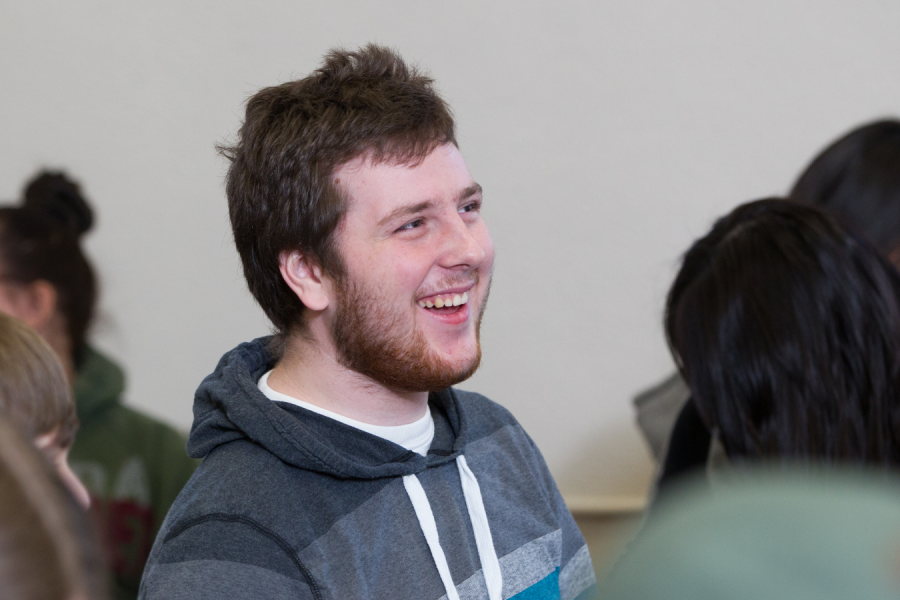
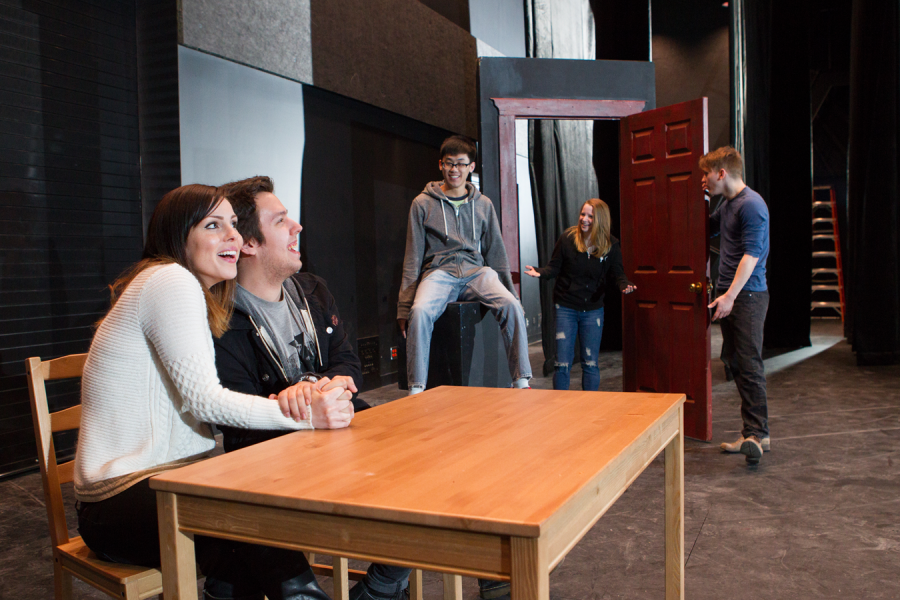
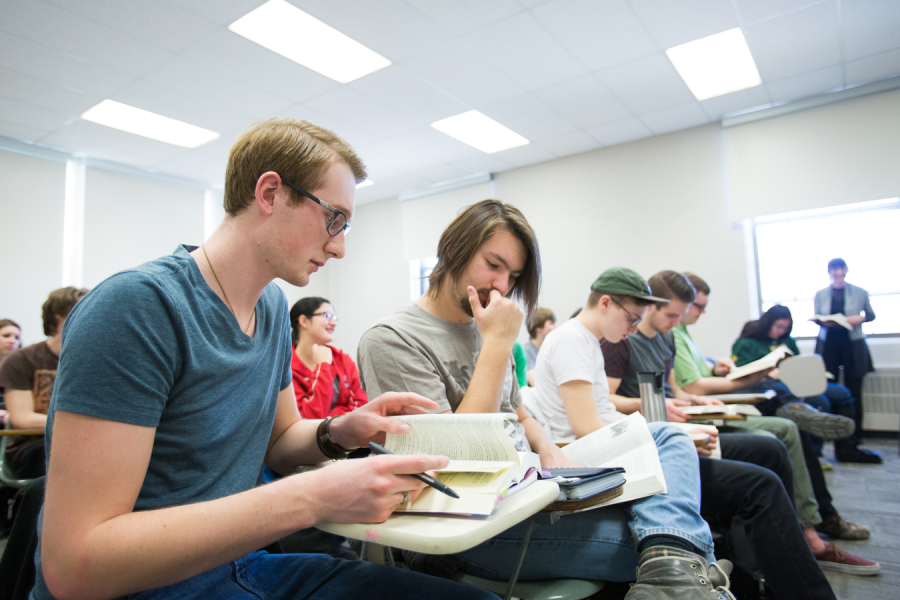
Undergraduate students are invited to join EFTSA which organizes social and academic events for students.
The University of Manitoba campuses and research spaces are located on original lands of Anishinaabeg, Ininiwak, Anisininewuk, Dakota Oyate, Dene and Inuit, and on the National Homeland of the Red River Métis. More
University of Manitoba
Winnipeg, Manitoba Canada, R3T 2N2
The remarkable ability of story to engage, surprise, shock and move us is the foundation of our department. We are a vibrant interdisciplinary unit where students can pursue both creative and critical work in literature, film and theatre, including creative writing, performance and film or stage production.
We aim to provide comprehensive historical coverage, to expand students’ writing skills and to promote the kind of analysis and argumentation that honours the richness of these disciplines.

Many courses in English, Theatre and Film are Special Topics or Honours Seminar courses where the course description changes from year to year. Please refer to Aurora for current information when planning your course registrations including instructors, sections, locations, dates and times.
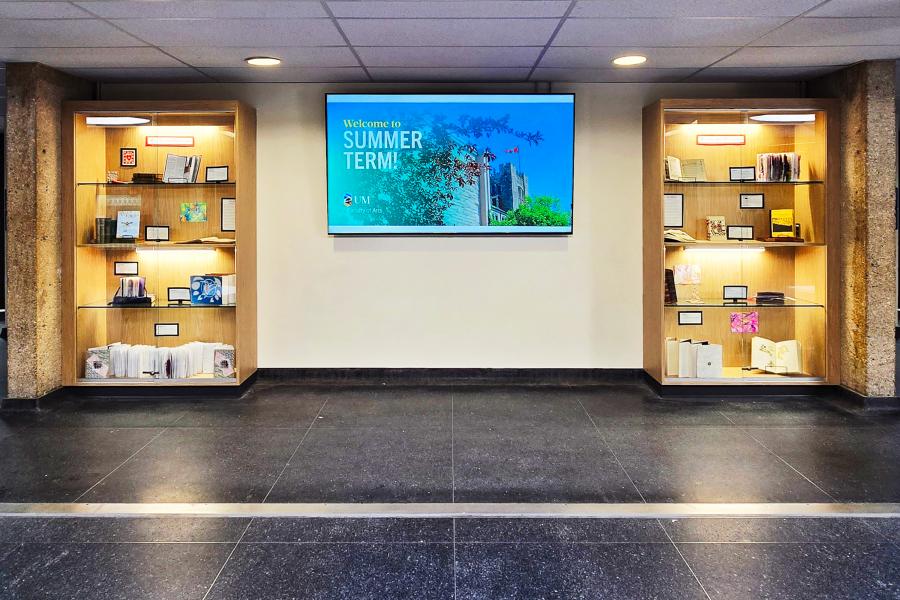
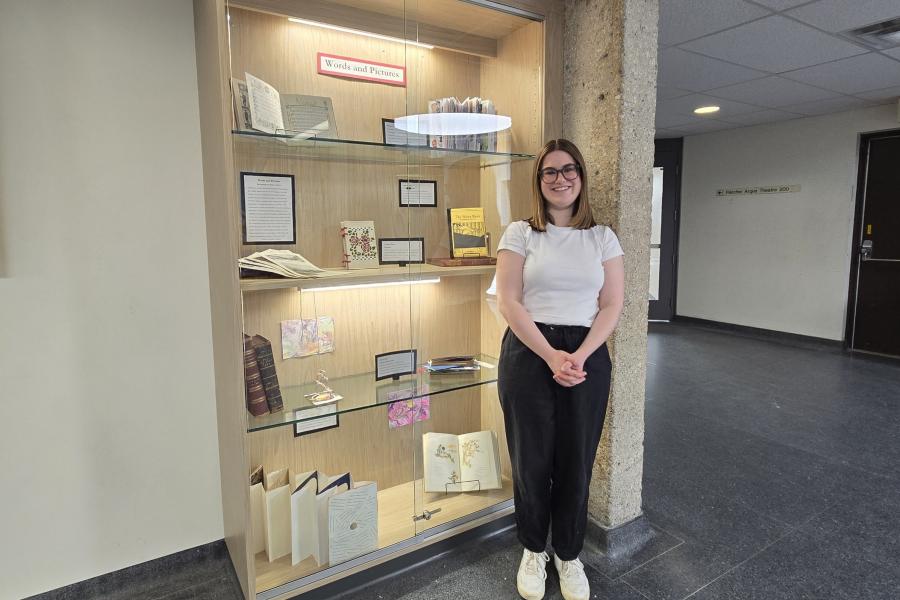
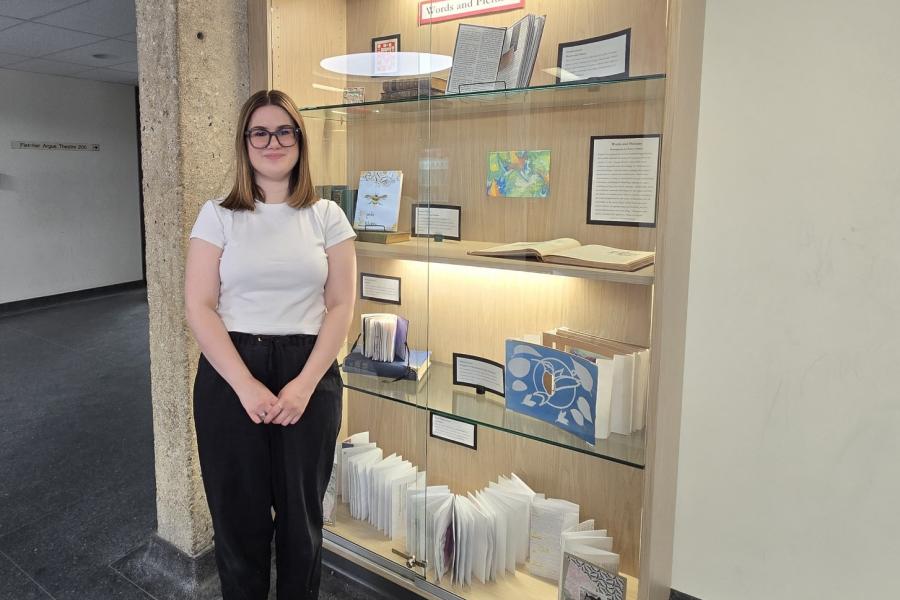
Check out the Words and Pictures summer exhibition in the cabinets outside of the 100 Fletcher Argue Theatre. The collection will be up throughout the summer.
Inspired by nineteenth-century bookmaking practices, this exhibit features the work of 9 students from the Faculty of Arts. During Winter Term 2026 in course ENGL 4630/7980 Words and Pictures: Victorian Book Histories instructed by Dr. Vanessa Warne, these students deepened their knowledge of Victorian-era material culture, creating objects ranging from paper peepshows to scrapbooks and beyond.
The items demonstrate a variety of nineteenth-century bookmaking techniques, including bookbinding, tipping-in, paper marbling, etching, and block printing. Additionally, the items feature materials including not just paper, but clay and fabric. In making these objects, creators considered the relationship between the study of literature and the materiality of the book. Many of the items consider similar themes of repurposing, preservation, and the relationship between text and image. Ultimately, this exhibit considers the question, “what is a book?”
The exhibit is curated by Natasha Diachun [BAHons/2026] a June 2026 graduate with an English major and Theatre minor and was a student in the class. Thank you to the students for sharing their work.
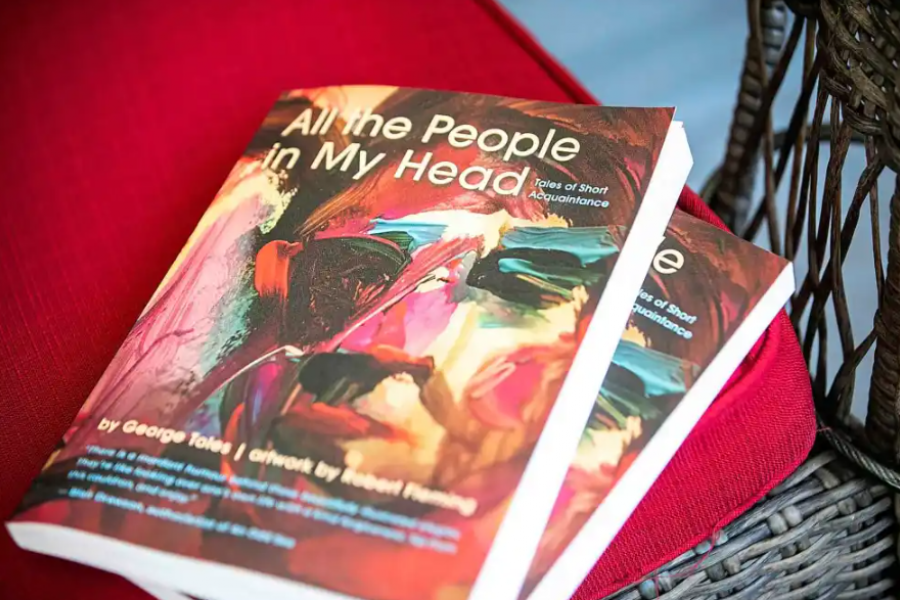
The below course list is subject to change without notice. Please see the Aurora class schedule for the most current information.
ENGL 2140 - Literature of the Victorian Period
TBA
ENGL 2170 - American Literature to 1900
Medoro
ENGL 2180 - American Literature since 1900
Joo
ENGL 3010 - Shakespeare
Clark
We will study Shakespeare’s most important comedies, histories, tragedies, and romances, including A Midsummer Night’s Dream and Much Ado about Nothing, Richard III and Henry IV, Hamlet and King Lear, and The Tempest. We will link our knowledge of Shakespearean dramatic form to an enhanced understanding of the Elizabethan and Jacobean historical context, as well as to earlier classical and medieval dramatic structures. Among other historical issues, we will consider the enormous but widely misunderstood impacts of Renaissance humanism and the sixteenth-century Reformations; the complex and simultaneous political drives toward state centralization, absolutism, and democracy; the transition from status to class societies; and the development of European colonialism in the Americas. We will attend to the ideologies that sustain and destabilize tradition and social order, and in turn we will consider how these ideologies might provide material for the production and development of dramatic form. In the end, consideration of the ways in which Shakespeare reflects on and contributes to the development of an early modernity energized by possibility but troubled by individual dilemmas arising from large-scale social tensions will allow us to imagine ways in which Shakespeare speaks to us about life in the twenty-first century.
ENGL 2760 - Introductory Creative Writing
Annandale
The purpose of this course is to introduce the student to the principles of creative writing. Students will work on a series of exercises. These exercises will lead to the creation of one large project. An overall grade will be given at the end of term, but students should feel free to consult with the instructor about their progress throughout the term. The course will take the form of lectures followed by workshops. Active, respectful participation on the part of students will thus be enormously important.
ENGL 2810/FILM 2460 - Shakespeare and the Golden Age of the Teen Movie
Weinberg (Special Topics in Literature Prior to 1900)
Do you love the Y2K aesthetic? Do you love pop culture and book-to-film adaptations? Satisfy these cravings with ENGL 2180: Shakespeare and the Golden Age of the Teen Movie. Cross-listed as FILM 2460, this course will delve into Shakespeare’s plays, the idea of millennial teen culture, and the cultural expectations around film adaptation. We will explore how American actors and directors during the millennium grappled with the unknown technological potential of the future by bringing the language of the past into the present. Films we will study include Romeo + Juliet (1996), 10 Things I Hate About You (1999), Hamlet (2000), and O (2001).
ENGL 2820 - Introduction to Black Literature in Canada
Paris (Special Topics in Literature After 1900)
What makes literature Black? Is it the race of the author, the content of the work, or an engagement with a larger Black diasporic literary tradition? In this class, we will consider poems, plays, novels, and works of creative non-fiction by authors who self-identify as Black from Canada, America, West Africa and the Caribbean. We will consider the political and aesthetic dimensions of their work, and we will discuss what it means to do criticism of Black art and literature in an ethical way. While some of the topics we will discuss can be heavy, this class will also pay particular attention to the representations of joy, love, and forgiveness in Black literature.
ENGL 2820 - Beyond the Canon: Debates on Decolonization
Diehl (Special Topics in Literature After 1900)
This course offers an introduction to Canadian literatures written in English. It addresses debates, especially concerning decolonization and diversity, that are currently redefining conceptions of Canada as a nation, culture, and place. Focusing on poems, short stories, novels, and plays, we explore works from the early nineteenth century to the present. We read these works alongside historical materials, such as political speeches, government documents, newspaper clippings, photographs, and paintings, learning how to contextualize the literature within Canada’s colonial, racialized, and gendered pasts. While the course proceeds chronologically, historical literary texts are often paired with more recent ones, encouraging students to consider how newer works revisit and reimagine the older works and their contexts. Through lectures, discussions, and assignments, we will question how “Canada” and “CanLit” have been constructed and contested by writers of different eras, regions, backgrounds, and gender identities; we also confront complicated and compelling ideas about who and where we find ourselves to be.
ENGL 2900/THTR 2600 - Canada at War
Dunn (Studies in Genre)
In the mythology of Canada’s emergence as a nation, war is often both a trigger and a solidifier of national identity. This course will explore the abundant dramatic literature that chronicles Canada at war, studying plays that both cement and contest traditional or official patriotic narratives. The selection of plays maps the breadth of theatrical practice that characterizes the country, takes an in-depth look at representative works from some of Canada’s most significant playwrights, and follows the emergence of Canadian identities beyond colonial and martial roots. Woven through the course will be a focus on theatre’s unique contribution to historiography: the why and how of (re)telling history from multiple points of view.
ENGL 2910 - “Comics”
Tromly
This course will examine the expressive possibilities of the medium of comics. We will begin by discussing important formal aspects of comics and develop the skills required for the close reading of visual narrative. Our readings will explore the wide range of personal and historical experience that has been represented through comics and the stylistic diversity of these representations. We will discuss well- known graphic novels alongside work from communities that are important to Winnipeg, including comics by Filipino Canadian and Indigenous creators. For 2026-27, the content of this course will be exclusively Canadian, and therefore this course can be counted toward Canadian requirements for most degrees in English.
ENGL 3130 - Writing Romantic Women
Faubert
In this course, we will study novels and a few poems about women and written by women. Focussing on the Romantic period, when the “woman question” was asked in earnest by women and men inspired by the revolutionary fervour of the age, we will explore how women authors constructed women’s social roles through novels, not only with respect to their potential love and career choices, but also in regard to the range of emotions thought to be possible for them. In what ways were women oppressed and how do these authors confirm these limitations or promote change for women? Attention to developments in the mode of the novel – from the late eighteenth-century novel of sentiment to the related Gothic novel, to the novel of manners of the Regency period – will highlight how literary technique can be used as an important tool for social commentary. Required term work includes an in-class essay, a major take-home essay, and a final test.
ENGL 3270 - Métis Literature
Cariou (Topics in Canadian Literature)
The Métis people have told their stories and sung their songs in Red River and on the western plains since the genesis of Métis culture in the eighteenth century, and have persisted here despite being subject to extreme discrimination, military conquest, theft, displacement, and acts of legislative erasure. In fact, Métis culture has thrived in recent decades, led in part by an extraordinary group of writers and artists who have shown the way toward renewed expressions of pride and self-determination. In the resurgence of Indigenous literature that has occurred since the 1990s, Métis writers have played an extremely important role. In this course we will study some of the most influential and accomplished work by historical Métis figures such as Pierre Falcon, Louis Riel and Gabriel Dumont, and we will then move to the contemporary era to examine works by Maria Campbell, Gregory Scofield, Duncan Mercredi, Katherena Vermette, Marilyn Dumont, Chelsea Vowel and Connor Kerr. We will study these works with an eye toward understanding their portrayals of Métis kinship networks, land relations, oral traditions, linguistic autonomy and political activism. We will also discuss the historical legacies of the Red River Resistance of 1869-70 and the North-West Resistance of 1885 as well as the period of Métis diaspora and that followed.
ENGL 3810 - The Arctic in 19th-Century British Literature
Perkins (Special Topics in Literature Prior to 1900)
In the opening lines of Frankenstein, the would-be explorer Robert Walton proclaims his conviction that in “the icy climes” of the Arctic, he will find “a region of beauty and delight.” Walton’s fascination with his imagined version of Arctic was shared by many British writers and readers throughout the nineteenth century, even (perhaps especially) if they never got anywhere near the polar regions. In this class we will explore the complex place that the Arctic held in the nineteenth-century British cultural imagination. The course material will include fiction and drama by authors including Mary Shelley, Wilkie Collins, and Sir Arthur Conan Doyle, but we will also look at a variety of work in other genres and media, including travel writing, magazine articles, newspaper stories, and visual spectacles such as fashionable Arctic panoramas, dramatic paintings of Arctic landscapes, and illustrations of Inuit visitors to Britain demonstrating their skills in hunting and kayaking.
ENGL 3810 - Renaissance Lyric Poetry
Owens (Special Topics in Literature Prior to 1900)
For many contemporary students of the genre, a “lyric” poem can be defined as a relatively short non- narrative poem that features a solitary speaker expressing seemingly unmediated emotion in an intensely personal context. Some of the poetry we will study in the course (almost) its the same bill. But more of it does not. We will discover astonishing variety in the kinds of poems that can be considered lyric poems in the Renaissance, from sonnets to satires, elegies to epitaphs, odes to ballads—kinds of poems in which emotion is usually highly mediated and contexts can be public, social, and political as well as intensely personal. We will not be aiming to reach anything like a rigid definition of “the Renaissance lyric poem” in our course. We will be interested, rather, in identifying some of the qualities linking diverse poems under the label of lyric while recognizing important differences in purpose, audience, occasion, subjects, form and metre. We will therefore situate the poetry firmly in its historical context. We will be even less concerned to test how well or how poorly Renaissance lyric poems meet the criteria of an imposed modern definition, such as the one described above, although we might discover genealogical links between Renaissance and modern lyric poems. We will be interested above all to describe the capaciousness of Renaissance lyric poetry and to define the achievements of its authors. Book-ended by Thomas Wyatt (d.1542) and Andrew Marvell (d.1678), our course may include poems from some big names in Renaissance literature—Shakespeare, Spenser, Donne, Milton—as well as poems by writers who might be less familiar to you.
ENGL 3820/FILM 3250 – Going Too Far
Toles
Going too Far will concentrate on films and short literary works which insistently deny or violate a sense of proportion and balance. Instead, they operate with a fixation on extremes that push us past sensible limits , pursuing excess, irrationality , and even self-destruction for their own sake. None of the texts quite find their way out of the morass they generate. Confusion in structure, tone, and purpose are not only tolerated, but put forward as a kind of value system. Ross Posnock has written books of criticism celebrating various radical forms of renunciation, refusal and what he terms the art of immaturity. Some of his writing will be used to supply a critical perspective. Irrationality and perverseness typically seem to push against civilized order. But what do they contribute if they are allowed into the mix of liberating aspiration? Our investigation of the theme of “going too far” will commence with Dostoevsky’s spiteful, unappeasably alienated underground man.
ENGL 4630 - Manufactured Space: The Work of “Canada”
Calder (Honours Seminar)
Who does the nation’s dirty work? This class asks how Canadian literary texts engage with the social and political production of national space by looking at representations of work and its value. Notions about labour are entwined with issues of immigration, belonging, class, race, gender, and region, among many other things. Focusing on texts from 1920 to the present, this class examines how ideas about labour remain central to manufacturing “Canadian” identity. Whether they promote the ideals of patriotic work or make visible the exploited and marginalized labour force in slaughterhouses and nail salons, these texts engage with intersections between nationalism and capitalism.
Primary texts may include works by Martha Ostenso, Douglas Durkin, Margaret Sweatman, Douglas Coupland, Michael Ondaatje, Sky Lee, Kate Beaton, Souvankham Thammavongsa, Kate Braid, Tom Wayman, Bronwen Wallace, Alistair MacLeod, Rohinton Mistry, and Jessie Georgina Sime. Students will also read a variety of secondary sources and related criticism.
ENGL 4630 - Forms of Power and the Power of Forms
Watt (Honours Seminar)
Form is a particularly valuable concept for the study of Middle English literature, Christopher Canon writes, because the “general absence of explanatory context” for the many “formally unique” poems written in the period means that they often “resist interpretation.” This seminar explores the possibility that the content of several texts preoccupied with forms of power can provide insight into the
reasons why their authors selected forms designed to resist interpretation by enacting or defying the will of the powerful.
ENGL 4630 - Celebrity and Fan Cultures
Keating (Honours Seminar)
This class will take a long view of the interrelated realms of celebrity and fan cultures, primarily through amatory/romance writings and their fan communities. Beginning with what many critics see as the emergence of modern, Western celebrity in the late 17th century in England, we will consider the types of texts that shape celebrity figures and investigate the ways that fan cultures around celebrities (both real and fictional) change as forms of media change. The secondary readings will introduce you to the fields of celebrity studies and fan studies highlighting their intersections with literary studies. In particular, we will look at the ways that celebrity culture in English-speaking Western societies developed in tandem with systems of capitalism and liberalism/neoliberalism and interrogate narratives around the complex relationship between fan communities and the artists/corporations who produce the objects of their fandom.
ENGL 2650 - Introduction to Critical Theory
Libin
An introduction to the history and application of critical theory for the study of literature and other media. The course will cover at least three distinct schools of critical theory and at least two distinct historical eras.
ENGL 2860 - African Literature
Libin
This course will chart a course through several representative novels of sub-Saharan Africa through a chain of texts that reflect on each other in various ways. We will begin (provocatively, perhaps ill- advisedly) with Joseph Conrad’s vexing colonial/anti-colonial reflections on the Belgian Congo in Heart of Darkness, followed by Chinua Achebe’s pointed, complex re lection on Conrad’s misrepresentations in Achebe’s Things Fall Apart. We will then look at Buchi Emecheta’s feminist reflections on the Igbo traditions represented by Achebe in her novels. Other texts will (likely) include reflections on postcolonial nation states by Ngũgı̃ wa Thiong’o and Tsitsi Dangarembga, and Zakes Mda’s depiction on how the colonial past reflects on the postcolonial present in his The Heart of Redness. Throughout, we will take into account the tension between the specific local context provided in each novel and the imagined, unwieldly idea of “Africa.”
ENGL 2940 - Short Fiction
Cariou
This course traces the development of the short story in English from its origins in the nineteenth century to our contemporary era, focusing on acknowledged classics of the genre but also examining lesser- known works that push the boundaries of the art. We will study works from around the world, and from several distinct literary periods, attempting to understand these works in their cultural and temporal contexts. In addition, we will study some oral stories and short films, in order to broaden our understanding of brief narrative forms. The stories will include work in genres such as horror, speculative fiction, autobiographical fiction, magic realism, and experimental narratives. Authors to be studied include Poe, Joyce, Mansfield, LeGuin, Achebe, Carver, Saunders, and many more.
ENGL 2980 - Poetry
Calder
Are you afraid to talk about poetry? Do you write tortured, terrible verse? If you can’t tell your anaphora from your polyptoton, this class is for you. Here we’ll look at a variety of poetic forms, thinking about the bones underneath the poem’s skin and how they make meaning. The class will look at some traditional structures, ranging from ballads to free verse, and the non-traditional uses to which they are put by contemporary writers. We’ll think about poetic constraints and how language explodes out of the ordinary. There may be limited opportunity for creative work, but on the whole this is not a creative writing class.
ENGL 3170 - Literature of the American Counterculture 1968-1973
Tromly (Studies in American Literature)
The culture of the late 1960s and early 1970s in America is best known for its music, film, and fashion. This course will explore the literary counterculture of this period, including the New Journalism and underground comix. We will also read novels and poetry that were important to the counterculture. We will discuss literary responses to a variety of contemporary issues, including the war in Vietnam and the pacifist movement; new forms of feminism; and anti-imperialism both in the U.S. and abroad. Readings may include journalism by Joan Didion, Hunter S. Thompson, and Thom Wolfe and comics like Zap Comix and Wimmen’s Comix.
ENGL 3620 - Asian Canadian Cultural Activism
Diehl (Studies in Canadian Literature)
This course examines cultural forms, particularly poetry, short fiction, graphic narratives, novels, and films, in order to explore the complicated agency involved in representing Asian Canadian histories, experiences, and identities. Our discussions will focus on how these cultural forms play an activist role in negotiating and contesting dominant constructions of Canadian history and culture. We will start with selections from Asian Canadian literary anthologies, which are often regarded as the starting point of Asian Canadian cultural consciousness. We will then move through literature and films that draw attention to racial legacies involving the Chinese Exclusion Act, the Japanese Canadian Internment, and the Komagata Maru Incident. Lastly, we will attend to transnationalisms of Asian Canadian cultural forms, and their ability to disrupt national epistemologies and formations.
ENGL 3620 - Women and the 19th Century Periodical Literature
Perkins (Special Topics in Print Culture and Book History)
In their introduction to Women, Periodicals, and Print Culture in the Victorian Period (2019), Alexis Easley, Clare Gill and Beth Rogers note “the many and at times surprising ways” in which women participated in and contributed to the nineteenth-century periodical press. In addition to providing all sorts of content – fiction, poetry, cultural commentary, reviews – women also contributed to the production of magazines and newspapers in roles ranging from compositors to editor. In this class, we will explore the literary and other professional work of some of the women who were central to the periodical culture of nineteenth- century Britain, including (among others) Christian Isobel Johnstone, Eliza Cook, Harriet Martineau, Eliza Lynn Linton, and Margaret Oliphant. As we do so, we will consider material conditions of print, production, and circulation as well as the cultural work being done in a selection of periodicals ranging from small, radical papers to hugely influential magazines such as Blackwood’s and The Westminster Review.
ENGL 3810 - Special Studies in Literature Prior to 1900: Sex, Money, and Power in Jane Austen’s Novels
Weinberg
Why must a single man in possession of good fortune be in want a wife? Who has these expectations and why? What does this tell us about sex, money and power for the gentry in the Regency period? What can we discover when attending to gender, race, class and privilege from an intersectional perspective? In this course, we will study Jane Austen’s most popular novels as well as her rarely-discussed novel fragments. Be prepared to read a lot, think deeply, challenge first impressions, and share your opinions in class discussions, essays and an exam.
ENGL 4630 - Ecocritical Theatre
Dunn (Honours Seminar)
Through the frame of ecocriticism, the study of the relationship between human cultural expressions and the environment, this course will study a selection of plays that treat environmental issues. We will begin with late nineteenth century European drama, in which rapid technological and cultural changes were matched by the rapid renewal of theatrical environments by a series of playwright innovators. Plays by Henrik Ibsen, Anton Chekhov and Samuel Beckett will enable re lection on differing views of nature, and allow consideration of materialism, dehumanization, exploitation, and deception. In the mid twentieth century our focus will shift to the emergence of an ecocritical perspective in Canadian drama, looking at traditional scripted works, as well as postdramatic and site-specific performances. Through these plays and related interdisciplinary readings, the class will study the interplay between science and culture, and assess the social, cultural, political, and economic dimensions of the environmental crisis. We will debate the role of theatre and performance in the emergence of a posthuman perspective and the pursuit of ecological justice.
ENGL 4630 - Edmund Spenser’s The Faerie Queene
Owens (Honours Seminar)
This course will focus on a single poem, Edmund Spenser's The Faerie Queene, 1590/1596. (We will start with the aim to read the entire poem, six books and a fragment of a supposed lost seventh book, but will not hold ourselves to that goal: the amount of time we spend on any one book will be determined by student interest and the discussions that arise in our study of the poem.) The poem itself is sufficiently capacious--in length, scope, subject matter, genre, themes, poetics. mode, geopolitical reach--to accommodate an astonishing range of critical responses and readerly interests. In an self-styled explanatory letter appended to the 1590 installment of The Faerie Queene, Spenser declares that his "historical fiction" will illuminate both "ethicke" and "politicke" virtues, that is, the virtues that the private person can cultivate and the virtues (strengths) that a polity or commonwealth should espouse and practice. With these two poles as initial signposts, we will devote the first class or two to exploring how your interests might intersect with the poem and together we will develop a more detailed plan of study. *This process will be greatly expedited if you come to the first class meeting knowing something about The Faerie Queene :)
ENGL 4630 - Strange Loops: Cinema and the Theory of Repetition
Corne (Honours Seminar)
Repetition informs cinema in countless critical ways, from plots involving time loops, clones, copies, forgeries, spaces of industrial production, and detective or quasi-detective quests to reconstruct what happened (i.e. “the crime”); to formal devices such as the flashback and the multi-perspectival retelling of “the same” event; to narrative and documentary projects of historical reenactment; to avant-garde uses of remediation (i.e. found footage); to spectatorial habits of obsessive rewatching, often linked with fandom. This course will explore these and other modes of cinematic repetition, covering a variety of recursion- steeped works of global cinema alongside several major theorists of repetition from a range of disciplines (i.e. philosophy, psychoanalysis, cybernetics). Our investigations will lead us to consider how cinema has mobilized repetition’s potential as a force nightmarish and redemptive, conservative and transgressive, anaesthetizing and creative, among much else, and how we might relate the question of cinema and repetition to today’s larger online mediascape.
FILM 2440 - Filmmaking
TBA
Digital filmmaking equipment is used to understand the rudiments of cinematography, editing, lighting, and directing. Students will make at least one short film.
FILM 2460 - Film Noir
Austin-Smith
The term ‘ film noir’ refers to a cycle of films typically set in cities where dimly lit streets reek of danger, and sinister figures in trench coats lurk in the shadows. Though its roots are in German Expressionism and Weimar “street films,” film noir became famously associated with American post-WW II cinema, the private detective, and the femme fatale. This course will consider ilm noir as a genre that trades in stories of temptation, betrayal, mistrust, and disillusion, but also engage it as a mode and style of ilmmaking, exploring its ilmic rendering of cynicism and disillusion, and its critique of post-war civil progress. The noirs and neo-noirs we will discuss will likely include a few of the following: M (Lang, 1931), The Big Sleep (Hawks, 1946), Night and the City (Dassin, 1950), Double Indemnity (Wilder, 1944), The Third Man (Reed, 1949), Chinatown (Polanski, 1974), Blade Runner (Scott, 1982). Out of the Past (Tourneur, 1947), Touch of Evil (Welles, 1958), and Kiss Me Deadly (Aldrich, 1955).
FILM 2460/ENGL 2810 - Shakespeare and the Golden Age of the Teen Movie
Weinberg
Do you love the Y2K aesthetic? Do you love pop culture and book-to-film adaptations? Satisfy these cravings with FILM 2460: Shakespeare and the Golden Age of the Teen Movie. Cross-listed as ENGL 2810, this course will delve into Shakespeare’s plays, the idea of millennial teen culture, and the cultural expectations around film adaptation. We will explore how American actors and directors during the millennium grappled with the unknown technological potential of the future by bringing the language of the past into the present. Films we will study include Romeo + Juliet (1996), 10 Things I Hate About
You (1999), Hamlet (2000), and O (2001).
FILM 3250/ENGL 3820 – Going Too Far
Toles
Going too Far will concentrate on films and short literary works which insistently deny or violate a sense of proportion and balance. Instead, they operate with a fixation on extremes that push us past sensible limits , pursuing excess, irrationality , and even self-destruction for their own sake. None of the texts quite find their way out of the morass they generate. Confusion in structure, tone, and purpose are not only tolerated, but put forward as a kind of value system. Ross Posnock has written books of criticism celebrating various radical forms of renunciation, refusal and what he terms the art of immaturity. Some of his writing will be used to supply a critical perspective. Irrationality and perverseness typically seem to push against civilized order. But what do they contribute if they are allowed into the mix of liberating aspiration? Our investigation of the theme of “going too far” will commence with Dostoevsky’s spiteful, unappeasably alienated underground man.
FILM 3420 - Film Theory
Corne
This course gives students an opportunity to pull back from the study of individual films— at least as an initial maneuver—to reflect on the film medium itself, to wrestle with André Bazin’s basic yet elusive question, “What is cinema?” Critics have been asking such a question and attempting to answer it with sustained, searching rigor since the early decades of the twentieth century, relatively soon after the birth of movies, and they continue to do so in the wake of monumental transformations in the ways that movies are made and watched in the digital era. Our goal will thus be to acquaint ourselves with several major voices, schools, and concepts in this ongoing exchange, which forms the basis of the distinctive canon known as “film theory.”
Topics to be covered will include: the relation between film and the slippery notion of “reality”; the nature of cinematic identification, and how this spectatorial process is inflected by issues of gender, race, and class; the significance and operations of narrativity in film; the relation between sound and image in the audio-visual equation (with particular attention to how theorists writing at the time of the advent of sound film responded to the new technological phenomenon); the enticing yet fraught conceptualization of film as a “language”; the constitution, and potential ideological underpinnings, of the cinematic “apparatus”; the status of film as a “mass” medium; the capacity of film to capture psychic processes and the experience of consciousness; the impact of the “digital revolution” on film; and film’s place within the larger contemporary digital mediascape.
FILM 2430 - Canadian Film
Austin-Smith
Canadian cinema has been described as “the invisible cinema: a cinema that exists but is not seen.” Perched as it is next to the global powerhouse of Hollywood, Canadian ilm lacks the pro ile of US cinema and has struggled to reach theatrical audiences. Most of us are unlikely to have seen a ilm—especially a feature ilm--labelled “Canadian” in a commercial venue. This course will not only make the invisible visible, but also offer us ways to think about national cinema more critically. We will think about what makes cinema a vehicle for national identities and concerns, about how cinema responds to demands for recognition, independence, belonging, and calls for reconciliation. We will also explore a variety of Canadian production circumstances that have resulted in a range of ilms, from silent to horror, from documentary to experimental, from Indigenous to settler.
FILM 2460 - European Horror
Annandale
European horror films have had a more spotty production history than their American cousins. While the horror film first arose in France and Germany, it did not flourish until the late 1950's in Britain with the rise of Hammer studios, and the 1960's on the continent with the arrival on the scene of the likes of Mario Bava and Dario Argento. These would be films that would in no small way reflect the sexual and political upheavals of that time. This course will concentrate, therefore, on the era, which came to a close with the end of the 80's, that was something of a golden age for the European horror film. Note: European horror films are often far more violent and sexually explicit than their American contemporaries. Students should be aware that the films being studied feature considerable amounts of gore, nudity, sexual violence, and violence in general of all kinds.
FILM 3460 - Acting for the Camera
Toles
Course objectives:
1) A practical exploration of the acting techniques appropriate for work in film and television. Each student will be required to perform a significant number of scene bits and a few full scenes on video camera.
2) A development of skills connected with directing actors in film as well as preparing two-person dialogue scenes for the camera. These skills will include intensive preparatory scene analysis, storyboarding, camera operation during performance, and a few visits to the editing room. The most important skill for a director, I would argue, is learning how to communicate with actors in a manner that produces effective, creative results. All of the students will have opportunities to direct as well as perform.
THTR 2150 - Theatrical Techniques: Onstage (Requires Audition)
Kerr
Building on the fundamental work done in Introduction to Theatre THTR 1220, this intensive practical course explores advanced acting techniques and introduces students to the fundamentals of directing. In addition to directing and acting scenes and monologues in class, the course requires students to direct two scenes with first-year students in second term, and to prepare a comprehensive Director's Notebook for an in-class scene directed in either the first or second term.
Prerequisite: THTR 1220 AND permission of the instructor.
NOTE: Sign up for an audition (we recommend using the monologue you worked on in Introduction to Theatre) and an interview about your interest in acting and/or directing.
THTR 2160 - Theatrical Techniques: Backstage (Requires Interview)
TBA
The Backstage course is designed to give students the opportunity to explore both the general administrative and technical requirements of mounting theatrical productions in a real-world situation. This is a hands-on practical course, and we will use the current UM Theatre Program productions as a working model or "text." By the end of the course, students should have a comprehensive understanding of the process involved in accomplishing the above and will have acquired exposure to, and some expertise in, the various technical and administrative positions found in theatre productions. The three components to the course include lectures and discussions on various topics concerning design, management and operations of a theatre company, readings that will help with understanding specific details in the related lecture topic and provide a reference guidance for the projects that you will be undertaking, and project positions involving hands-on technical work on productions.
THTR 2600/ ENGL 2900 - Canada at War
Dunn (Special Studies)
In the mythology of Canada’s emergence as a nation, war is often both a trigger and a solidifier of national identity. This course will explore the abundant dramatic literature that chronicles Canada at war, studying plays that both cement and contest traditional or official patriotic narratives. The selection of plays maps the breadth of theatrical practice that characterizes the country, takes an in-depth look at representative works from some of Canada’s most significant playwrights, and follows the emergence of Canadian identities beyond colonial and martial roots. Woven through the course will be a focus on theatre’s unique contribution to historiography: the why and how of (re)telling history from multiple points of view.
THTR 3000 - The House of the Seven Gables
Dunn (Special Topics in Theatre Production)
This is an advanced course in performance creation with focuses on acting, design and/or technical theatre. It builds on introductory skills developed in Introduction to Theatre and intermediate skills developed in the Theatre Program’s Onstage and Backstage courses and refines them through performance. Within the structure of this course students may focus on the creation of a role, including voice and physical performance skills, a particular design element such as set, costumes, sound, lighting, props, or video projection, or a technical theatre role, such as stage management or front of house. The play is an adaptation of Nathaniel Hawthorne's famous Gothic novel The House of the Seven Gables transformed into an ensemble piece laced with eerie imagery and contemporary resonances by playwright and UM sessional instructor Vern Thiessen. The story of the Pyncheon family, Gables follows the residents of a house cursed by an ancestor's land theft and haunted by the ghosts of many generations. Entrance to this course requires either completion of, or enrollment in, THTR 2150 Onstage or THTR 2160 Backstage. Performance and backstage roles will be assigned through an audition and interview process.
ENGL 2200 - Canadian Indigenous Theatre
TBA
This course offers an introduction to Indigenous theatre in the location now known as Canada. The plays to be studied will include work from several Indigenous nations. Class instruction will model respectful and culturally attentive engagement with Indigenous practices and worldviews.
ENGL 3000 - The Merry Wives of Windsor
Groome (Special Topics in Theatre Production)
In the Winter Term 2027, the Theatre Production course will rehearse and then perform Shakespeare’s comedy The Merry Wives of Windsor. The play’s abundance of word play and potential for physical comedy means that it is a joy to perform and watch, more rewarding on the stage than as a read. But to dismiss the play as simply a farce would be to miss its critique of the bourgeoisie and its rich depictions of a set of women who challenge the roles constructed for them and find creative ways to ensure their autonomy. This production will offer students a range of challenging roles, including the possibility of women playing some of the men’s roles. And then there’s Falstaff, one of Shakespeare’s greatest comic creations and a favourite character of Queen Elizabeth I. Students will have the opportunity to perform on a thrust stage, strongly influenced by the design of the mainstage at Canada’s own Stratford Festival, and the production will be set in the 1950s or 1960s.
ENGL 3610 - Advanced Directing: Style and Substance
Kerr
This course will build upon the fundamentals of direction learned in Theatrical Techniques: Onstage THTR 2150 and the technical knowledge of theatre learned in Backstage THTR 2160 as it applies to directing. It will expand on the basics of working with actors, text analysis and use of space (particularly composition, focus and picturization (including a focus on the use of lights and sound)). It will also introduce ways to work with the entire production team. At the same time, the course will introduce working on the individual needs of particular genres and styles such as farce, Epic, naturalism, Comedy of Manners, expressionism, and absurdism. Ultimately, we will build up to examining the particular mixes of style and genre used by individual contemporary playwrights such as Caryl Churchill, David Mamet, Judith Thompson, Martin McDonagh, and Tom Stoppard or others proposed by the class. The course objective is to further develop the three basic skills of directing and to apply them to the particular style or genre of particular plays:
-text analysis
-the use and control of the three-dimensional space, particularly as it impacts story and audience using principles of composition, focus and picturization, including using lights and sound
-effective communication with actors and effective communication with the production team
Note: You will be expected to perform in others’ projects. Directing classes can often call for more acting than acting classes.
Prerequisites: THTR 2150 or THTR 2160 AND permission of the instructor.
Discover the variety of scholarships, prizes and awards for undergraduate and graduate students in English, Theatre, Film & Media.
Bursaries are also available.
The department has a history of sponsoring two to three internships each year with Mosaic, an interdisciplinary journal housed in the Faculty of Arts.
Read the current issue of the English, Theatre, Film & Media newsletter, featuring staff and student news. (Fall 2023)
Plan your university journey. Get the information you need for academic planning and connect with experiences to develop the knowledge, skills and attributes that employers are seeking.
Plan your university journey. Get the information you need for academic planning and connect with experiences to develop the knowledge, skills and attributes that employers are seeking.
Our department has close affiliations with the following:
Sofia Martignoni, Student Services Assistant
620 Fletcher Argue Building
204-474-9678
sofia.martignoni@umanitoba.ca
Lakshmisree Shaji, Graduate Program Assistant
623 Fletcher Argue Building
204-474-7365
Lakshmisree.ShajiMarar@umanitoba.ca
Department of English, Theatre, Film & Media
620 Fletcher Argue Building
15 Chancellors Circle
University of Manitoba (Fort Garry campus)
Winnipeg, MB R3T 2N2 Canada