
What we do

The Centre is designed to be open-ended, so long as its activities are consistent with the overarching goal of working to create culture change in capitalism via promoting business models that foster community.

Develop and support multi-disciplinary research

Develop and support multi-disciplinary research that enables examining the multi-facets of business models that enhance social impact. This includes awarding annual "Chiu Centre Research Fellows" with small grants that can be used for research purposes or for course buy-outs. Similar grants or funding may also be awarded to graduate students whose work is closely aligned with the Centre's.

  • Research Fellowships

    Every year, University of Manitoba faculty and instructors are invited to apply for a Chiu Centre Research Fellowships.  These funds support research that examines and promotes business as a force for connection, equity, and social good, from social impact entrepreneurship to technologies tackling today's toughest social and ecological challenges. Each year, up to five fellows receive funding to turn their research into real-world impact.
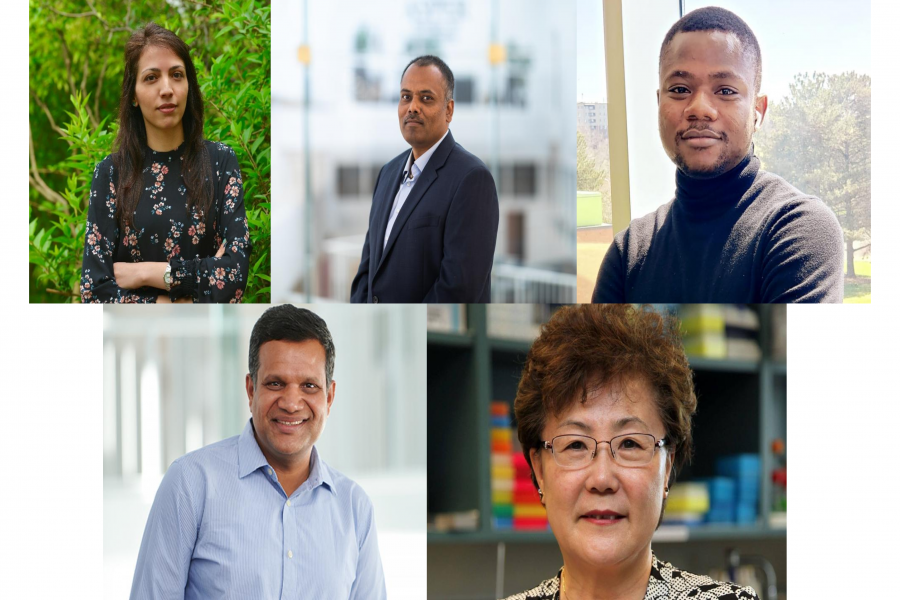

  • Headshots of five chiu winners

Introducing the 2026–27 Chiu Centre Research Fellows

We are pleased to announce the recipients of the inaugural Chiu Centre Research Fellowships. Selected from a highly competitive pool of applications spanning 13 departments across the University of Manitoba, this year's fellows represent the breadth and boldness of research that sits at the heart of our mission: business serving community.

Each fellow is advancing scholarship that addresses important social and ecological issues is ways that promise to strengthen community and go beyond conventional business thinking. Their work spans Indigenous food sovereignty, menstrual health in India, biodiversity action, wildfire resilience, and community-driven retail, reflecting the Centre's commitment to research that is both rigorous and transformative.

  • Breaking the Stigma: Micro-entrepreneurs and Rural Menstrual Health in India 

    Dr. Kiran Pedada Department of Marketing, Asper School of Business 

    Contact Info

  • This research examines the role (new) micro-entrepreneurs can play in addressing misinformation and providing appropriate sanitary products in rural India where, due to stigma and misinformation, approximately 20% of girls drop out of school after their first menstruation. With 900 million people living in rural communities, this study has the potential to enhance community and help tens of millions of people improve their socio-economic well-being by determining the best practices of micro-entrepreneurs.


  • New Business Models that can Mitigate Northern Wildfires and Serve Community

    Dr. Nahid Masoudi Natural Resources Institute

    Contact Info

  • This research examines new forms of local business enterprise that can help to address the growing risk wildfires pose to communities in places like northern Manitoba, which cause great financial and social devastation. This study will examine how the risk and costs of wildfires can be lowered by creating local businesses that reduce the “fuel” that fires have access to. Such businesses can remove dead vegetation, trees, dry grass, or even combustible building materials via pruning, thinning, and, where appropriate, prescribed burning. In addition to reducing the risk and costs of wildfires, this strengthens communities by creating local jobs and economic activity.

  • Pathways to Biodiversity Action for Community-Serving Businesses in Canada

    Dr. Raphael Ayambire Faculty of Architecture, Department of City Planning

    Contact Info

  • This study seeks to translate findings of the Intergovernmental Science-Policy Platform on Biodiversity and Ecosystem Services (IPBES) “Business and Biodiversity Assessment” (BBA) to help businesses become agents of a just and sustainable future rather than drivers of ecological decline. The IPBES BBA is a landmark methodological assessment which outlines how all businesses depend on and impact biodiversity, yet current economic and governance conditions misalign what is profitable with what is beneficial for nature and society. Businesses must learn to play their part as members of an ecological community of mutual care.

  • Community-Driven SMART Vertical Farming as a Social Enterprise Model for Food Sovereignty and Economic Resilience in Northern Indigenous Communities
     

    Dr. Miyoung Suh Faculty of Agricultural and Food Sciences, Department of Food & Human Nutritional Sciences

    Contact Info
     

  • This research explores how a smart vertical farming system can grow into an Indigenous-led social enterprise that strengthens food sovereignty, health, and economic resilience. By combining community ownership, cultural governance, and market strategy, the project tests how functional "medi-foods" can improve health outcomes while generating revenue that's reinvested into community well-being. The result: a replicable business model for Indigenous-led food enterprises — one that's culturally grounded, economically viable, and scalable to northern and underserved communities across Canada.

  • More Than a Market: How Retailers Can Serve Indigenous Community Well-Being

    Dr. Harsha Kamatham Asper School of Business, Marketing Department

    Contact Info


  • This funding will support the early-stage development of community-guided research on retail entry, food access and consumption behaviour, and community well-being in Indigenous and remote Northern communities. The project will provide the foundation for a larger research program on business models that support food access, community self-determination, and culturally responsive retail systems in Northern Canada. The research will be guided by the University of Manitoba’s Researching in Good Ways and Working in Good Ways frameworks.

Develop longitudinal data sets

Develop longitudinal data sets of leading-edge business models that address social and ecological issues facing society. This may include collecting data (e.g., interview, survey, archival) that are informed by and made available to researchers from a variety of disciplines. By studying exemplary business models over time, researchers can get a deeper understanding of the characteristics and processes that enhance social impact. It is expected that students will participate in collecting, coding and sometimes analysing data.

Current Research: A Study of Businesses That Serve Community

We are developing a longitudinal dataset of businesses that place people and planet ahead of profit, exploring how they build financial well-being (enough for everyone), political well-being (voice for everyone), and social well-being (mutual care over isolation). Over the past seven years, the project has collected interview data from more than 100 organizations, informing scholarly publications, graduate theses, textbooks, and the award-winning documentary Beyond Profit: Seeking Sustainability.  With new funding from the Chiu Centre for Business Serving Community, the study will continue for years to come, building a rich, evolving dataset for researchers to study how these organizations grow and adapt over time.

Find a list of these studies here

Promote research dissemination

In addition to the published research related to the longitudinal dataset (see above), the Centre also supports other scholarly and creative work, including publications in scholarly and practitioner journals, occasional books for scholars or practitioners, textbooks for courses in social impact entrepreneurship, and video-based materials. Here are two publications related to the work of the Centre

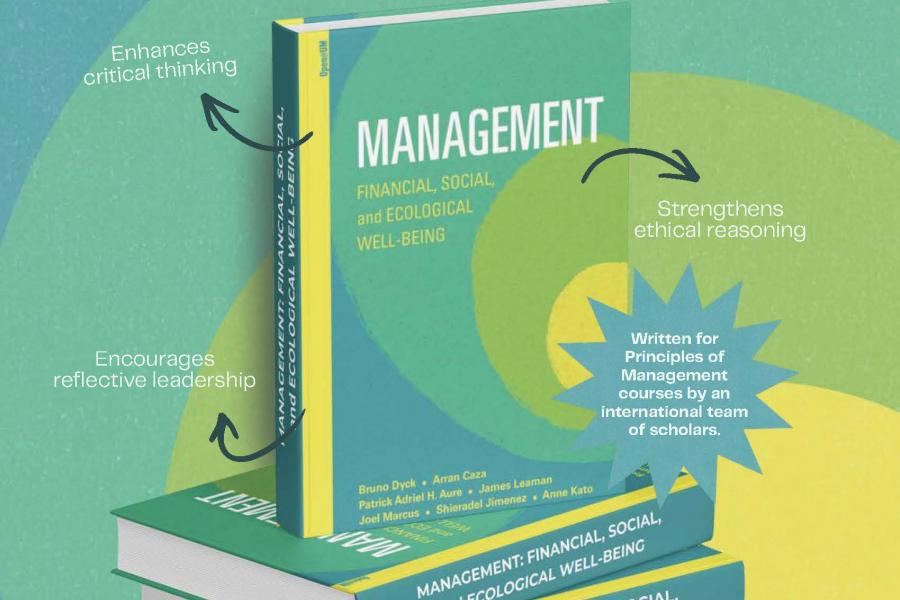
  • Management: Financial, Social and Ecological well-being

    The first publication associated with the Centre is a management textbook that describes three approaches to management, including the “Social and Ecological Thought” approach closely linked to the vison of the Centre, which is being used at business schools around the world (notably Canada, the USA, and Philippines)

    Start Reading


  • Beyond profit: Seeking sustainability

    Two students embark on a quest in search of sustainability in business, exploring questions of profit maximization and corporate social responsibility.

    An Official Selection at the 2023 Canada Shorts Film Festival. Winner at the 2024 Environmental Film & Screenplay Festival.

    Watch Here

Facilitate seminars and events

Host events, seminars, panels and guest speakers featuring research on business serving community for faculty, students and the larger community.

Events & Seminars, Coming Soon
We're planning a series of events and seminars for faculty, students, and staff. Stay tuned for details.

Meet the Chiu Community

  • Professor Bruno Dyck's professional shoot. He is wearing a black polo shirt
  • Bruno Dyck, Director

    Bruno Dyck has a long-standing interest and commitment to multi-disciplinary research related to business serving community. He is a management and organizational theorist, holds the Norman Frohlich Professorship in Business Sustainability, and is known for his research and writing on business that places people and planet ahead of maximizing profits. 

  • Francois Jordaan

    Research and Adminstrative Lead

    Jordan Schofield

    Student Research Assistant

Members

Membership is open to any faculty member or graduate research student at the University of Manitoba who demonstrates an interest in one or more of the following areas:

  • icon community

    Community

    Examining and promoting business models to foster community, connectedness, compassion and equity

  • icon question

    Transformation

    Examining and promoting business models to transform the culture of capitalism

  • icon information

    Sustainability

    Examining and promoting business models to address social and ecological issues facing society

  • icon lightbulb

    Innovation

    Theoretical and/or applied research focused on social impact entrepreneurship, social innovation, and technologies that can transform industries by addressing social and ecological issues

  • icon book

    Pedagogy

    Instruction, pedagogy and promotion of business models that foster community

Current members

Members are responsible for contributing to the advancement of the mission and vision of the Centre.

The inaugural members are listed below, but this list is expected to grow as the work of the Centre becomes known.


Name

Title

Faculty/Department

Chi Liao

Associate Professor

Accounting & Finance

Derek Johnson

Professor

Anthropology

Harsha Kamatham

Assistant Professor

Marketing

Iain Davidson-Hunt

Professor

Natural Resources Institute

Jesse Hajer

Associate Professor

Economics

Kiran Pedada

Assistant Professor

Marketing

Lei Lu

Professor

Accounting & Finance

Luming Wang

Associate Professor

Marketing

Martin Entz

Professor

Plant Science

Minelle Silva

Associate Professor

Supply Chain Management

Mohammad Eslami

Associate Professor

Supply Chain Management

Mohammad Khan

Associate Professor

Social Work

Nahid Masoudi

Associate Professor

Natural Resources Institute

Nathan Greidanus

Associate Professor

Business Administration

Rajesh Manchanda

Professor

Marketing

Rong (Ratchel) Zeng

Assistant Professor

Business Administration

Sean Buchanan

Associate Professor

Business Administration

Sijie Sun

Assistant Professor

Marketing

Suzanne Gagnon

Associate Professor

Business Administration

Thomas Falkenberg

Professor

Curriculum, Teaching & Learning

Yik Au

Associate Professor

Accounting & Finance

Advisory board

The advisory board is being created and will be comprised of representatives from across the University of Manitoba, corporate and non-profit sectors, and the broader community.

Contact us

Chiu Centre for Business Serving Community
Drake Centre, Asper School of Business
181 Freedman Crescent
University of Manitoba (Fort Garry campus) 
Winnipeg MB R3T 5V4 Canada