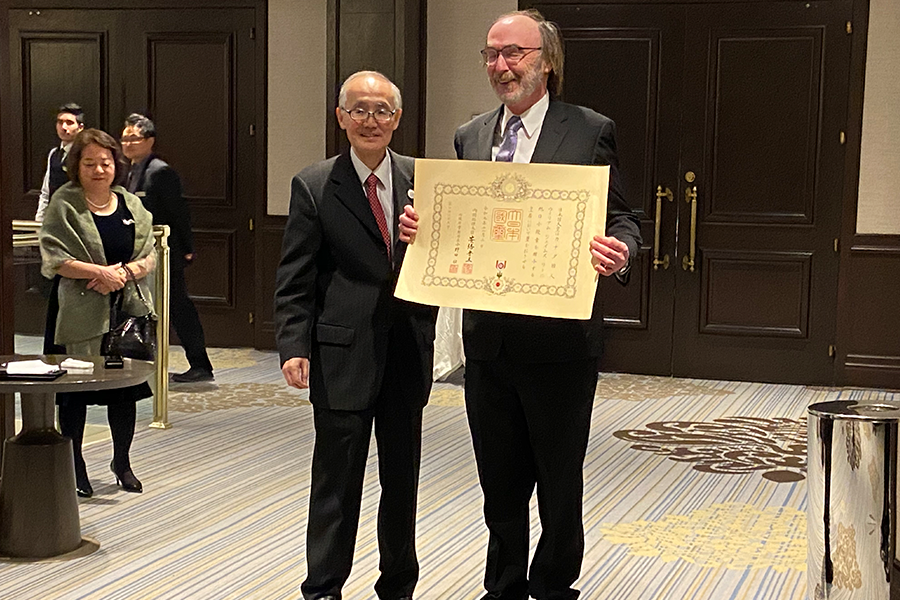


Congratulations to Dr. Jeongmin Kim on receiving an Rh Chrysalis Award for Exceptional Early-Career Research from the University of Manitoba at the May 28, 2026 Rh Awards ceremony. The award recognizes exceptional early-career academics within their first five years of independent research who have demonstrated innovation and impact across disciplines.
Dr. Kim is the Director of the Asian Studies program and an Assistant Professor of History with the Faculty of Arts. She is recognized for scholarship investigating transpacific linkages between East Asia and North, with particular focus on positioning women at the center of economic and military histories of the modern world.
Learn more about Dr. Jeongmin Kim’s research, teaching and publications
The Rh Awards have been in place for more than 50 years to support the advancement of knowledge across disciplines at UM.