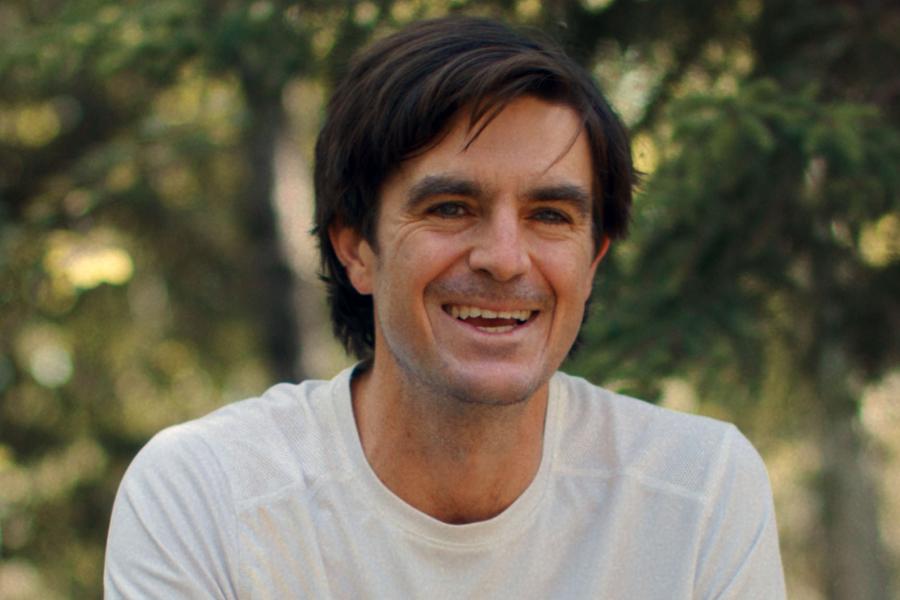
Currently accepting graduate students - yes

  • Master's
  • PhD

Teaching

  • PSYC 2290 - Child Development
  • PSYC 3130 - Introduction to Health Psychology
  • PSYC 4540/7310 - Current Issues in the Psychophysiology of Stress

Biography

I am a Cognitive Neuroscientist by training, beginning at UTSA with mentorship by Dr. Nicole Wicha in collecting electroencephalogram and the event-related potentials (ERPs) methodology. My training continued at the University of Oregon, where I studied under Helen Neville and others at the Prevention Science Institute. This experience lead me to incorporating conceptualizations of stress physiology into my research and developing an expertise with cardiac measures of the autonomic nervous system. Currently, I lead a large team of graduate and undergraduate student researchers at The Hearts and Minds Lab, where we run experiments with children and adults involving measurement of brainwaves, cardiac activity, stress hormones, and cognitive function.
 

Education

  • PhD (Psychology), University of Oregon, 2017
  • MS (Psychology), University of Texas at San Antonio, 2009
  • BBA (Information and Operations Management), Texas A&M University, 2005

Research

Research interests

  • Effects of acute stress on neurocognitive function
  • Assessment of psychophysiological function via consumer-grade wearable health monitors
  • Interactions between cardiac autonomic physiology and behaviour/brain function

Research summary

One arm of my research focuses on interactions between cardiac measures of autonomic physiology and electroencephalography measures of brain function. This research is examining questions such as whether the parasympathetic and sympathetic nervous systems are associated with specific components of brain activity, measured by event-related potentials (ERPs). Some of this research to date suggests that sympathetic nervous system activity may facilitate focused selective attention in children and adults.

The other arm of my research has been examining alternative measures of psychophysiology that can be used outside of the lab, such as app-based measures of pulse rate via smartphone cameras and consumer grade wearable health monitors. In this line of research, we have replicated classic laboratory experiments of acute stress on video chat platforms, and have tracked associations between day-to-day heart rate and self-reported stress. We are currently exploring the potential of biofeedback interventions to promote physical and mental health.

Selected publications

  • Harvie, H., Gutierrez-Trejo, A. R., Giuliano, R. J. (2025). Assessing whether household pets buffer responses to a remote stress induction. Anthrozoös, 1-20.
  • Paton, A., Stienwandt, S., Penner-Goeke, L., Giuliano, R. J., & Roos, L. E. (2024). Feasibility of an online acute stressor in preschool children of mothers with depression. Developmental Psychobiology, 66(5), e22520.
  • Sitka, M., McHardy, R. J. W., Watts, D., Roos, L. E., Tomfohr-Madsen, L., Turner, H., Penner-Goeke, L., Rioux, C., MacKinnon, A., Giesbrecht, G. F., Lebel, C., & Giuliano, R. J. (2024). Smartwatch photoplethysmography heart rate measures are associated with parenting behaviors in mothers with elevated mental health symptoms. Translational Issues in Psychological Science, 10(2), 232-244.
  • Nelson, B. W., Harvie, H. M., Jain, B., Knight, E. L., Roos, L. E., & Giuliano, R. J. (2023). Smartphone photoplethysmography pulse rate covaries with stress and anxiety during a digital acute social stressor. Psychosomatic Medicine, 85(7), 577-584.
  • Harvie, H., Jain, B., Nelson, B., Knight, E., Roos, L. E., & Giuliano, R. J. (2021). Induction of acute stress through an internet-delivered Trier Social Stress Test as assessed by photoplethysmography on a smartphone. Stress, 24(6), 1023-1032.
  • Giuliano, R. J., Karns, C. M., Roos, L. E., Bell, T., Petersen, S., Skowron, E. A., Neville, H. J., & Pakulak, E. (2018). Effects of early adversity on neural mechanisms of distractor suppression are mediated by sympathetic nervous system activity in preschool-aged children. Developmental psychology, 54(9), 1674-1686.
  • Giuliano, R. J., Karns, C. M., Bell, T., Petersen, S., Skowron, E. A., Neville, H. J., & Pakulak, E. (2018). Parasympathetic and sympathetic activity are associated with individual differences in neural indices of selective attention in adults. Psychophysiology, 55(8), 1-16.
  • Giuliano, R. J., Farrar, J., Roos, L. E., & Skowron, E. A. (2018). Cumulative risk exposure moderates the association between parasympathetic reactivity and inhibitory control in preschool-age children. Developmental psychobiology, 60(3), 324-332.
  • Giuliano, R. J., Gatzke-Kopp, L. M., Roos, L. E., & Skowron, E. A. (2017). Resting sympathetic arousal moderates the association between parasympathetic reactivity and working memory performance in adults reporting high levels of life stress. Psychophysiology, 54, 1195-1208.
  • Giuliano, R. J., Skowron, E. A., & Berkman, E. T. (2015). Growth models of dyadic synchrony and mother-child vagal tone in the context of parenting-at-risk. Biological psychology, 105, 29-36.
  • Giuliano, R. J., Karns, C. M., Neville, H. J., & Hillyard, S. A. (2014). Early auditory evoked-potential is modulated by selective attention and related to individual differences in visual working memory capacity. Journal of cognitive neuroscience, 26(12), 2682-2690.

Awards

  • 2021 - Teaching Excellence Award (New Faculty), Faculty of Arts, University of Manitoba
  • 2019 - Psychology Teaching Award, University of Manitoba

Outreach

You may also be interested in