
Instructor
Faculty of Arts
Department of Psychology
Duff Roblin
190 Dysart Road
University of Manitoba
Winnipeg, MB R3T 2N2
Phone: 204-474-9338
joshua.leclair@umanitoba.ca
Preferred pronouns: he/him
The University of Manitoba campuses and research spaces are located on original lands of Anishinaabeg, Ininiwak, Anisininewuk, Dakota Oyate, Dene and Inuit, and on the National Homeland of the Red River Métis. More
University of Manitoba
Winnipeg, Manitoba Canada, R3T 2N2
Faculty of Arts
Department of Psychology
Duff Roblin
190 Dysart Road
University of Manitoba
Winnipeg, MB R3T 2N2
Phone: 204-474-9338
joshua.leclair@umanitoba.ca
Preferred pronouns: he/him
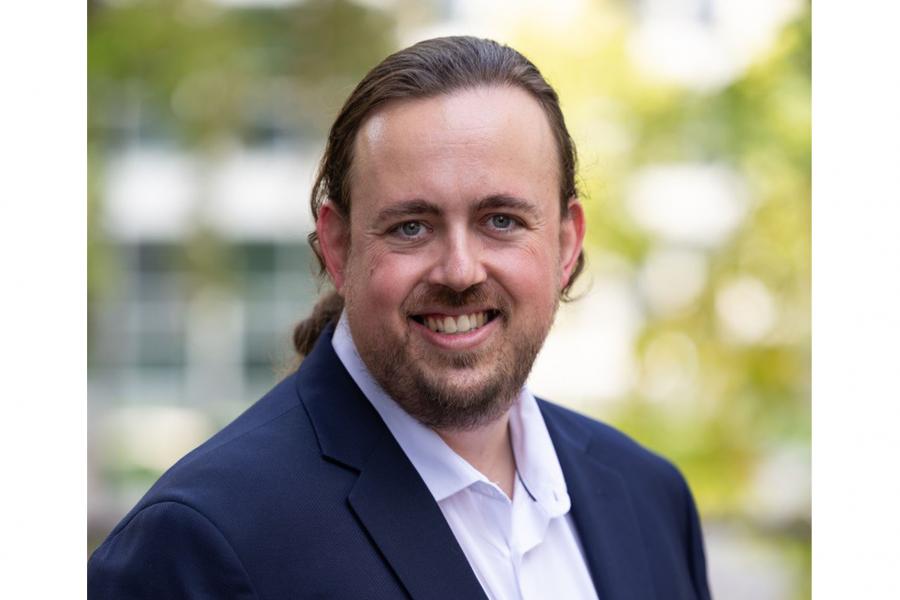
Dr. Josh Le Clair (he/him) is an Instructor in the Department of Psychology at the University of Manitoba who is currently completing supervised clinical practice towards licensure. He earned his PsyD in Clinical Psychology from the University of Prince Edward Island and holds a MSc in Applied Mathematics from the University of Western Ontario. During his doctoral studies Dr. Le Clair completed a clinical internship year in Winnipeg working in the areas of university student counselling and community mental health.
Clinically, Dr. Le Clair is a generalist practitioner primarily trained in psychological assessment and intervention with adults. He has received advanced training in Ericksonian psychotherapy and clinical hypnosis through the Milton H. Erickson Foundation. At present, Dr. Le Clair is completing a multi-year training program in relational Gestalt psychotherapy through the Pacific Gestalt Institute. He is interested in creative and experiential approaches to psychological transformation and his clinical work is theoretically influenced by radical constructivism, Batesonian epistemology, and second-order cybernetics.
Broadly, Dr. Le Clair's research interests centre on the epistemological and methodological foundations of clinical practice—examining how different theoretical frameworks shape how problems are understood, experienced, and approached in psychotherapy. He is drawn to questions about how clinical approaches construct personal experience, how different paradigms privilege or obscure certain therapeutic possibilities, and how practitioners can develop more reflexive, philosophically informed approaches to understanding psychological suffering and promoting transformational change. Previously, Dr. Le Clair's work has applied Lacanian psychoanalytic theory to critically examine contemporary therapeutic practices with sexual minority individuals from these perspectives.