

Sustainability Action Plan
UM’s sustainability action plan
The UM Sustainability Action Plan 2025–2030 charts an exciting next chapter in UM’s sustainability journey. Building on years of progress in environmental, social and economic sustainability, the plan strengthens our momentum and sets a bold course for climate action and long‑term institutional transformation.
Advancing key priorities
The Sustainability Action Plan advances key priorities in the university's strategic plan, MOMENTUM: Leading Change Together 2024-2029, and the Climate Action Plan, while aligning with UM's 30-year Master Capital Plan and enhanced enterprise risk management framework.
- MOMENTUM places sustainability at the heart of who we are and who we aspire to be, alongside our commitments to community and Reconciliation.
- The Climate Action Plan maps our path to reducing Scope 1 and 2 emissions by 50% by 2030 and reaching net‑zero by 2050.
- The 30‑year Master Capital Plan provides a bold roadmap for renewing and evolving our campuses and ensures every investment considers sustainability, lifecycle value and climate resilience.
- The enterprise risk management framework recognizes climate change, infrastructure needs and shifting expectations as key considerations in guiding decisions that protect and strengthen the institution for the future.
Explore how we're taking action
The Sustainability Action Plan is built around MOMENTUM's strategic theme of reimagining engagement.
It commits to achieve sustainability and accessibility targets through community decision-making processes and institutional initiatives.



Build sustainable and accessible campuses
Build sustainable and accessible campuses designed to facilitate community building and community life.
What we're doing:
- Developing sustainable building guidelines and standardizing building materials.
- Creating and applying building specifications for all capital projects.
- Developing training materials, manuals and process improvements to build capacity in project management and operations teams.
- Integrating Climate Action Plan targets for water, waste and energy into asset and capital planning.
- Improving inclusivity and accessibility of current sustainability events and resources.


Reduce waste and greenhouse gas emissions
Reduce waste and greenhouse gas emissions to reach sustainability goals informed by our Climate Action Plan.
What we're doing:
- Assessing further renewable energy options to meet emissions reduction goals.
- Developing an Energy Action Plan, including automating heating and lighting systems in the most energy-intensive space on campus.
- Developing a Zero Waste Plan and integrating sustainability requirements into procurement policies.
- Creating a Land Action Plan to maintain and increase carbon sequestration.
- Collaborating with community transportation partners to improve options and advance a Sustainable Transportation Plan to decrease emissions from commuting, business travel, research travel and fleet operations.
- Developing a Climate Resiliency and Adaption Plan.


Advance the UN’s Sustainable Development Goals
Increase opportunities for faculty, staff and students to engage in sustainability initiatives through learning experiences, research and community programming to collectively advance the UN’s Sustainable Development Goals.
What we're doing:
- Developing a long-term engagement plan with campus stakeholders and partners.
- Creating a baseline sustainability education program for staff and faculty.
- Tracking, reporting and visualizing sustainability and climate action data.
- Creating a Green Labs initiative.
- Creating a community of practice for faculty and staff members and hosting a major annual sustainability-focused event for students.


Investing in a sustainable future
UM will advance the Sustainability Action Plan by leveraging existing operating budgets, long‑term capital planning, external funding and strategic partnerships. Sustainability priorities will be embedded into core decision‑making—from capital projects and asset management to procurement and lifecycle costing.
Where possible, savings and efficiencies gained through initiatives like energy optimization, waste reduction and asset renewal will be reinvested to fuel further progress. UM will also continue to pursue external funding grants and partnerships that drive climate action, research and innovation.
This approach ensures that sustainability initiatives are financially responsible, aligned with long‑term institutional priorities and grounded in UM’s commitment to stewarding public resources wisely.
Guided by community consultation
The Sustainability Action Plan was developed through consultation, beginning with an environmental scan of other universities, a survey of the UM community and targeted focus groups.
Research
In 2025, development of the Sustainability Action Plan began with an environmental scan of strategies at other Canadian universities, including U15 institutions and select peers.
This analysis revealed key trends, priorities and themes shaping sustainability in higher education.
To ensure the plan reflected the needs of our community, a survey was conducted to identify priority areas across academics, campus operations, campus life and sustainability leadership. The survey results informed the design of focus group discussions and helped identify participants eager to provide deeper input.
Focus groups
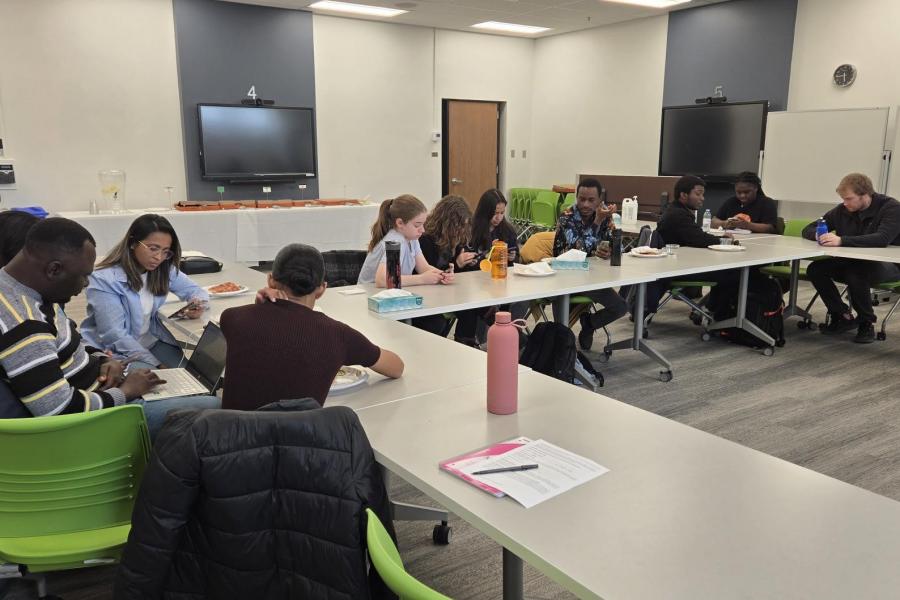
Focus groups brought together faculty, staff and students, with targeted engagement of leadership, the University of Manitoba Students’ Union (UMSU), the University of Manitoba Indigenous Students’ Association (UMISA) and the UM Sustainability Committee.
These conversations explored a wide range of sustainability topics and played a critical role in shaping the plan’s priority areas.
Draft action items were then aligned with the UM Strategic Plan implementation framework to ensure coherence across institutional goals before being finalized by the UM Sustainability Committee.
Next steps
Strong governance for lasting impact
Implementation of the Sustainability Action Plan is anchored in clear governance, shared accountability and integration with UM’s existing planning, capital and risk management frameworks. This ensures sustainability is embedded in decision‑making and translated into measurable action across campus.
Guiding oversight
The UM Sustainability Committee—established by the Vice‑President (Administration) and the Provost & Vice‑President (Academic)—provides strategic oversight. The committee tracks progress, aligns the plan with MOMENTUM, the Climate Action Plan, the 30‑year Master Capital Plan and enterprise risk management, and advises on emerging risks and opportunities.
Coordinated implementation
The Associate Vice-President (Administration) portfolio, including the Office of Sustainability, will coordinate implementation of the Sustainability Action Plan.
The Office of Sustainability leads day‑to‑day implementation, partnering with faculties and administrative units to advance priority initiatives. This includes supporting with tools and expertise, facilitating collaboration through working groups, managing data systems and driving engagement, education and communications to build a campus‑wide culture of sustainability.
Transparent reporting
Progress will be measured through defined metrics and timelines, with regular reporting to senior leadership and governance bodies. Campus and external stakeholders will be updated through established reporting frameworks such as STARS and other benchmarking tools, ensuring transparency and continuous improvement.
A living plan
The Sustainability Action Plan will evolve over time. Regular reviews will assess progress, respond to changing regulatory, environmental and institutional conditions and incorporate new best practices. A formal review every five years will update priorities, targets and actions to remain aligned with UM’s strategic direction.