
Rachel Kuehn Ramberran
Advisor: Ralph Stern
What Happened Here? : Re-imagining the Memorial for the Victims of Brandenburg an der Havel’s Holocaust Prototype and Re-designing Urban Fabric in Small-Town Prussia
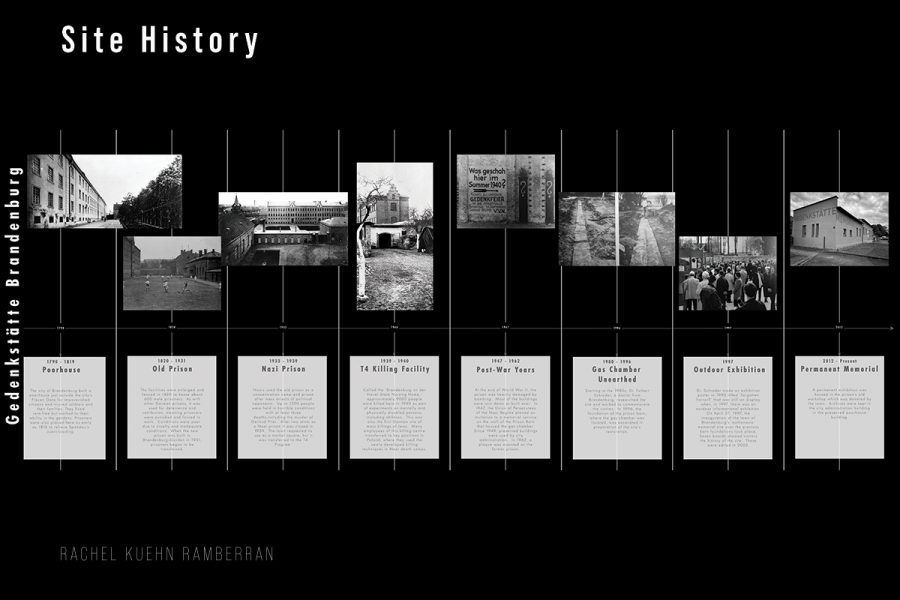
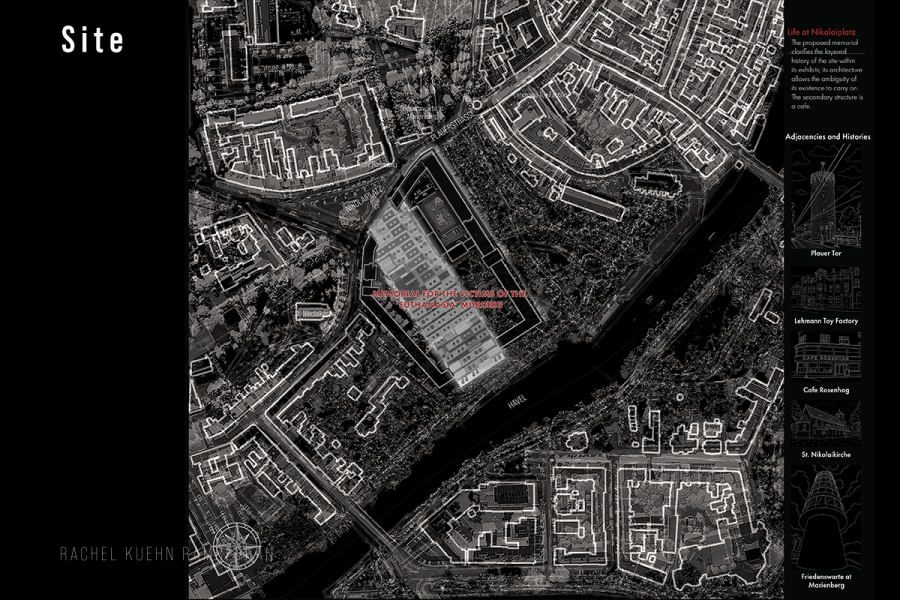
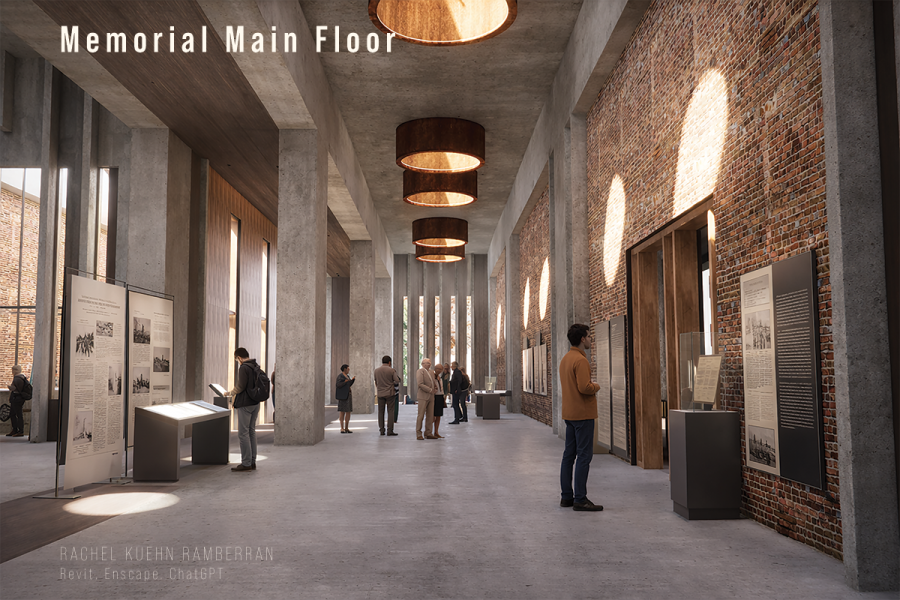
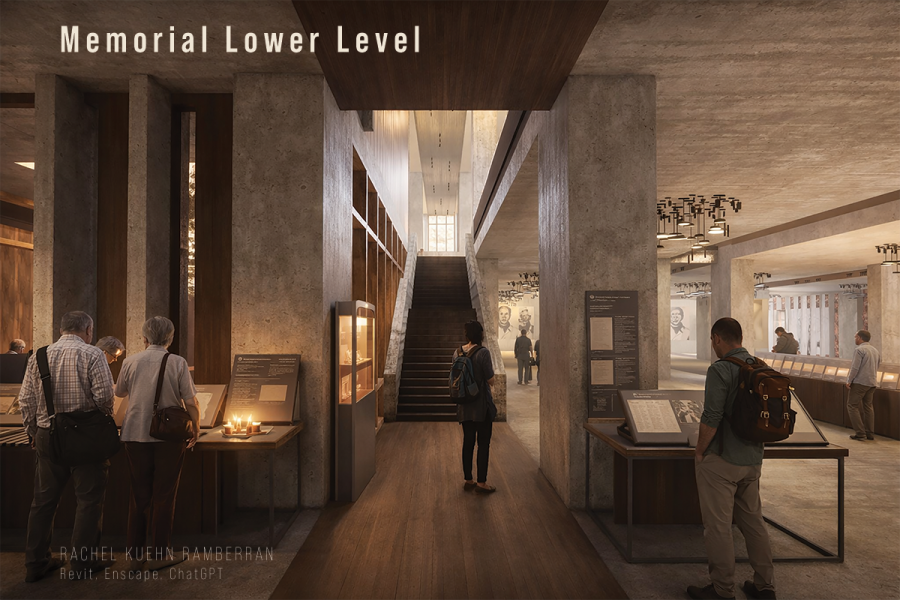
In Brandenburg an der Havel, Germany, a ‘disappeared’ site immediately outside the city’s medieval walls holds a layered, important story and an existentially ambiguous current state. As an inadequate criminal prison, then a Gestapo detainment centre for political dissidents, and finally, as a Nazi T4 ‘euthanasia’ killing centre of the physically and mentally disabled, the extensive complex of buildings and courtyards along the Havel began as social housing for injured 18th and 19th century soldiers. It faced and was adjacent to bustling businesses along Nikolaiplatz and Plauerstrasse, including stylish restaurants, a world-famous toy company, and an ancient Catholic church.
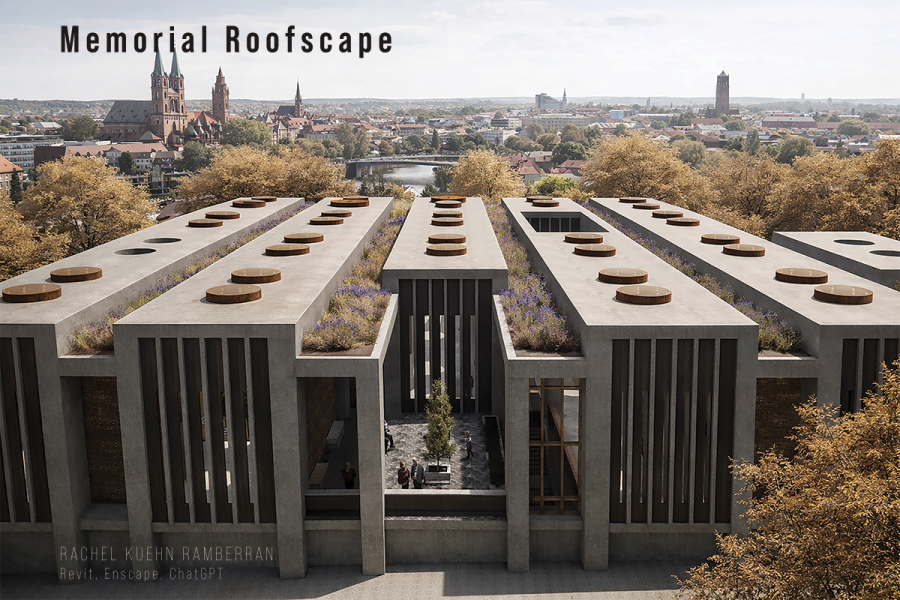
With only prison walls separating it from a significant east-west axis, ‘What happened here?’ is the initial, natural question for a site so closely integrated into the life of Nikolaiplatz. A war-victory lookout and restaurant on the nearby Marienberg view the site from the north. A medieval tower, Plauer Tortum, sits a hundred metres to the northeast. Church steeples in the town’s many Gothic structures punctuate the skyline from nearby Altstadt and across the Havel to the south in Neustadt and Cathedral Island. For a site no one wanted to see, its neighbouring architecture was closely watching. Heavily damaged at the end of WWII, some buildings survived the war, were occupied by the Russians, largely demolished by the East Germans, and then forgotten by almost everyone. Today there is a small memorial museum in the prison’s former workshop surrounded by incongruous functions in a tattered urban context.
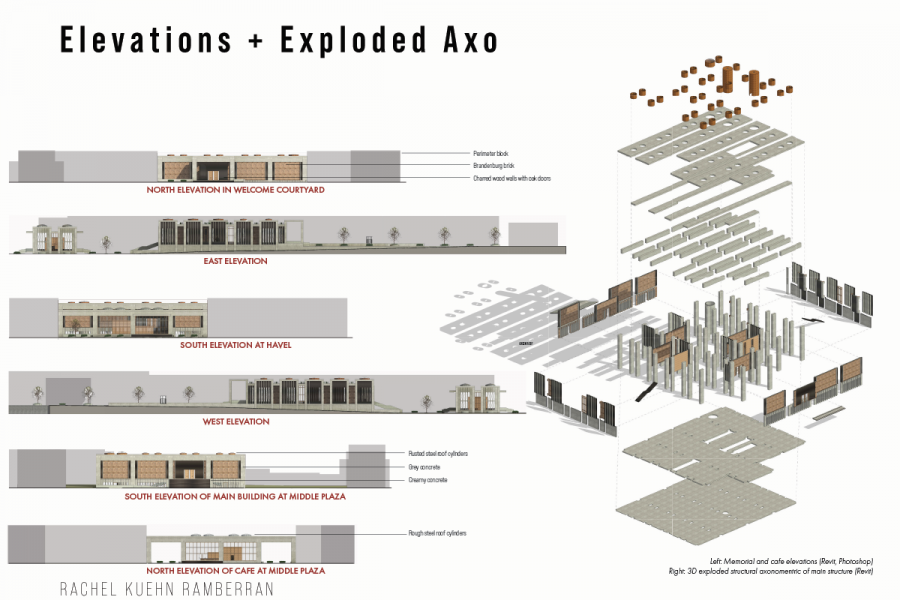
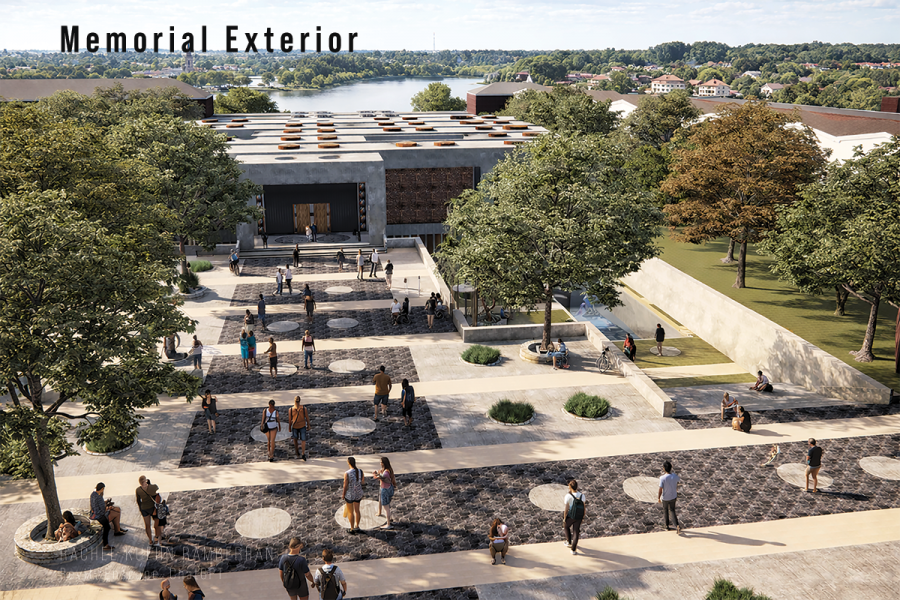
Uncovering the complex history of the site required significant research across a multitude of sources. Addressing the almost-1200-year-old town of Brandenburg an der Havel, as well as the complicated, disjointed political history of Brandenburg-Prussia-Germany, the project will provide appropriate urban design and architectural responses for a new memorial to the victims of the ‘euthanasia’ murders of Brandenburg an der Havel. This includes a proposed program for a more extensive monument and needed education centre. Design approaches to restitch the layers of the urban fabric adjacent to the site are also offered. The thesis’ intention is to repair the urban context, reclaim the site and its significance, and create a museum/memorial that will articulate its complex history and provide an important addition to Brandenburg an der Havel. In this way, the site becomes ‘seen,’ its identity known, and its adjacencies properly responsive.