
Energy and buildings
Learn more about actions we’re taking to find energy-efficient solutions for our campus and buildings.

Energy and Buildings
The energy required to keep our buildings running — from burning natural gas for heating; electricity consumed for cooling, plug load and lighting; and wastewater generated — accounts for most of UM’s greenhouse gas (GHG) emissions. Because of the minimal carbon impact of our electricity, the vast majority of these emissions are from natural gas for heating our buildings.
UM’s energy team has made great strides in minimizing the carbon footprint associated with buildings. Future work will continue a focus on improving energy conservation, finding alternatives to natural gas (decarbonization) and embracing innovative solutions as we manage and build our existing and future buildings.
Baseline
-
2019
In 2019, most of UM’s GHG emissions came from the energy required to keep our buildings running, from heating and cooling to plug use, and indoor and outdoor lighting. As the largest category, it’s one over which we have the most direct control.

Highlights
Energy use intensity at the Fort Garry Campus has decreased 32% since 1990 due to energy efficiency measures.
ACT
UM’s Climate Action Plan embraces the community’s willingness and desire to work together to see change. To achieve the action goals, everyone has a role to play. Here are some ways you can help us meet our climate action goals for energy.


Big moves Pathway actions for energy and buildings
We’re taking action in each of these categories: building towards net zero; increasing energy efficiency at Fort Garry and Bannatyne campuses; decarbonizing our heat energy; and exploring innovative solutions for energy.
Build towards net zero
As the campus population grows, space needs change and buildings age. Launching in 2023, the UM Sustainable Building Design Guidelines will provide guidance for social, financial and environmental sustainability in projects to build new buildings, renovate existing spaces and further develop our public spaces. The goal is to foster sustainable, beautiful and welcoming spaces at UM while working to reduce greenhouse gas emissions and help us reach our climate action goals.
What we’re doing:
- Developing the Sustainable Building Design Guidelines.
Increase energy efficiency
The university has a proven track record of implementing energy efficiency measures dating back to 1978. These efforts have resulted in significant reductions in the energy we use per square meter of building space. Our next steps are to update our UM Energy Strategy to help identify the most viable options for further energy efficiency improvements in concert with other campus plans and strategies.
What we’re doing:
- Update the UM Energy Strategy
- Identifying and implementing more utility and demand reduction strategies.
Decarbonize heat energy
Our next challenge is to eliminate carbon emissions related to buildings, mainly from the burning of fossil natural gas to heat buildings. Supported by funding through the Investing in Canada Infrastructure Programe, we’re installing two 3MW electric boilers in the Central Energy Plant to replace natural gas used at the Fort Garry Campus.
With the launch of the Climate Action Plan, we are committing to adding an additional 3MW electric boiler. The three electric boilers will reduce the need for burning natural gas at the Fort Garry Campus by 52% — eliminating 16,000 tonnes of GHGs.
What we’re doing:
- Three 3MW electric boilers will be installed at the Fort Garry Campus Central Energy Plant.
- Evaluating other opportunities to displace fossil natural gas fuel consumption on campus, including renewable natural gas options.
Find innovative energy solutions
In order to meet our goals, we’ll explore and test innovative technology and new solutions as they become available.
Electrification of energy sources for buildings and transportation will be a viable option for us to reach our goal of net zero by 2050. With limited electrical capacity on campus, we’ll look to supplement that capacity with renewable electricity options.
What we’re doing:
- Exploring innovative solutions to decarbonize heat energy.
- Determining the most efficient ways to pursue alternative renewable energy solutions, like solar.
Current and ongoing energy and building projects
Energy management initiative
The University monitors all energy and water consumption including its optimization initiatives. UM has focused on energy efficiency for decades with the first computer-based building control system being installed in 1979. Today, facilities are monitored and controlled by thousands of digital controllers that keep a close watch on consumption behind the scenes
Central Energy Plant re-servicing
A long-term plan is underway to provide the Fort Garry campus with a reliable and sustainable heating source for the next 50 years. Options being studied are heating the campus with renewable natural gas, locally sourced biomass and campus-wide energy conservation as alternatives to using natural gas.
Chilled water system optimization
The chillers located in the Central Energy Plant are the largest electrical loads on campus. Control optimization of the chillers and end-use in buildings throughout the campus will provide estimated annual energy savings of $110,000 per year.
Campus metering upgrades
Electrical meters are being upgraded in facilities across campus to improve accuracy and reliability. These meters are connected to a new IST virtual server that polls the meters for automated reading and long-term data logging.
Process optimization
UM seeks to improve system performance while minimizing energy use. As building technologies advance, we apply proven technologies to improve our facilities and provide safe user environments. Variable speed drives, digital control systems, flue gas heat recovery, district heat recovery, campus-wide heating and cooling systems, heat pumps, indoor air quality monitoring, dual-core heat recovery ventilators, and LED lighting are used across campus to maximize efficiency.
Continuous improvement
UM facilities staff are actively engaged in exploring sustainable solutions to design problems and continue to update technical specifications with sustainable materials and installation requirements. We continuously look for new ways to improve and optimize operations across all campuses.
Water management
Effective water resource management includes planning, developing, distributing and managing the optimum use of water resources for all UM campuses. The University of Manitoba is the largest consumer of water in the City of Winnipeg, which means we are continually looking for optimization and improvements to our management system.
- Replaced over 2,800 fixtures to low-flow or other water conserving devices
- Design standards require all new and retrofit plumbing projects include water conserving fixtures and systems such as low-flow faucets, shower heads and low-capacity toilets
- Water cooled condensers tied to chilled water line
- Water meters to be placed on all new buildings for improved water monitoring
- Retention ponds in Smartpark to hold rain runoff and prevent flooding
- Naturalizing many areas with drought-resistant and native prairie plants
- In an effort to reduce waste and promote universal access to potable water, outdated and seldom-used fountains were replaced with new bottle fillers with automatic sensors
- Improved water metering technologies provide Physical Plant with the capacity to monitor actual campus water usage, which results in an estimated savings of $500,000 per year
Working group
Working groups are being established for each of the four action pillars to develop and implement the plans to reach net zero by 2050.
All working groups include UM staff who work in related areas who will bring their expertise to the table and provide direction on how to implement solutions.
The Energy and Buildings Working Group will be established in fall 2023
Green Buildings
UM has adopted a LEED Silver rating as the target certification for all new buildings. For both new buildings and renovation projects, all Requests for Proposals (RFP) include a sustainability component, and consultants are required to follow LEED requirements as much as possible. Consultants with LEED accreditation score higher on the RFP.
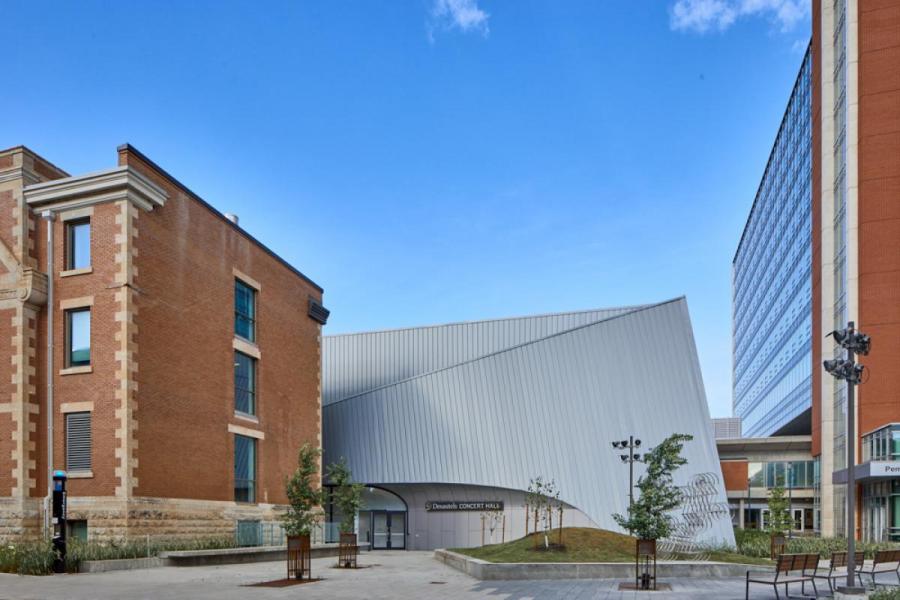
Desautels Concert Hall is a state-of-the art, intimate performance venue in the heart of the Fort Garry campus. With its stunning architecture, superior acoustics, optimal sightlines and a configurable stage for a variety of performances, it is the University of Manitoba's showpiece venue
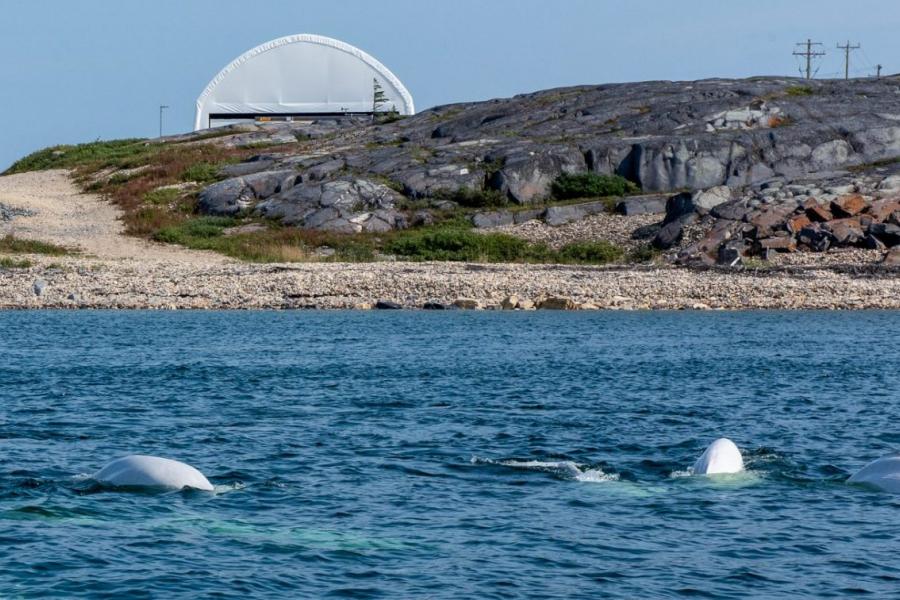
The Churchill Marine Observatory (CMO) is a globally unique multidisciplinary research facility located adjacent to North America’s only Arctic deep-water port with rail access to the south. Working together with the town of Churchill and communities in the region, CMO researchers study the challenges and opportunities associated with the rapidly changing Arctic Ocean such as increased marine shipping in Hudson Bay and throughout the Arctic.

This building is 46,100 square feet with an engineering innovation and prototyping centre, a co-op/industrial internship program office, Internally-Educated Engineers Qualification (IEEQ) Program Office, student study space, teaching and research laboratories, and biomedical engineering laboratories. This building uses dual-core heat recovery ventilators to recover energy and drastically reduce heating and cooling loads.
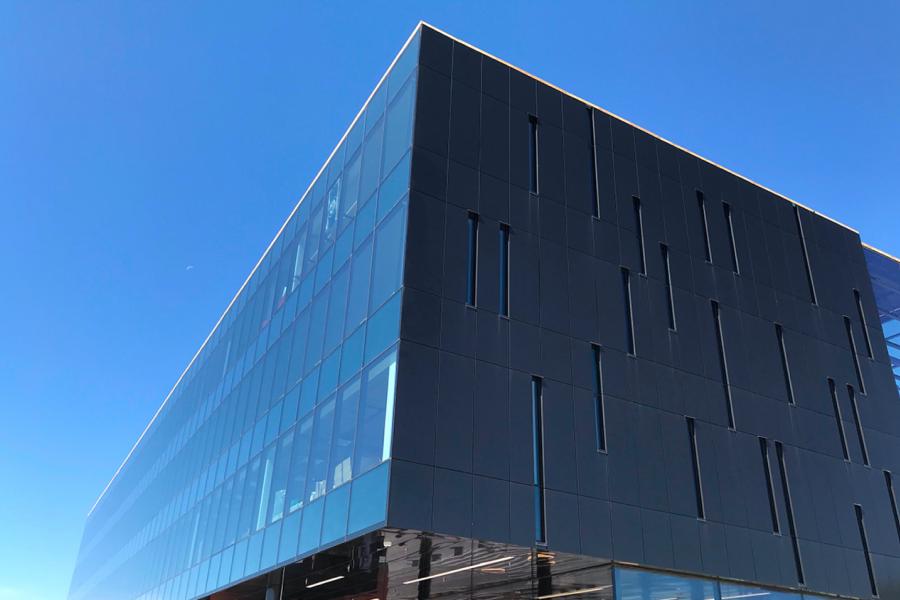
The building is a four-storey office building and business incubator. The main floor includes a restaurant, atrium and mechanical space. Building heating and cooling is condensing boilers and variable refrigerant flow system. The building has a raised floor to allow ventilation to be distributed from below. All lighting is LED and washroom fixtures are low-flow.
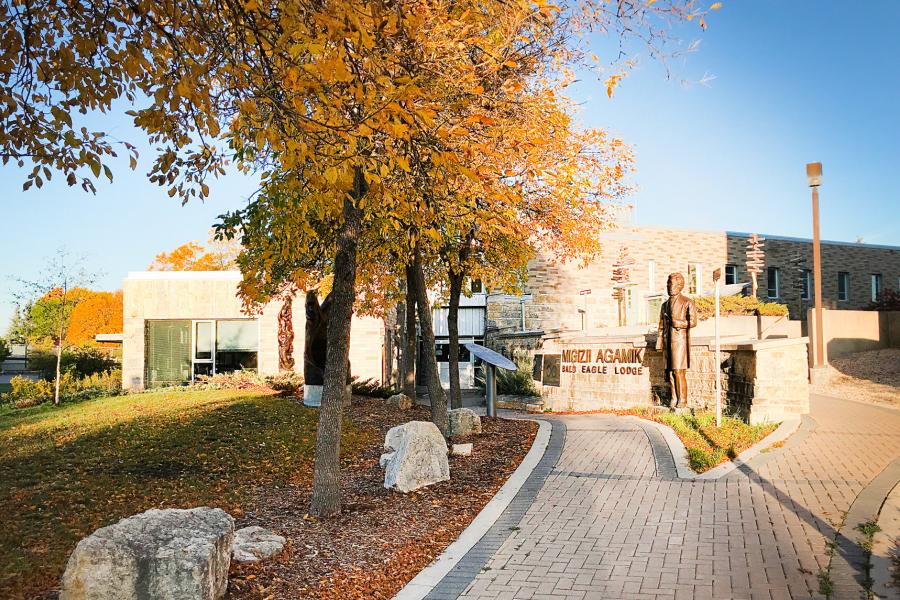
Migizii Agamik at the UM's Fort Garry campus is a multi-use building, primarily to enable Indigenous students to access counselling, social networks and other support offered through on-campus programs. Building elements include 29 offices, reception, boardroom, staff lounge, student lounge and study/computer rooms, food service area, the Circle Room and a large, multi-purpose, central meeting area for larger events. The heating and cooling of this building uses energy recovered from within the building and from around the campus.

The UM Active Living Centre is a beautiful facility that provides a full array of fitness and recreational activities and amenities to the community at large and focuses on specific educational values promoted by the UM Faculty of Kinesiology and Recreation Management. Heating and cooling energy for this building is recovered from exhaust air to significantly reduce the building heating and cooling loads.

This project includes a 500-seat auditorium, music rehearsal spaces for jazz/large ensemble/choral ensembles, percussion studios, an electro-acoustic studio, an opera movement studio, and multiple classrooms and offices. This building uses a variable refrigerant flow for heating and cooling in addition to a robust humidification system to maintain a stable environment for artists and their instruments.

The interior of the building is dominated by a central atrium that connects all four levels and animates the interior, encouraging the exchange of ideas between disciplines. The facility combines galleries, digital media labs, print media studios, sound stages, workshops, lecture theatres and classrooms into a unified whole, allowing UM to stake a claim as a significant contender in post-secondary art education.
The facade is composed of a glass curtain wall, large-scale aluminum grille screens supporting Virginia creeper vines, precast concrete panels and steel cladding. The large amount of north glazing not only provides excellent lighting for the studio spaces, but also increases the visibility of art production.
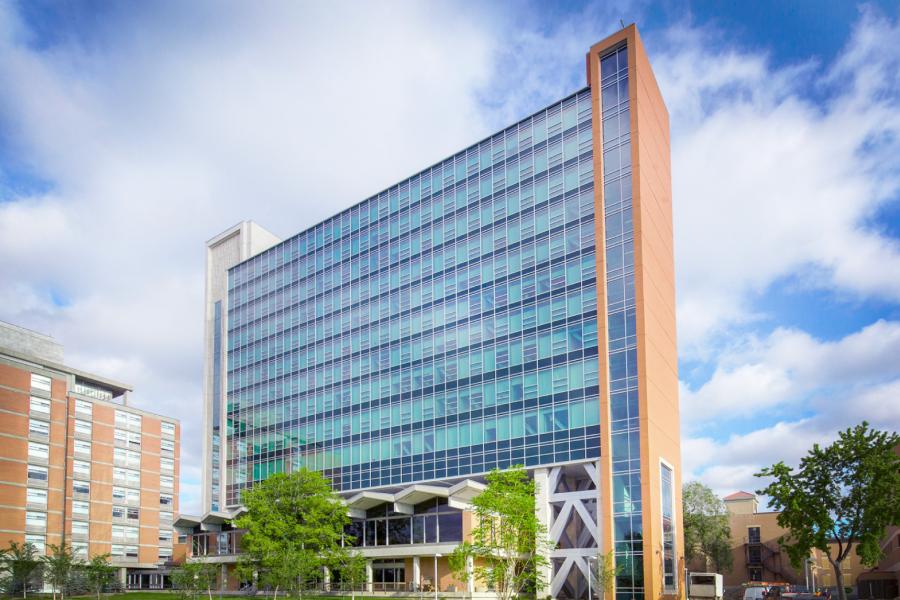
Pembina Hall was the winner of the Sustainability Award at the Canadian Institute of Steel Construction's 2013 Alberta Steel Design Awards of Excellence. All 360 units in the Pembina Hall Residence are single rooms with an exterior glass wall, providing plenty of natural light and spectacular views of the campus to the north and the Red River to the south. Each room includes a heat pump to keep residents comfortable using recovered energy from around campus.
You may also be interested in:
Contact us
Office of Sustainability
152 Physical Plant Building
89 Freedman Crescent
University of Manitoba (Fort Garry campus)
Winnipeg MB R3T 2N2