
Prairie Indigenous Knowledge Exchange Network
Prairie Indigenous Knowledge Exchange Network (PIKE-Net) is a mentorship program dedicated to connecting First Nations, Inuit and Métis communities and university researchers with Indigenous students to help build health research capacity and develop the next generation of Indigenous health researchers.
PIKE-Net is a partnership among four universities in Manitoba and is funded by the Canadian Institutes of Health Research (CIHR) through the Network Environments for Indigenous Health Research (NEIHR) program.
Program overview
Program goals
The Prairie Indigenous Knowledge Exchange Network (PIKE-Net) program will first expand the pool of Indigenous health researchers working in the academy and in communities, while also improving their competitiveness within academia and with funding agencies (for those who choose to pursue this path).
Second, the program will further develop a sustainable and collaborative research environment among Manitoba’s First Nations, Inuit and Métis communities and post-secondary institutions, building on work initiated under the ACADRE/NEAHR programs and strengthening national and international linkages.
Program objectives
- To increase mentorship opportunities for First Nations, Inuit and Métis trainees and new investigators through networking.
- To increase mentorship opportunities and collaborations with regions across Canada’s North.
- To address recruitment, retention, and representation of First Nations, Inuit and Métis and Inuit trainees and new investigators.
- To create mechanisms within mentorship networks that support trainees and new investigators throughout the different states of their training and career.
- To ensure the inclusion of cultural practices and attention to the psychosocial needs of trainees in Indigenous mentorship network programs.
- To identify systemic and individual barriers hindering First Nations, Inuit and Métis trainees and new investigators from becoming full-tenured faculty members or nominated principal investigators driving the Indigenous health research agenda, for example, and developing strategies for overcoming barriers.
Our history: Building student research networks
Since 2001, Ongomiizwin Research at the University of Manitoba (formerly the MFN–Centre for Aboriginal Health Research) has been home to Indigenous health research mentorship programs in Manitoba. These programs—known over the years as ACADRE, NEAHR, IMNP, and now PIKE-Net—have supported Indigenous undergraduate and graduate students across the province as they explore careers in health and research.
Over the years, students have received more than funding. The program has emphasized mentorship, hands-on research experience, peer support, and relationship-building with researchers and community organizations. Many former participants have gone on to become health professionals, researchers, educators, and leaders in government, community, and other fields.
Building on this strong foundation, PIKE-Net continues the legacy of supporting Indigenous students in culturally safe and supportive learning environments. The program centres Indigenous ways of knowing, being, and doing, and recognizes that students come with diverse experiences, identities, and connections to community. Our goal is to create space for Indigenous students and early-career researchers to grow, build confidence, and pursue research that matters to them and their communities.
With support from the 2024 CIHR Operating Grant: Network Environments for Indigenous Health Research (NEIHR) - Renewal, PIKE-Net is being relaunched to continue and strengthen Indigenous health research mentorship in the Manitoba region.
Funding and opportunities
Undergraduate Summer Research Internship
Overview
The PIKE-Net Undergraduate Summer Research Internship in Indigenous Health is a 13-week program (May to August) that provides Indigenous (First Nations, Inuit and Métis) undergraduate students with the opportunity to gain experience in Indigenous health research. This internship provides:
- An opportunity to learn in a supported environment where students build skills, confidence, and professional habits through mentorship and experience.
- A stipend award over the course of the internship (Total = $7,000 paid in bi-weekly installments).
- Research experience under the supervision of a research mentor to develop their skills working on research projects in Indigenous health.
- Projects may vary from year to year and have included such topics as heart health, maternal/child health, youth culture camps, and HIV/AIDS. Most projects are based in Winnipeg, but opportunities may be available for students interested in working with other communities.
- Opportunities to take part in PIKE-Net workshops, research symposiums and other research training and mentorship activities.
Eligibility
Students must (must meet all three):
- Be enrolled (in a part-time or full-time basis) in an undergraduate university degree program in any discipline for the 2025-2026 academic year;
- Answer questions about their Indigenous ancestry and submit a positionality statement regarding their identity as Indigenous peoples of Canada (First Nations, Inuit and Métis); and
- Be studying at a Manitoba post-secondary institution, or be a Manitoba student studying outside the province who can demonstrate a connection to Manitoba (e.g., Manitoba residency or membership in a Manitoba community).
How to apply
Complete the online application form and submit all required documents to: pikenet@umanitoba.ca.
Required documents
The following items are to be submitted by email, in addition to completing the online application form:
- Student trajectory and strengths (80%)
Summary of personal, academic and career goals, how these relate to Indigenous health research and how the internship will support these goals. Include what you can contribute to the program (e.g., relevant experience, strengths or characteristics).
Submit in one of the following formats:- Written: Maximum 2 pages (PDF, Times New Roman, 12-point, single-spaced)
- Oral: Maximum 10 minutes (MP3, AAC, M4A or external link)
- Video: Maximum 10 minutes (MP4, MOV or external link)
- Referee assessment (20%)
Two referee assessment forms completed by individuals familiar with your abilities and characteristics (e.g., Elder/Knowledge Keeper, community member, academic or professional reference).- View the Referee Assessment Form (for reference only) to see what referees are asked to complete.
- Tip: Choose at least one referee who has seen you in a work or learning environment.
- Supporting documentation (not used in evaluation; informs level of support needed)
- Academic transcripts for all post-secondary institutions attended (unofficial accepted)
- CV or résumé
Application deadline
All application materials must be received by 11:59 PM on March 8, 2026. All applicants will be notified of their application status in April.
Access the online application form
What to expect
Successful applicants will begin the internship in May 2026. The first week includes orientation and two days of workshops covering research skills and topics specific to Indigenous health, including traditional healing and approaches to health.
During the 13-week internship, students will complete a research project under the guidance of a research mentor. Activities vary by project and may include literature reviews, research team meetings, interviews or focus groups, data analysis and other research-related tasks.
At the end of the program, interns will participate in a research colloquium to share their experiences with fellow interns and mentors.
Contact
For more information about the program or application process, please contact the MB NEIHR program coordinator.
Graduate Fellowship in Indigenous Health
Overview
PIKE-Net Graduate Fellowship in Indigenous Health is a one-year stipend designed to support Indigenous Master’s and PhD students whose research or project is in Indigenous health (viewed through a holistic lens encompassing physical, mental, emotional, and spiritual wellness).
This fellowship is granted through an annual competition, open to students in all faculties and programs in Manitoba. We welcome applications from both thesis-based and capstone-based (major project) graduate streams.
Value
| Full-Time | Part-Time | |
|---|---|---|
| Master's students | up to $17,000 | up to $8,500 |
| PhD students | up to $20,000 | up to $10,000 |
| Stipend enhancement* | $3,000 | |
*Students holding other major fellowships (e.g., CIHR, SSHRC) are eligible for an stipend enhancement of up to $3,000.
Eligibility
Students must the all of the following:
- Enrolled (in a part-time or full-time basis) in a graduate program (Master’s or PhD) for the 2026-2027 academic year with a primary research or project focus in Indigenous health.
- Students must answer questions about their Indigenous ancestry and submit a positionality statement regarding their identity as Indigenous peoples of Canada (First Nations, Inuit and/or Métis).
- Applications will be considered from Indigenous students (First Nations, Inuit and/or Métis) studying at Manitoba institutions, but consideration will also be given to those studying at institutions outside of the province provided that the student can demonstrate a connection to Manitoba (e.g. Manitoba residency, member of a Manitoba community).
How to apply
Please complete the application form and send all other requirements in one email to pikenet@umanitoba.ca with the subject headline: Graduate Fellowship Application: [Last Name, First Name].
Application deadline
All application materials must be received by11:59 PM CST on May 31, 2026 (Sunday).
- Application form
- Background
- Eligibility questions
- Photo: Share a photograph of yourself that you feel best reflects your identity as described in your positionality statement.
- Positionality statement: Describe yourself and your Indigenous (First Nations, Inuit and/or Métis) background (i.e., what are your names, family history, and which Indigenous community do you belong to and where). How do you feel connected or are working towards connecting with your Indigenous community? How has your identity and relationship with your Indigenous community shaped your goals and values, and how has this impacted the work that you do? Maximum 2,000 characters (approximately 450 words).
Access the online application form
- Applicant background and experience (45%)
- Applicant goals and trajectory (20%): Provide a summary of your personal, academic and career goals. Describe how your graduate program and research/project support the direction you are pursuing. This statement should clearly connect your future aspirations with the skills, knowledge and impact you aim to develop through your graduate work. This can be submitted in written, oral or video format.
- Personal statement of experience (15%): Describe your academic journey by sharing why you are drawn to this work, the experiences that have prepared you, the supports you have or anticipate needing, and any setbacks you’ve faced and what they taught you. This statement should focus on your personal connection to the work, including your relationship with your Indigenous community and the lived experiences that shaped your path. This can be submitted in written, oral or video format.
- Academic achievement (10%)
- Academic transcript for all post-secondary institutions attended (unofficial/web transcripts are accepted).
- Curriculum vitae (CV)/résumé
Research/project proposal (25%)
If you are early in your program of studies, include:
- Brief description of your area of research/project interest
- How your research/project may contribute to the health of Manitoba First Nations, Inuit and/or Métis communities
- Proposed workplan to develop your research/project idea, including a timeline and how your courses and other activities will contribute to the development of your ideas
If you have identified a thesis project, include:
- Purpose and objectives of the research/project
- How your research/project may contribute to the health of Manitoba First Nations, Inuit and/or Métis communities
- Description of proposed participants, methodology and dissemination plan
- Workplan, including a timeline for completing the research/project
This can be submitted in written, oral or video format.
- Support environment (30%)
- Resources and commitment statement (10%): Your academic supervisor (or committee member) must provide a summary of the resources available to support your academic and research/project work — such as facilities, equipment, funding opportunities and relevant faculty expertise within the department or research/project group. They must also indicate their intent to supervise the thesis project and provide oversight and mentorship regarding the management of the research/project budget. Maximum 2,000 characters (approximately 450 words).
The supervisor (or committee member) must send this directly to pikenet@umanitoba.ca. It is your responsibility to ensure the required statement is received by the application deadline.
- Two (2) support letters (20%): Two referees must describe your strengths, character and fit for the proposed research/project, and their capacity to engage in it successfully. One must be provided by an academic reference and another by an individual familiar with your characteristics and abilities (e.g., Elder, Knowledge Keeper, community member or professional reference).
These must be sent directly to pikenet@umanitoba.ca. It is your responsibility to ensure the required letters are received by the application de
- Supporting documentation
- Copy of graduate program acceptance
- Copy of stipend letter for major stipend (for stipend enhancement only)
For the required documents submitted in written, oral, or video format, please use the following guidelines:
- Written: maximum 2 pages (PDF format), Times New Roman, 12-point, single-spaced
- Oral: maximum 10 minutes (MP3, AAC, M4A format or link to external viewer)
- Video: maximum 10 minutes (MP4 or MOV format or link to external viewer)
What to expect
All applicants will be contacted end of July about the status of their application.
Successful applicants will receive their stipend in September.
Recipients will have opportunities to take part in PIKE-Net workshops and other research/project training, mentorship, and wellness activities.
Contact
For more information about the program or application process, please contact the MB NEIHR program coordinator.
Our partners
We are a group of community- and university-based Indigenous and ally scholars and leaders from a consortium of Indigenous organizations and four universities in Manitoba, all committed to improving access to meaningful university-based opportunities to First Nations, Inuit and Métis trainees.
Our logo
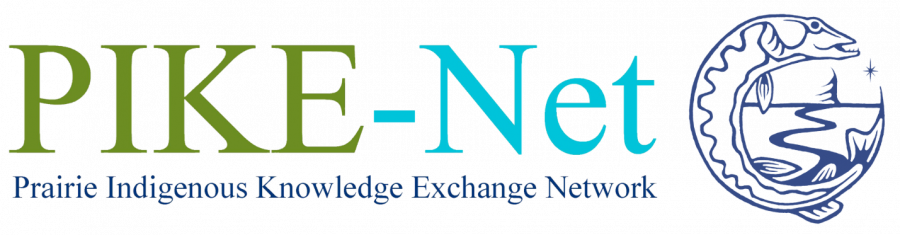
About the logo
Symbol: The cyclic form of the symbol plays on the cycle of life and is representative of Indigenous views.
Pike: Pike fish are known for their aggressive behaviour however, for this symbol, it was important to capture specific features of the fish without focusing on its aggressive characteristics such as its teeth. In this way, the pike fish is represented for its beauty. Moreover, the pike fish was specifically selected to represent this project for two reasons: firstly, because the letters that make up the word pike presents a fitting acronym for the project. Secondly, pike fish are Indigenous to Manitoba.
Jack pine tree and northern star: The jack-pine tree and star are representative of Northern communities, who in collaboration with CAHR, have partnered together on the PIKE-Net project. I have drawn branches on only one side of the tree because in winter, the tree naturally bends from the northern winds.
River: The river represents the importance of water systems, which is a perfect example of how people travelled and connected throughout the prairies.
Horizon: The straight line of the horizon represents the prairies - flat.
Colours: The three colours utilized represent the three biospheres of the planet. Light green represents earth, light blue represents the sky, and dark blue represents water. These three biospheres are in constant connection and exchange in order to sustain life on earth.
Repetition of three: The representational lines of three found in the fins, gills, teeth, river and tree are symbolic of the three Indigenous nations in Canada: First Nations, Inuit and Métis.
Organic style: It is important that the lines within the symbol remain organic, which is to say, uneven. The unevenness of the lines is purposefully drawn in order to avoid a mechanical or inorganic structure. But perhaps more importantly, realistically the work of Creator as seen in the make-up of the earth are not composed of straight lines rather a compilation of fluid lines which is why the belly and spine are unsymmetrical.
Monochrome colour: The monochrome colour allows for the symbol to transition between black and white or any other preferred colour.
About the artist
My name is Clark Morrissett, and I am a proud Cree-Métis man. I was born and raised in Winnipeg, Manitoba by my beloved parents Lorraine and Clark. I have a bachelor's degree in fine arts from the University of Manitoba, which is where I discovered and took great interest in becoming a lifelong student of various mediums including oil paints, conte and charcoal.
I draw inspiration from both classical and contemporary artists throughout the world. In particular, trailblazing Indigenous artists such as Norval Morrisseau and Alex Janvier, both of them with their individual styles and techniques to express the spiritual life-force of their cultures, and Jackson Pollock who radically introduced abstract expressionism.
For me, the conversation which exists from brush to canvass begins with the strokes of fast and loose markings - as do conversations flow - so too does the paint. Although at times I nurture traditional techniques, I constantly question and experiment with new ways to express myself, to create my own mark through various forms and styles within contemporary Indigenous art.
I do not believe that an end-goal exists for my art; rather, it continuously evolves as does my understanding of who I am is un-layered. I continue to produce artistic work for organizations who value contemporary Indigenous art.
In memoriam
It is with heavy hearts that we announce the passing of Clark Morrissett, a beloved member of the PIKE-Net community and a dear friend. We ask that you join us in remembering the immeasurable love, support, and gifts that Clark provided us throughout his time on Mother Earth.
One of the many gifts that Clark has provided us includes the PIKE-Net logo, as shown above. A brief glance at the PIKE-Net’s logo webpage clearly shows the level of thought and detail that went into the creation of this logo. For example, a pike fish was chosen as it is Indigenous to Manitoba and also represents the act of throwing out a net to gather (and mentor) students. Clark also explained that pike fish are known for their aggressive behaviour; however, for this symbol, it was important to capture specific features of the fish without focusing on its aggressive characteristics such as its teeth. In this way, the pike fish is represented for its beauty. Clark’s inclination to find beauty in everything will be remembered with fondness and cherished forever.
Above all, we wish to honour the contributions that Clark has made and the presence that he has left on our hearts. Not only did he symbolize the PIKE-Net program in a meaningful way, but also helped enlist a sense of pride in the work that we do. We send our love and prayers to the family and friends of Clark.
Mîkwêc / Naqumik / Anushik / Marsi / Niá:Wen / Miigwech / Thank You
Contact us
PIKE-Net
Ongomiizwin – Research
Indigenous Institute of Health and Healing
715 John Buhler Research Centre
727 McDermot Ave
University of Manitoba
Winnipeg, MB R3E 3P5
431-374-9596
204-975-7783