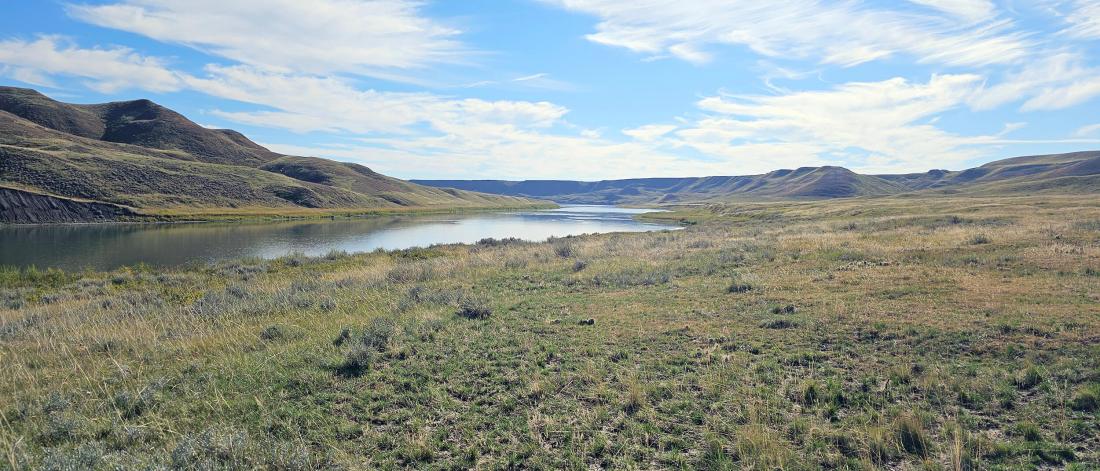
A river runs through the foothills

About

This 3-day virtual conference brings together researchers, students, producers, government, commodity organizations and industry representatives with a range of perspectives to collectively share ideas and experiences about how to improve agricultural sustainability in Canada. Sessions will feature brief presentations followed by facilitated panel discussions. The conference will include a hands-on interactive workshop on the Holos model designed to estimate on farm greenhouse gas emissions, as well as a research update featuring graduate students who will share their findings through short videos.

The conference will offer Certified Crop Advisor Continuing Education Units (CCA CEUs).

Conference Planning Committee

University of Manitoba:Kim Ominski, Doug Cattani, Marcos Cordeiro, David Lobb, Joanne Thiessen Martens, Anna Rogiewicz, Kyle Bobiwash, Crystal Jorgenson and Peter Frohlich
Agriculture and Agri-Food Canada:Roland Kroebel, Sarah Pogue, Aaron McPherson and Emma Stephens
Industry/Farm Production:Melissa Atchison, Kristine Tapley

Conference Hosts

Holos logoAgriculture and Agri-Food Canada


Schedule at a Glance

DayTheme
March 3Theme 1: Perspectives, sustainability and secure food systems
March 4Theme 2: Redefining sustainability beyond greenhouse gas emissions
March 5Theme 3: New models for research and industry engagement

Day 1 - March 3, 2026 (pm)

1:00-1:10 pm (CST)Welcoming Remarks
Kim Ominski (University of Manitoba) and Roland Kroebel (Agriculture and Agri-Food Canada), Co-chairs
Greeting from Nazim Cicek, Dean (Faculty of Agricultural & Food Sciences, University of Manitoba)
1:10-2:15 pm (CST)

Keynotes:

Moderator: Ellen Goddard - University of Alberta

  • Koen Deconinck (Organisation for Economic Co-operation and Development)

    Eight Building Blocks for Measuring Carbon Footprints (…and beyond?)
    The last few years have seen the "fast and furious" growth in initiatives to measure carbon footprints and other environmental impacts of agri-food products. The risk is that a fragmented landscape of competing methods, tools and frameworks will lead to confusion and frustration. Work at the OECD aims to reduce this fragmentation by identifying the eight building blocks which are necessary for reliable and widespread measurement. This presentation will introduce the eight building blocks and ongoing efforts at the OECD to reduce fragmentation. While this framework was developed for carbon footprints, it is clear that there is growing demand for information about other environmental impacts of agri-food production as well; the presentation will also reflect on how the eight building blocks could be applied to these other impacts.
     

  • Tyler McCann (Canadian Agri-Food Policy Institute)

    Agri-Food Sustainability in a Risky World

2:15-2:30 pm (CST)Break
2:30-3:30 pm (CST)

Theme 1: Perspectives, sustainability and secure food systems

Moderator: Kyle Bobiwash - University of Manitoba

  • Cheryl Melnyk (Gambler First Nation Health Centre)

    Good Life with Food Futures
    This food security project centers on the innovative geodome; designed to grow a diverse range of fruits, herbs and vegetables year-round. The geodome’s efficient spherical structure maximizes natural light, and within floor radiant heat creates an ideal environment for continuous food production. Inside, raised beds, aquaponic and vertical growing systems support crops such as leafy greens, tomatoes, peppers, berries, as well as fish and wild rice, ensuring a balanced and nutrient rich harvest. By incorporating sustainable practices—like rainwater collection, vermiculture composting, and drip irrigation, the project minimizes waste and conserves resources. This approach strengthens local food resilience and provides fresh produce to the community regardless of seasonal limitations. Beyond food production, the geodome serves as an educational space where residents can learn about sustainable agriculture, environmental stewardship, and the importance of self-sufficient food systems. The geodome is the keystone piece of Gambler First Nation’s Food Sovereignty plan.
     

  • Vanessa Hines (Fox Lake Cree Nation)
     
  • Monica James (Farm Credit Canada)

    The Role of Indigenous-led Capital in Reshaping Canada’s Agricultural Future
    Canada's agricultural sector is often celebrated for its innovation and productivity, yet its history also includes a quieter truth: Indigenous peoples were systematically excluded from participating fully in agriculture on their own lands. This talk explores how that legacy continues to shape today’s food and financial systems and why addressing it is essential for a sustainable and equitable future. From an Indigenous worldview, the session explores the structural barriers that persist, including access to capital, capacity-building gaps, and the need for stronger relationships across the agricultural ecosystem. It also highlights how Indigenous-led capital is beginning to reshape Canada’s agricultural landscape. Participants will gain a deeper understanding of how reconciliation and economic inclusion can unlock a more resilient agricultural future for Canada.

3:30-4:15 pm (CST)Panel Discussion
4:15-4:45 pm (CST)Student Video Session 1
4:45 pm (CST)Adjourn

Day 2 - March 4, 2026 (am/pm)

9:00-12:00 am (CST)

Holos - Holos model workshop and a preview to the next version of Holos

Session prep: Holos 2026 install instructions

12:00-1:00 pm (CST)

Ted Poyser Lecture in Soil Health - Soil Health for Monitoring Agronomic Gain: Perspectives from West Africa and the Sahel

  • Joann Whalen, James McGill Professor research chair at McGill University and Affiliate Professor at the Center for Sustainable Soil Sciences of the Mohammed VI Polytechnic University in Morocco
1:00-1:30 pm (CST)Student Video Session 2
1:30-2:00 pm (CST)Student Video Session 3
2:00-3:00 pm (CST)

Theme 2: Redefining sustainability beyond greenhouse gas emissions

Moderator: Tim McAllister - Agriculture and Agri-Food Canada

  • Sarah Pogue (Agriculture and Agri-Food Canada)

    Looking Beyond Climate Regulation: Managing Agricultural Systems for Multiple Ecosystem Services and Biodiversity
    Much recent public discourse surrounding the environmental impacts of agriculture has focussed on sector contributions to climate change and how management practices can potentially mitigate some of the industry’s greenhouse gas emissions. Although addressing the climate change impacts of the Canadian economy as a whole is vital, we must also give adequate attention to other environmental consequences of agricultural production and broader concepts of sustainability. This talk focusses on the management of agricultural systems to enhance the supply of multiple ecosystem services - “the direct and indirect benefits people obtain from ecosystems” - such as food, climate regulation, recreational activities, etc. Although the ecosystem services concept can appear quite human-centred, it also considers the well-being of nature and biodiversity in its own right. We will discuss an ES framework for the holistic assessment of human-environment relationships in agricultural systems, the challenges associated with measuring multiple indicators of environmental, social and economic sustainability in these systems, and priorities for future research.
     

  • Meagan King (University of Manitoba)

    Farmer Well-Being as a Key Component of Farm Sustainability
    Nothing functions in isolation on a farm; the health and well-being of people, animals, and the environment are all interconnected. Farmer well-being is increasingly recognized as a key component of agricultural sustainability and an emerging area of concern. During this talk, I will introduce different components of well-being, the stressors farmers face, the notion of being a ‘good farmer’, the constant lack of control, and the role of having strong community connections. Farmer well-being can be associated with feeling valued by consumers and adoption of environmental practices. There are relationships between farmers’ resilience, risk aversion, having a potential successor, and making operational changes to improve sustainability. I will summarize the results of the University of Guelph’s 2021 national survey and then share some early results of the University of Manitoba LEAP (Leveraging Ecosystems to transform Agriculture on the Prairies) Project, where we engaged with farmers through informal coffee sessions as well as formal qualitative interviews. Finally, I will share some well-being resources for farmers and those working in agriculture.
     

  • Lisa Ashton (RBC Royal Bank)

    From Research to Industry Insights: RBC Climate Action Institute's Agriculture Index
    Presentation Description: Lisa will share why RBC is engaging in climate research and industry action, the method behind the agriculture index, and insights from the RBC Climate Action institute’s latest research and engagements on agriculture and food.

3:00-3:15 pm (CST)Break
3:15-4:00 pm (CST)Panel Discussion
4:00-4:30 pm (CST)Student Video Session 4
4:30-5:00 pm (CST)Student Video Session 5
5:00 pm (CST)Adjourn

Day 3 - March 5, 2026 (pm)

11:30-12:00 pm (CST)Student Video Session 6
12:00-12:30 pm (CST)Student Video Session 7
12:30-1:30 pm (CST)Break
1:30-2:00 pm (CST)Student Video Session 8
2:00-3:00 pm (CST)

Theme 3: New models for research and industry engagement

Moderator: Joanne Thiessen Martens - University of Manitoba

  • Michelle Carkner (University of Manitoba)

    Moving Faster Together: Weaving Farmer and Industry Knowledge into Research
    When farmer, community, and industry knowledge is woven into research from the start, innovation moves faster and results are more likely to be practical and adopted. Drawing on my experience coordinating Canada’s first nationwide Participatory Plant Breeding program, I will share how farmer and research expertise accelerated learning, strengthened trust, and delivered locally relevant outcomes. I will also highlight lessons from the LEAP and Nature+ on using co-design approaches to align research with whole-farm priorities, timelines, and risk realities within a local and international context. The talk will feature examples of collaboration models where farmers, researchers, and industry partners co-develop questions, test solutions, and adapt methods. Key ingredients for success include reciprocal relationships, clear roles and expectations, transparent data sharing, and feedback loops that respect farmer capacity. Participants will leave with actionable principles for building partnerships that generate innovative, farm-ready results.
     

  • Melissa Arcand (University of Saskatchewan)

    Repositioning the value of co-benefits: aligning climate-smart agriculture with Indigenous community priorities
    Many sustainable agriculture initiatives in Canada have been framed primarily around achieving national net-zero targets for greenhouse gas emissions. Indigenous communities, however, often prioritize different, community-defined goals that reflect their relationships with land, water, and local food systems. These priorities include food sovereignty, protection of water quality, access to traditional plant foods and medicines, employment, and economic development opportunities, among others. In this context, net-zero outcomes still hold value, but they are secondary to goals that strengthen community well-being and self-determination. Recognizing this mismatch creates an opportunity to reposition how co-benefits are identified and valued within climate-smart agriculture, and to design sustainable agricultural initiatives that align with what matters most to Indigenous communities.
     

  • Alain and Nicolas Philippot (Producers)

    LEAP One Generation to the Next
    Sustainability can take on many definitions on a farm from one generation to the next. Experience, science and research come together on our farm to create a new vision as the farm transitions to Nicolas. We will explain how the research LEAP activities align with our goals for sustainability in our industry.
     

  • Clayton and Quinn Robins (Producers)

    Seeing the Value in Research Collaboration
    Clayton and Quinn will discuss the importance of being able to collaborate and cooperate with various research and environmental organizations. As co-author of a dozen multi-disciplinary scientific papers, Clayton understands the value in the collection and analyses of data derived from robust experimentation and accurate data collection. He and Quinn welcome the opportunity to work with scientific institutions to further their dataset and assist them however is necessary. In addition to the advancement of knowledge to support the bigger picture, their farm gets access to data that would otherwise not be collected. This data can then be used for decision-making as they continue the evolution of their grazing model.

3:00-3:12 pm (CST)Break
3:12-3:15 pm (CST)Student Video Session Awards Will Be Announced
3:15-4:00 pm (CST)Panel Discussion
4:00-4:15 pm (CST)Wrap up and concluding remarks
Kim Ominski (University of Manitoba) and Roland Kroebel (Agriculture and Agri-Food Canada), Co-chairs
4:15 pm (CST)Adjourn