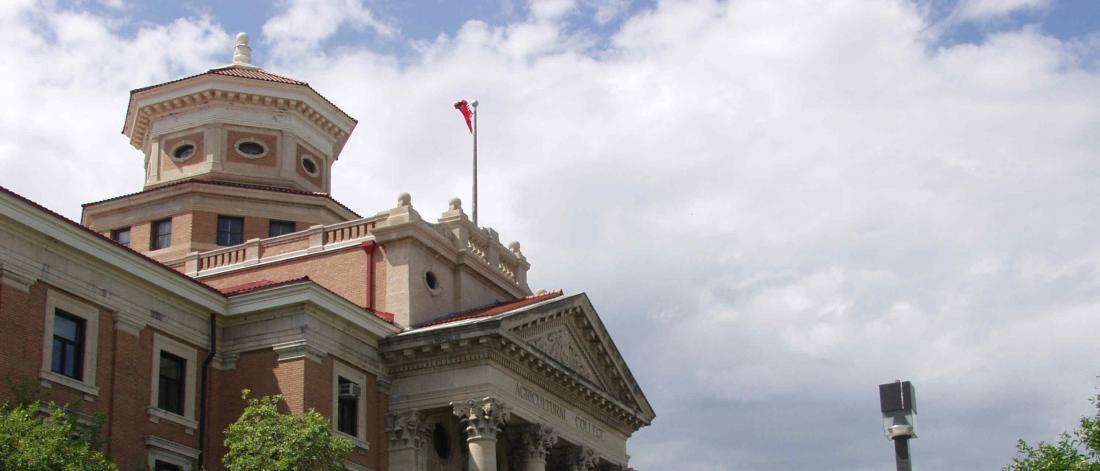
Administrative building and bright sky.

Workplace safety and health

Employee rights

The Manitoba Workplace Safety and Health Act and Regulation outlines four fundamental worker rights:

  • The Right to Know
  • The Right to Participate
  • The Right to Refuse Dangerous Work
  • The Right to Protection Against Reprisal

At the University of Manitoba, the Right to Know is supported through documented Environmental Health and Safety (EHS) programs and procedures, required safety training, and communication resources such as Safety Data Sheets (SDSs).

The Right to Participate allows all UM employees to take an active role in identifying hazards and raising safety concerns. Employees may also volunteer to serve on Workplace Safety and Health Committees. Hazards and safety concerns should first be reported to your supervisor for resolution. 

The Right to Refuse Dangerous Work applies when a worker believes a task may pose a danger to themselves or others. The first step in the process is to report the concern to your supervisor, providing them with the opportunity to address and correct the situation. EHSO is available to assist at any stage of the refusal process.

The Right to Protection Against Reprisal ensures that employees can exercise their workplace safety and health rights without fear of discipline, discrimination, or other negative consequences. This right is essential to fostering and maintaining a strong safety culture at the University of Manitoba.

If additional assistance is needed, please contact EHSO by phone or email.

Right to Refuse Infographic (PDF)

To locate the Right to refuse procedure document and form, see the Workplace Safety and Health- Employee rights page on the UM Intranet.

Workplace safety and health committees

The MB Workplace Safety and Health Act and Regulation outlines specific requirements for safety and health committees in workplaces. This legislation applies to all workplaces in Manitoba. The spirit of this legislation is intended to allow workers to have a voice, representation and to participate in health and safety matters within the workplace.

The administration of the safety and health committees is supported by EHSO, but its success is reliant on the participation of volunteers elected and chosen from across the various faculties and departments of the University of Manitoba. 

The University is a complex workplace spanning multiple geographical locations and facilities as well as varied types of work and hazards. Due to this complexity, there are 20 safety and health committees at the University known as the Local Area Safety and Health (LASH) Committees. The jurisdiction of each committee is based on associated faculty or department, geographic area and similar hazards. The committees conduct safety and health activities as described in the Manitoba Workplace Safety and Health Act and Regulation. 

The University also supports and Organizational Safety and Health Advisory (OSHA) Committee whose role is to assist with work that spans multiple LASH committees. Although this committee is not required by legislation, it is helpful in ensuring the right employee membership is engaged in EHSO program documentation reviews in topics that affect all employees. 

To learn more about your LASH and OSHA committees, see the Workplace Safety and Health page on the UM Intranet.

Incident reporting and worker compensation

All incidents in the workplace must be reported to both your supervisor and EHSO immediately.

Reporting an incident 

All workplace incidents, injuries, illnesses and near misses should be reported to your supervisor and EHSO as soon as possible.

Incidents can be reported to EHSO by phone at 204-474-6633 (8:30 a.m. to 4:30 p.m., Monday to Friday) or by using the Incident Report Webform.

Incident report webform

EHSO reviews incident reports and follows up as needed. This may include gathering additional information, investigating what happened, and identifying corrective actions to help prevent similar incidents in the future.

Reporting to the Workers Compensation Board

Work-related injuries and illnesses may also need to be reported to the Workers Compensation Board of Manitoba (WCB).

If an individual requires medical treatment, misses time from work, or is unable to perform their regular duties because of a workplace injury or illness, EHSO will report the relevant information to WCB.

The person involved should also report their workplace injury or illness directly to WCB by calling 204-954-4321 (8:00 a.m. to 7:00 p.m., Monday to Friday). Reporting an incident to the University does not replace the person's report to WCB.

More information is available on the WCB How to Report a Claim webpage.

EHS training program

Environmental Health and Safety (EHS) training is an essential part of our commitment to creating a safe and healthy environment to work and learn. Our courses are designed to equip faculty, staff, and students with the knowledge and tools necessary to identify hazards, follow best practices, and comply with all relevant health and safety regulations. 

Whether you work in a laboratory, office, workshop, or field setting, our training courses ensure you are prepared to work safely and responsibly for the health and safety of all UM community members and for the environment. Completion of applicable training may be mandatory based on the work tasks of your position or the conditions of your work environment. Each position here at the University of Manitoba must have a safety training plan based on an assessment of hazards and risks within their role. Contact EHSO or your HR Consultant for more information.

EHS Training Manual 

Please see the EHS Training Program Catalogue for more information on the courses available.

EHS Training Program Catalogue 

All online courses can be accessed through UM Learn. Information on how to access UM Learn can be found on The Centre for the Advancement of Teaching and Learning site. 

If you require assistance accessing UM Learn or need to arrange a sponsored account, please contact the IST Service Desk directly for support.

Mandatory training

Environmental Health and Safety Basics

Environmental Health and Safety Basics provides information on health and safety in the workplace that is required to be provided to all employees as per the Manitoba Workplace Safety and Health Act and Regulation, including emergency response guidance. It also provides information to employees of the University of Manitoba on programs provided by the Environmental Health and Safety Office (EHSO) and UM Security Services.

Applicable Audience: All UM Employees

Environmental Health and Safety for Supervisors

This course helps supervisors understand their EHS responsibilities at the University of Manitoba. It outlines key programs, training, procedures, and resources available to support the health and safety needs of their direct reports and promote safety culture in the workplace.

Applicable Audience: Mandatory for all UM employees in a supervisory role, i.e. with direct reports (e.g. supervisors, managers, directors, etc.).

Biosafety Lab Training

Biological Safety Training: This course covers the guiding principles and basic safety measures used in biosafety.

Applicable Audience: all employees who apply for or amend Biosafety Permits (mandatory).

Biosafety Emergency Response Training: This course provides information to employees on how to respond to various potential biological emergency events. This course must be taken annually by all workers in a lab with biological agents. 

Applicable Audience: all students, staff, and faculty working or associated with biological laboratories (mandatory). 

Biological Safety Permit Administration: This course orients users on the responsibilities of permit holders and process of applying for Biosafety Permits. 

Applicable Audience: all employees who apply for or amend Biosafety Permits (mandatory)

All online courses can be accessed through UM Learn. Information on how to access UM Learn can be found on The Centre for the Advancement of Teaching and Learning site. 

Hazard assessments and safe work procedures

  • Hazard assessments are conducted to identify materials, equipment and activities that pose a risk to human health and safety or to the environment. Where hazards are identified, we must implement control measures to eliminate or reduce the risk.

    Safe work procedures reflect the hazard assessment and document the specific actions that need to be taken to prevent injury or illness.

    To access Hazard Assessments, Safe Work Procedures (SWPs), and related forms, visit Workplace Safety and Health- Hazard Assessments, Safe Work Procedures(SWP), and Personal Protective Equipment (PPE) section of the UM Intranet.

Personal protective equipment

PPE procedures are in place to ensure that workers can obtain and properly use PPE in work and learning activities where other measures cannot fully control the hazard. The procedures include information indicating their selection, use, inspection and maintenance.

Training related to the above Personal Protective Equipment procedures is available through UM Learn. All online courses can be accessed through UM Learn. Information on how to access UM Learn can be found on The Centre for the Advancement of Teaching and Learning site. 

These courses provide guidance on the proper selection, use, care, and limitations of PPE to help ensure it is used safely and effectively. Employees are encouraged to complete the applicable training for the PPE relevant to their work or learning activities.

Working alone

The University of Manitoba is committed to supporting the health and safety of individuals who work alone or in isolation. When working alone may present an increased risk, a hazard assessment and working alone plan should be completed and appropriate control measures identified and documented. 

Guidance, resources, and templates to support the development of Working Alone plans are available on the Workplace Safety and Health Intranet site.

Harassment and violence prevention programs

The University of Manitoba addresses harassment and violence prevention through programs administered by the Office of Human Rights and Conflict Management, Security Services, and the Environmental Health & Safety Office (EHSO). 

If you are experiencing or have concerns related to harassment or violence, please contact the Office of Human Rights and Conflict Management for support and guidance.

Office of Human Rights and Conflict Management Security Services 

Please contact the appropriate office for information on specific programs, services, or reporting processes.

Policies, procedures, and related forms for these programs can be accessed here. 

As an employer, the University of Manitoba is required to provide the annual report on Incidents of Violence. 

To learn more about the report, visit Workplace Safety and Health- Harassment and Violence Prevention page on our Intranet page.

You may also be looking for

Contact us

Environmental Health and Safety
Room 191 Extended Education Complex
406 University Crescent
University of Manitoba (Fort Garry campus)
Winnipeg, MB R3T 2N2 Canada

P310 Pathology Building
770 Bannatyne Avenue
University of Manitoba (Bannatyne Campus)

204-474-6633