
Air Pollution: Exploring and Finding Solutions
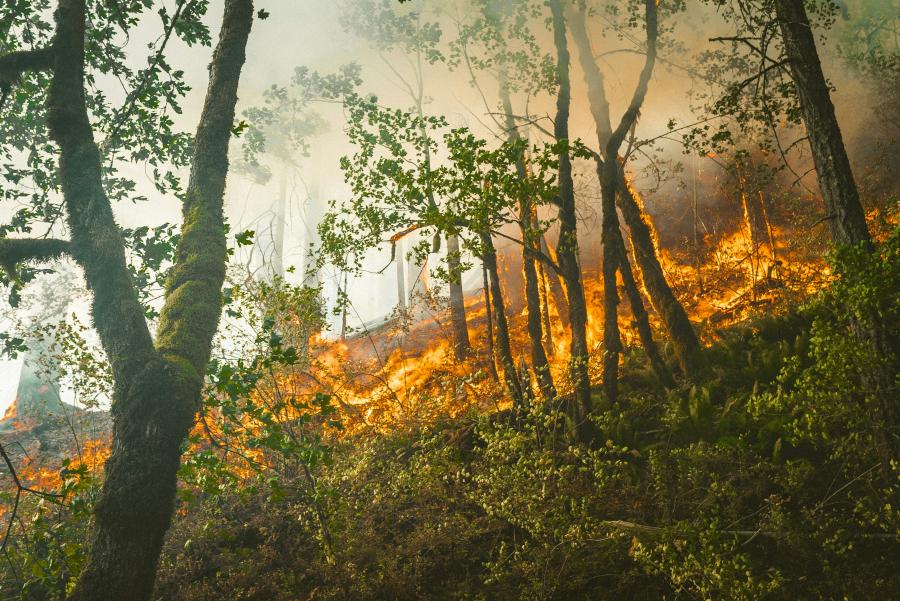
How clean is the air we breathe? What are our carbon emissions, today? Canada 150 Research Chair Dr. Julienne Stroeve and her team installed the Kunak air quality sensor on the University of Manitoba campus in November 2025 to answer these and many more questions about air pollution on our campus, in our city, and beyond.
Climate action and clean air:
Improving air quality is increasingly recognized as a climate solution. Reducing air pollution associated with climate-related emissions such as CO2, NO2, PM2.5, and tropospheric ozone has the potential to simultaneously and efficiently mitigate health and climate change impacts. Air pollution consists of short-lived climate pollutants (SLCPs or super pollutants) such as carbon (soot) associated with PM2.5, ground-level ozone, and nitrogen dioxide, and long-lived climate pollutants (greenhouse gases) of CO2 and CH4. SLCPs induce heating and cooling by trapping heat near the surface and deflecting radiation from the lower layers of the atmosphere. This is in addition to global warming induced by increased GHG emissions. Reducing both SLCPS and GHG emissions is essential in mitigating human-induced disruption to the Earth’s energy balance and global warming and collectively developing climate adaptation strategies that are integral to global stability and resilience.
Providing evidence: Quantifying air pollution to inform interventions
Air pollution measurements make the invisible visible. Knowing when emissions/air pollution peaks in real time allows us to identify possible air pollution sources, and interventions to remove and/or mitigate their impact. Measurements also help answer the questions: Can we reduce CO2 emissions on campus by changing speed limits and diverting traffic and routes? What is responsible for that sudden spike in ground-level ozone? When should the outdoor air filter to the HVAC system be shut down during the wildfire season? Under what atmospheric conditions do we have elevated levels of air pollution?
Finding common ground at local and global scales
Local and regional sources contribute to air pollution. Emissions from local sources include building heating and cooling systems, transportation, construction sites, urban fires and industrial activity. Non-local/regional sources include emissions from wildfires, larger-scale industrial activity and transportation, and conflict pollution.
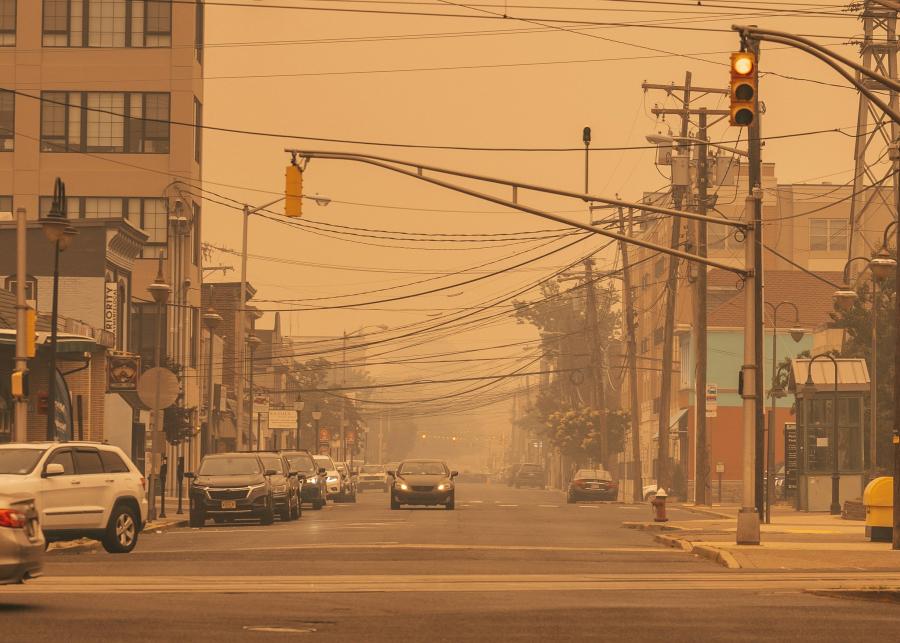
Wildfire seasons in Manitoba and Canada over the past several years, and most recently in northern Manitoba during the summer of 2025, underscored the local and regional implications of wildfires and wildfire smoke. According to the Government of Canada, over 85,000 people, with more than 45,000 from First Nation communities across Canada were evacuated in 2025. Amongst the displaced, over 32,000 were evacuated from Manitoba communities. Air quality in Winnipeg demonstrated values exceeding 500 µg/m3 when the accepted threshold ranges from 15 µg/m3 according to World Health Organization guidelines internationally, to 30 µg/m3 according to provincial guidelines locally.
The University of Manitoba campus is a microcosm of the city, with its interconnected network of natural and built entities and spaces. Understanding air pollution at local scales through continuous, real-time monitoring, provides a framework for extending this knowledge beyond the campus. Winnipeg currently has two provincial sensors, and 16 low-cost purple air sensors. All measure PM2.5; the Scotia Street station measures CO, O3, NO, NO2, NOx, wind speed and direction and PM2.5, as does the Ellen Street station in addition to SO2. Reliability of the Kunak sensor is demonstrated in recent comparisons and verification with the provincial sensors. The Kunak sensor is unique in that it also measures CO2, to inform interventions in near real time.
Training: Moving forward together
While measurements at a single location capture the temporal evolution in pollution at one location, a network of sensors is required to understand the spatiotemporal evolution in pollutants and their impacts. Variations in building height, land surfaces and land use change affect the flow of air around buildings and over topographic features, resulting in wind speeds and directions that fluctuate over street scales, with implications for pollutant dispersion.
Interested in accompanying us in this investigation? Please contact Xu.Li@umanitoba.ca, Julienne.Stroeve@umanitoba.ca, and Jennifer.Lukovich@umanitoba.ca for additional information and with your thoughts and questions. We look forward to hearing from you.
Written by Drs. Jennifer Lukovich, Xu Li, and Julienne Stroeve.