
Indigenous research ethics support
Find guidance and resources for planning Indigenous research, preparing an ethics application or responding to Research Ethics Board (REB) feedback.
If you’re a UM graduate student or faculty member, you can request a one-on-one consultation with us, even if you’re just starting to shape your research idea. In this meeting, you can talk through community relationships, research responsibilities and ethics questions, and get guidance on your next steps.
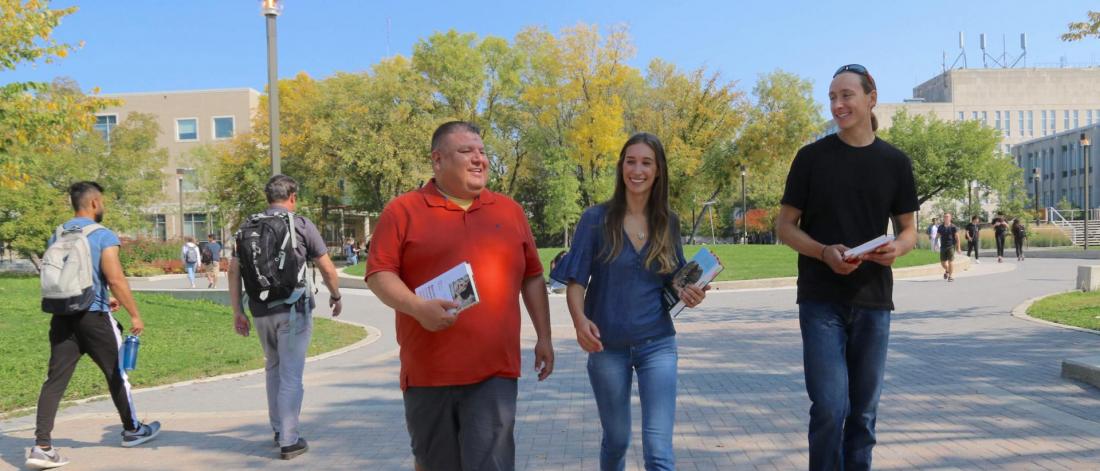
Research ethics consultations
Who is this support for?
UM graduate students and faculty seeking guidance on Indigenous research ethics, including research involving Indigenous Peoples, communities, knowledge or data.
What support is available?
Consultations provide an opportunity to discuss:
- Indigenous research methodologies and approaches;
- relationships and engagement with Indigenous communities;
- community protocols and expectations;
- reciprocity and responsibilities to research partners;
- data and knowledge governance;
- preparing an ethics application and responding to REB feedback; and
- relevant resources and other university supports.
Indigenous research ethics is relational and context-specific. Guidance considers the communities, relationships and responsibilities involved in your project.
This advisory support complements the roles of supervisors, faculty research supports and the REB. The relevant REB is responsible for formal ethics review and approval.
When and how to connect
Contact the Director of Indigenous Research, Don Davies (don.davies@umanitoba.ca), PhD for guidance at any stage of your research or ethics application.
Your research stage | How a consultation can help | What to share |
|---|---|---|
Developing a research idea | Talk through your research ideas, questions, methods, community engagement approach and possible next steps. | A brief description of your research, where you are in the process and any questions or areas you would like to explore. |
Preparing an application | Talk through your approach, work through questions or areas that may need clarification, and discuss how you might respond to REB feedback. | Any questions you would like to discuss, along with relevant protocols, application drafts, or REB comments. Sharing materials in advance, where possible, can help guide the conversation. |
Plan ahead using the timelines | |
|---|---|
When to reach out | Early. Starting the conversation early allows time for community engagement, research agreements, documentation and revisions. |
| Scheduling wait times | A consultation may be available within a few business days of submitting your request. When we receive more requests, you may need to wait up to two weeks for an appointment. |
Follow-up guidance or document review | Time varies depending on your project and the support requested. |
Email to request a consultation View ethics application support and workshops
Indigenous research ethics resources
Find resources for your current research task. Consultation support can help you identify which guidance is relevant to your project.
Not sure where to start?
- Preparing or revising an ethics application? See tab A.
- Working with First Nations, Inuit or Métis data or knowledge? See tab B.
- Building relationships with communities? See tab C.
- Looking for funding? See tab D.
- Planning research in one of Canada’s territories? See tab E.
A. Ethics application
Start here if you are preparing an ethics application or responding to REB feedback.
TCPS 2, Chapter 9: Research Involving the First Nations, Inuit and Métis Peoples of Canada
Panel on Research Ethics | 2022
Review guidance on community engagement, research agreements, collective interests and responsibilities when preparing research involving Indigenous Peoples or communities.
Research ethics planning tools
UM Human Research Ethics
Use these tools to identify ethics considerations as you plan your research and prepare your ethics application.
B. Principles and data
Find Indigenous research principles and UM guidance on data governance, Indigenous knowledge, research agreements and intellectual property.
Indigenous research principles and governance
The First Nations Principles of OCAP®
First Nations Information Governance Centre
Learn how the principles of ownership, control, access and possession support First Nations data sovereignty and information governance.
National Inuit Strategy on Research
Inuit Tapiriit Kanatami | 2018
Learn about Inuit self-determination in research, including research priorities, ethical relationships, data control and capacity building in Inuit Nunangat.
Métis Nation Data Strategy (PDF)
Métis National Council | October 2025
Explore principles and priorities for Métis data sovereignty, including data governance, stewardship, access and capacity building.
UM knowledge and data resources
Indigenous Knowledge and Research
UM Copyright Office
Review ethical and copyright considerations for Indigenous knowledge and cultural materials, including community protocols, consent, ownership and open-access publishing.
UM Research Data Management
University of Manitoba
Learn how UM’s research data management strategy supports Indigenous data sovereignty and responsible data practices in research partnerships.
Research agreements and partnerships
Researchers developing formal partnerships or agreements with Indigenous communities or organizations can seek guidance from the Office of Research Services on research agreements, contracts and partnership-related processes.
Intellectual property and knowledge sharing
Discuss ownership of research outputs, knowledge sharing, data stewardship and access with community partners early to establish shared expectations and identify applicable community protocols or governance frameworks.
University policies and supports can also help address intellectual property questions, including provisions within research agreements.
C. Partnerships and training
Explore guidance, training and readings on Indigenous community partnerships, research methodologies and data governance.
Community partnerships and research training
Working in Good Ways: A Framework and Resources for Indigenous Community Engagement
UM Community Engaged Learning
Explore principles and reflection activities for preparing, forming, maintaining and closing respectful, reciprocal partnerships with Indigenous communities.
Researching in Good Ways
L’offis Wiichihihwahk – Office of the Vice-President (Indigenous)
Explore this Indigenous-led initiative focused on principles and practices for respectful Indigenous research partnerships.
Indigenous Community Research Partnerships Training
Queen’s University | Free online training
Access self-paced training on developing research partnerships with First Nations, Inuit and Métis communities.
Indigenous Research Level of Engagement Tool (IRLET)
First Nations University of Canada | Free online training
Learn to assess whether Indigenous research proposals are planned and carried out appropriately.
Indigenous data governance training
Indigenous communities, Nations and organizations have distinct approaches to data governance, stewardship and access. Discuss expectations with your research partners at the beginning of your project.
The Fundamentals of OCAP®
First Nations Information Governance Centre
Explore the First Nations principles of ownership, control, access and possession through this online course.
Indigenous research methodology learning resources
Explore UM courses and foundational readings on Indigenous research methodologies, ethics, relational accountability and knowledge systems.
University of Manitoba courses
- INDG 7230: Methodology and Research Issues in Indigenous Studies
- INDG 7340: Advanced Seminar in Selected Topics on Indigenous Research
- INDG 4230: Traditional Knowledge and Indigenous Studies Research
Check the current course calendar for availability and prerequisites.
Suggested readings
D. Funding
Find Tri-Agency funding and support for Indigenous research and research training.
SSHRC: Indigenous research
Social sciences and humanities
Find support, training, funding measures and merit-review guidance for research by and with First Nations, Inuit and Métis Peoples.
CIHR: Indigenous Health Research
Health research
Explore Indigenous health research programs, initiatives and resources that support culturally safe research.
NSERC: Indigenous research
Natural sciences and engineering
Find funding and capacity-building support for Indigenous research, researchers and trainees.
E. Conducting research in northern Canada
Research in a Canadian territory may require a scientific research licence, depending on the project’s location and scope. Researchers are responsible for identifying all applicable requirements. Begin early: some licensing authorities recommend applying at least three months before fieldwork starts.
- Northwest Territories: Apply for a Research Licence (Government of the Northwest Territories)
- Northwest Territories: Aurora College Research Ethics Committee
- Nunavut: Research Licensing in Nunavut (Nunavut Research Institute)
- Yukon: Scientists and Explorers Act Licence (Government of Yukon)
You may also be interested in
Frequently Asked Questions
When should I engage with an Indigenous community about my research?
Community engagement should be considered early in the development of research, where it is appropriate to the project. Ideally, engagement is a collaboration that gives the community opportunities to shape the research, rather than simply being informed about a completed plan.
Early engagement creates opportunities for community perspectives, priorities and concerns to meaningfully influence the research. Depending on the project and community, discussions may include research questions and methods, community priorities, consent, data and knowledge governance, potential benefits, interpretation of findings, and how results will be shared.
Engagement can take many forms. Examples include:
- Meeting with community-designated representatives to introduce the proposed project and listen to their priorities
- Seeking guidance on local research protocols
- Working together to refine the research questions or methods
- Discussing reciprocity
- Where appropriate, developing a research agreement that addresses data and knowledge governance
- Maintaining conversations during the study and when interpreting and sharing findings
Community engagement may also result in a community indicating that it has no objection to the proposed study but does not wish to participate in the research design.
TCPS 2 Chapter 9 provides guidance on when community engagement is required and the forms it may take. The appropriate form and extent of engagement will depend on the research and the Indigenous community or communities involved.
Can I use verbal consent instead of written consent?
Yes. Consent does not always need to be documented with a signed consent form. TCPS 2 treats consent as an ongoing process, and consent may be documented in different ways depending on the research context.
For Indigenous research, researchers should consider whether the proposed consent process is appropriate for the participants, community and research relationships involved. Participants should receive the information they need to make an informed decision about participating and have an opportunity to ask questions.
If you propose using verbal consent, clearly explain in your ethics application how consent will be sought and how you will document that consent was provided. You can contact us for advice on how to seek and document verbal consent and describe this process in your ethics application.
Can I identify a participant by name when using their words or a quotation?
Research participants do not always need or want to be anonymous.
In some Indigenous research contexts, participants may want their knowledge and contributions to be recognized rather than anonymized. Identification and attribution should therefore be considered as part of the consent process. Researchers should clearly explain whether participants may be identified, how their words or knowledge may be attributed and where those contributions may appear.
It is important that the ethics application, consent process and actual research practices are consistent. For example, researchers should not promise anonymity and later attribute a quotation to an identifiable participant without appropriately obtaining consent from that participant.
Questions about attribution can also involve broader considerations concerning the recognition of contributions and the respectful use of Indigenous knowledge.
Can I use a semi-structured interview or conversational approach as a research method?
Yes. Research ethics does not require every qualitative interview to follow a rigid set of predetermined questions. Semi-structured interviews and conversational approaches can allow participants to guide aspects of the discussion and raise experiences, perspectives or knowledge that the researcher may not have anticipated.
The important consideration for your ethics application is to describe clearly and accurately how you intend to conduct the research. Your application should explain:
- The purpose of the conversation
- The topics you expect to explore
- How participants can decide what they wish to share
- How their information will be recorded, used and managed
For research involving Indigenous Peoples, researchers should also consider whether the proposed approach is appropriate to the community, relationships and relevant protocols. TCPS 2 Chapter 9 emphasizes respectful relationships, collaboration and engagement rather than prescribing a single research method.
Can I copy and paste information from my research proposal into my ethics application?
You can draw on material from your research proposal, but it is important to answer the specific question being asked in the ethics application rather than simply copying existing text.
A research proposal and an ethics application have different purposes. Material written for a proposal may include background information, potential activities or broader research plans that do not accurately describe what will happen in the particular study submitted for ethics review.
Copying and pasting can therefore create two problems:
- It may introduce information or activities that you did not intend to include.
- It may not fully answer the ethics question being asked.
A useful approach is to read each ethics question independently and answer it directly in plain language. You can then draw on relevant material from your proposal where it accurately reflects the research you intend to conduct.
Can you tell me whether my research ethics application will be approved?
We can provide guidance on Indigenous research ethics and help you understand how TCPS 2, including Chapter 9, may apply to your research.
We can also review your draft ethics application, offer advice on how to answer its questions clearly and identify areas that may require further consideration.
If you receive REB feedback, we can help you review it and develop a response strategy, including identifying where clarification or revisions may be needed.
Please note that we are not members of a Research Ethics Board (REB) and cannot determine whether an application will be approved. Decisions about research ethics approval are made through the University’s research ethics review process.
Our role is to help you understand and apply relevant Indigenous research ethics guidance and to describe your proposed research clearly and accurately in your ethics application.
We are here to support you in navigating the REB application process efficiently and successfully, with the goal of facilitating a timely review and approval of your research.
Contact us
Don Davies, PhD
Director of Indigenous Research
Indigenous Research and Academics
L'offis Wiichihihwahk – Office of the Vice-President (Indigenous)
71 Curry Place, University of Manitoba
Winnipeg, Manitoba R3T 2N2