Indigenous art | Price Faculty of Engineering | University of Manitoba
Skip to main content

The University of Manitoba campuses and research spaces are located on original lands of Anishinaabeg, Ininiwak, Anisininewuk, Dakota Oyate, Dene and Inuit, and on the National Homeland of the Red River Métis. More

Functional Menu

  • Current students
  • Faculty and staff
  • Alumni
  • Email
  • News and stories

Call To Action Menu

  • Visit
  • Apply
  • Donate
Home

Price Faculty of Engineering

Main Menu

  • Programs of study
  • Student experience
  • Research
  • Community and partners

What are you looking for?

  • Admissions

    • Explore undergraduate studies
    • Undergraduate admissions
    • Graduate admissions
    • Extended Education
    • Indigenous student admissions
    • International student admissions
    • Financial Aid and Awards
    • Apply to UM
  • Academics

    • Experiential Learning
    • Faculties, colleges and schools
    • Academic Calendar
    • Registrar's Office
    • Libraries
    • Undergraduate programs
    • Graduate programs
    • Extended Education programs
  • Research

    • Opportunities and support
    • Research Chairs
    • Centres and institutes
    • Partnerships and Innovation
    • Awards and recognition
    • International Centre
    • ResearchLIFE
  • Student supports

    • Academic supports
    • Career Services
    • Get involved
    • Student health and wellness
    • Military Support Office
    • Respectful conduct
    • Student services at Bannatyne campus
    • Accessibility for students
  • Community

    • Indigenous community
    • Alumni
    • Arts and Culture
    • Sport and Recreation
    • Giving
  • About UM

    • Governance
    • Strategic Plan
    • Our campuses
    • The UM brand
    • Facts and figures

Price Faculty of Engineering

Main Menu

  • Programs of study
  • Student experience
  • Research
  • Community and partners

The University of Manitoba campuses and research spaces are located on original lands of Anishinaabeg, Ininiwak, Anisininewuk, Dakota Oyate, Dene and Inuit, and on the National Homeland of the Red River Métis. More

University of Manitoba

Functional Menu

  • Current students
  • Faculty and staff
  • Alumni
  • Email
  • News and stories

Call To Action Menu

  • Visit
  • Apply
  • Donate

University of Manitoba
Winnipeg, Manitoba Canada, R3T 2N2

Maps and directions
1-800-432-1960 (North America)
Emergency: 204-474-9341
Emergency Information
  • Careers
  • Media
  • People search
  • Research experts
  • Privacy policy
  • Accessibility
  • Terms of use
  • Website feedback
  • All social

Price Faculty of Engineering

Breadcrumb

  1. Home
  2. Price Faculty of Engineering

Indigenous art in EITC

Featured Art

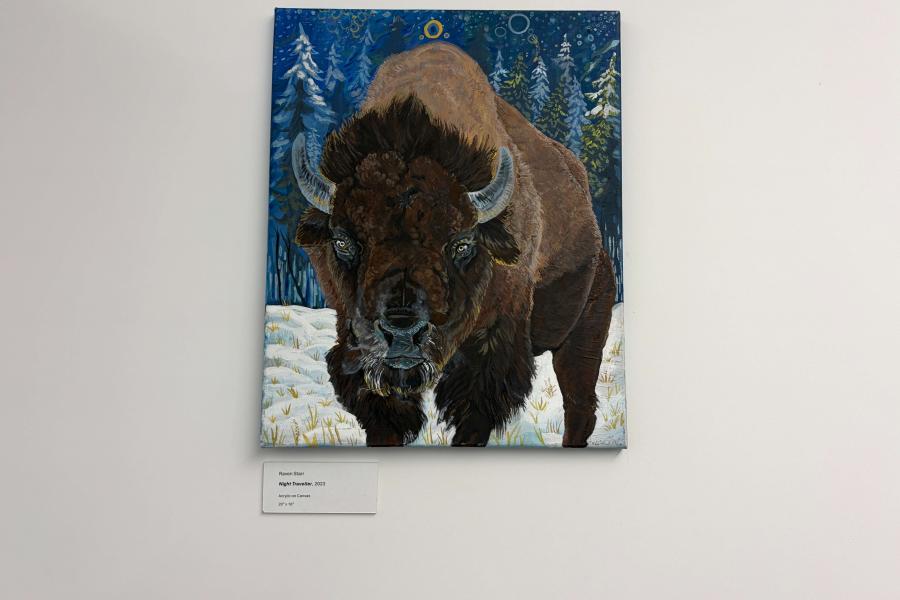
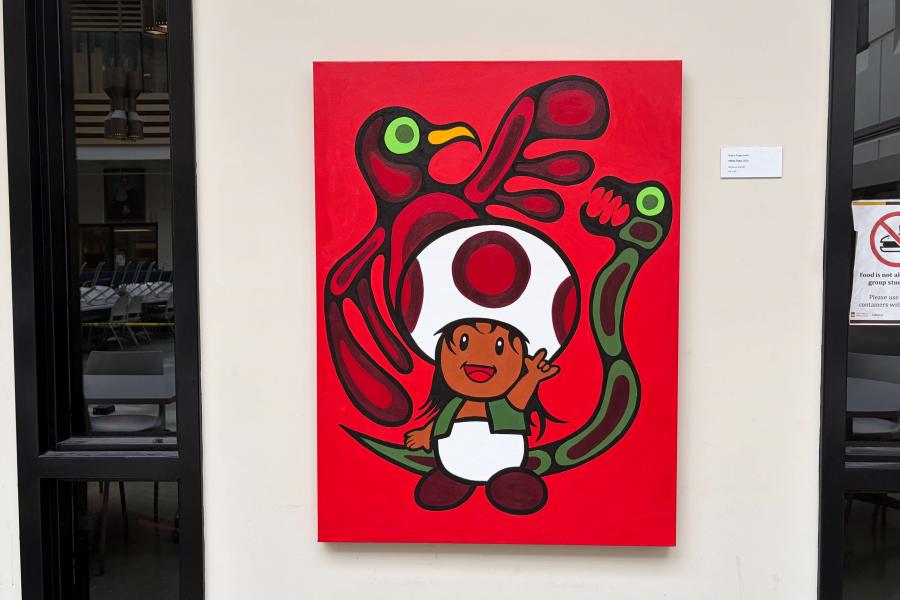
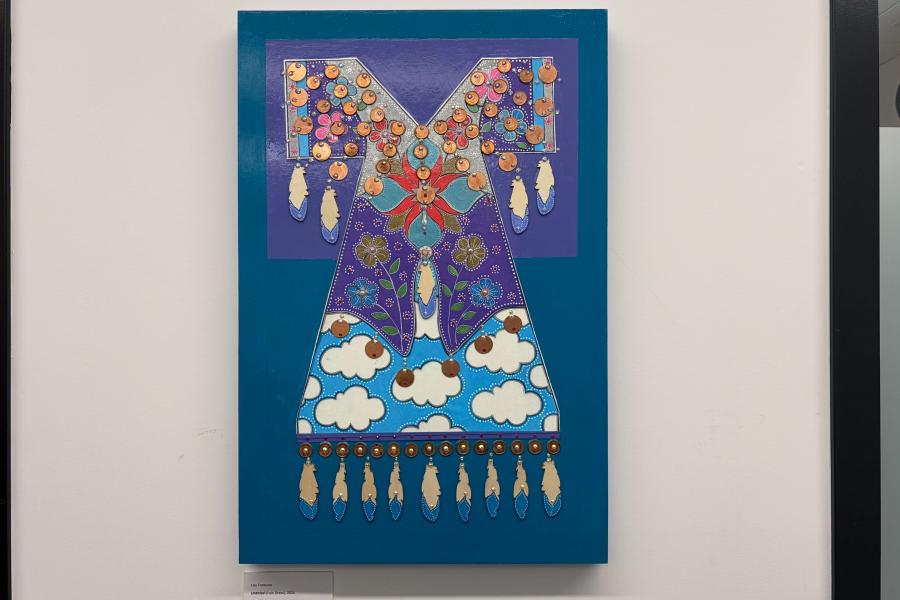
Meaningful reconciliation at the University of Manitoba (UM) goes beyond words—it is reflected through action, learning and collaboration. In the Price Faculty of Engineering, reconciliation is woven into the fabric of our community, from programs and curriculum to the spaces we share. Artwork by Indigenous artists displayed throughout the Engineering and Information Technology Complex (EITC) reflect this ongoing journey, honouring Indigenous knowledge, perspectives and creativity. Each piece invites reflection, dialogue and understanding as we work together toward Truth and Reconciliation.

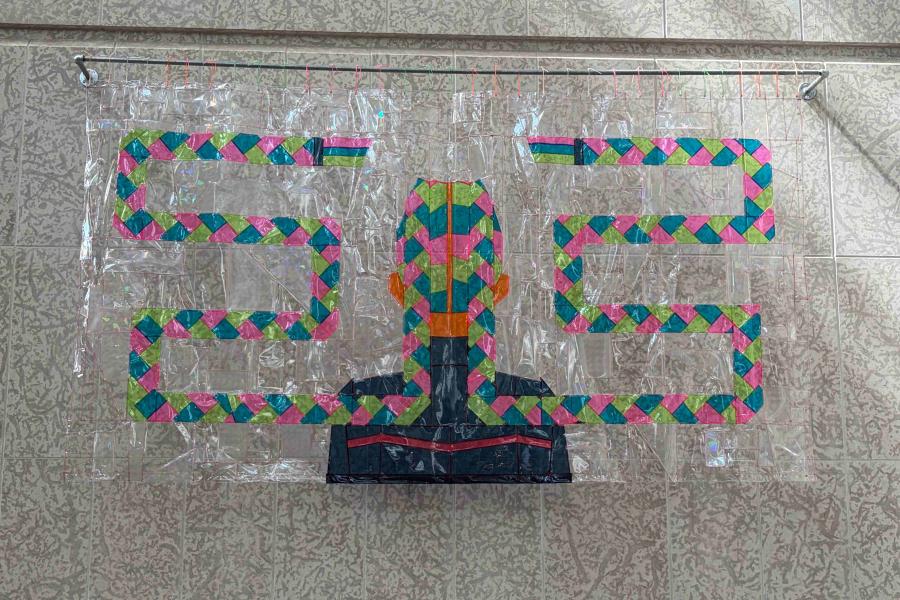
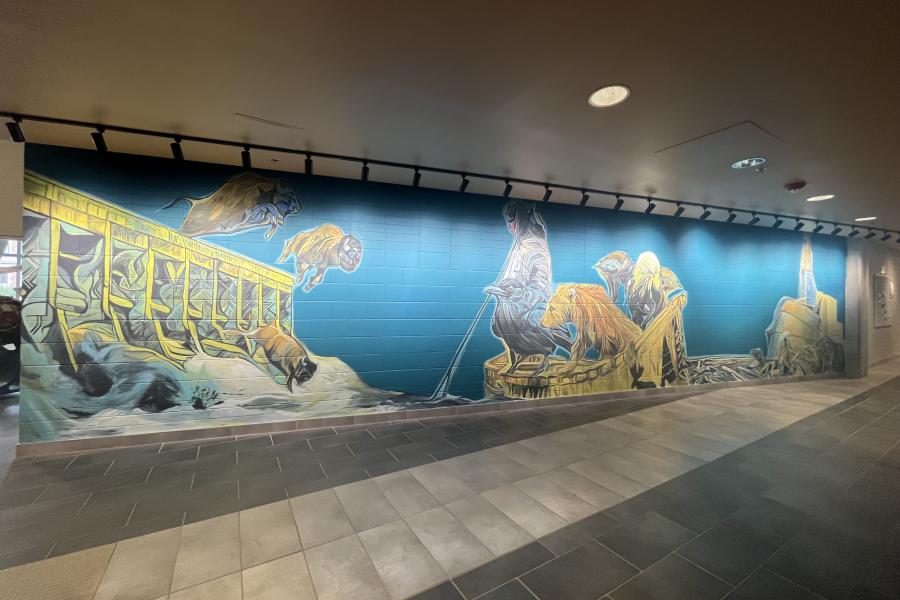
  • "Engineering and Truth and Reconciliation" mural by Mike Valcourt

    Location: Main floor of E2, between the Dean’s Office (E2-290) and Student Services (E2-262)

    Created by local Indigenous artist Mike Valcourt, this 9×40 ft mural reflects on the past, present, and future of engineering through the lens of Truth and Reconciliation. It acknowledges the impact of colonization and celebrates Indigenous innovation, particularly through imagery. The mural invites viewers to reflect on how engineering can move forward with respect and inclusion. 
    • Read story on UMToday
  • Engineering and Truth and Reconciliation Mural By Mike Valcourt
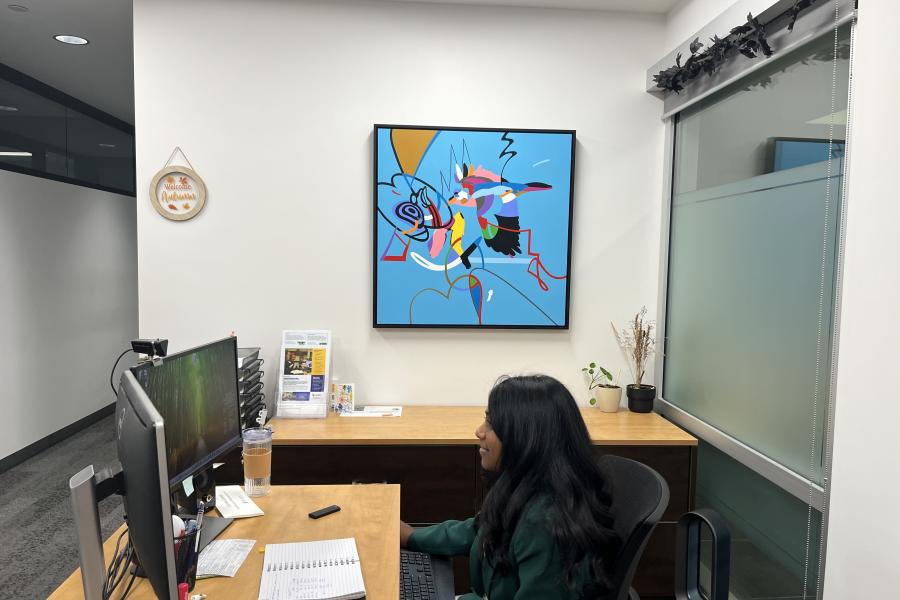
  • "Ombaashi" (s/he is blown up in the wind) by Dee Barsy

    Location: Student Services (E2-262)

    Ojibwe artist Dee Barsy of Skownan First Nation approaches her work with genuine curiosity and care, drawing inspiration from the natural world and the distinct personalities of the animals she portrays. Through vibrant colours and abstracted forms, Ombaashi captures a sense of motion and rhythm that reflects the harmony of nature. The piece invites viewers to reflect on how our individual yet interconnected roles shape and influence the larger community on this territory.

  • Girl sitting in front of Ombaashi painting
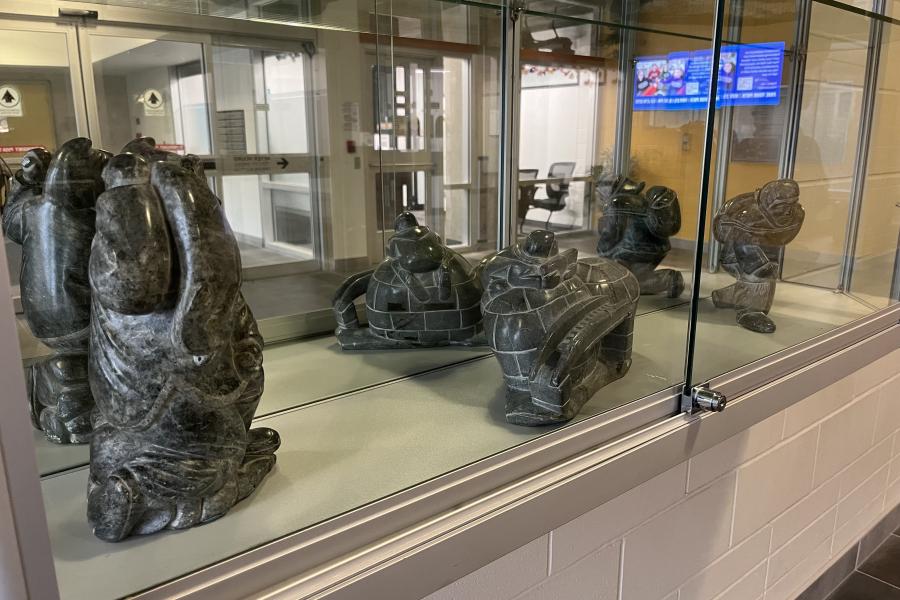
  • Inuit sculptures

    Location: Display case by Student Services (E2-262) 

    "Sealhunter" by unknown artist (left)

    "Man/Igloo/Sled" by Amewtr (middle)

    "Kneeling Inuit Man with Pack" by Charlie Sivuarapir (right)

    Not pictured: 

    "Untitled" by Nuyaliaq (Newgaliak) Qimirpik

    "Otter/Flipper" by Adamie

  • inuit display sculptures
  • Star Blanket “Respect” By Neepekan Hunt

    Location: Second floor (300 level) off main Atrium staircase

    Created by Anishinaabe and Cree artist Neepekan Hunt, this star blanket incorporates Indigenous symbols and University of Manitoba colours to convey respect, connection and cultural teachings. The buffalo represents respect for all beings, while the Inuksuk, Métis Infinity symbol, and double row Medicine Wheel highlight the interconnection of Indigenous peoples across Turtle Island. The blanket also reflects the spiritual connection to the Star Nations, reminding us that we come from and return to the stars.

  • Starblanket hung on wall
  • Art by Bada Jean and Lawrence Beaulieu 

    Location: E2-251

    "Miyo Kisikaw" by Bada Jean (left)

    "Mother and Child" by Lawrence Beaulieu (middle)

    "Spring Mama Bear" by Bada Jean (right) 


  • three images on a wall
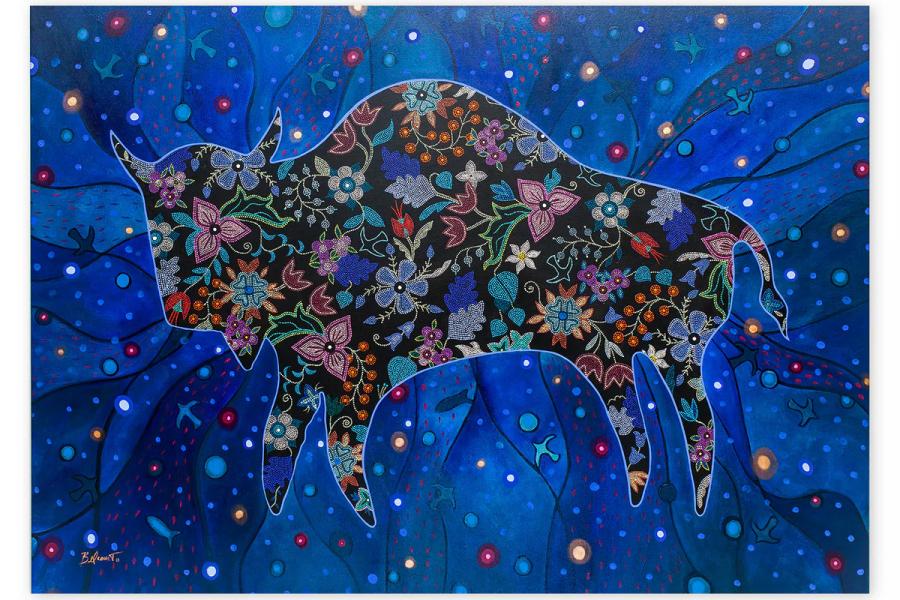
  • "The Earth is My Government" by Christi Belcourt

    Location: Library (E3-360)

    Christi Belcourt is a Métis visual artist, designer and community organizer whose dot-painted works, inspired by Métis floral beadwork, explore nature, spirituality and cultural themes. Her art is held in major collections including the National Gallery of Canada and Art Gallery of Ontario and she has received awards such as the Aboriginal Arts Laureate (2014) and Governor General’s Award for Innovation (2016).

  • The earth is my government image
  • Jackson Beardy art pieces

    Location: E2-361
    "Loons III" (left), "Bird Harmony" (middle) and "Loons IV"(right).

    Born on Garden Hill Reserve, Island Lake, Manitoba, Jackson Beardy was an Anishinaabe artist, storyteller, teacher and advocate for Indigenous people and artists. After attending residential school in Portage la Prairie, he studied at the Technical Vocational High School and the University of Manitoba, with his first exhibition at the Winnipeg Art Gallery in 1965. In 1984, he began the mural Peace and Harmony at the Indigenous Family Centre in Winnipeg, which was completed posthumously by students. Beardy’s legacy continues to influence Indigenous artists and Canadian art.

  • Jackson beardy art pieces (all three)

Price Faculty of Engineering
E2-290 Engineering and Information Technology Complex
75A Chancellors Circle
University of Manitoba (Fort Garry campus)
Winnipeg MB, R3T 5V6

eng.info@umanitoba.ca
204-474-9809
EITC 1, EITC 3, & SPEB: Monday to Friday 7:30 am to 10:00 pm
EITC 2: Monday to Friday 7:00 am to 10:00 pm
All EITC buildings: Saturday & Sunday 8:00 am to 6:00 pm
Follow us
Faculty Directory
Home
  • Careers
  • Media
  • People search
  • Research experts
  • Accessibility

University of Manitoba
Winnipeg, Manitoba, Canada

Maps and directions
1-800-432-1960 (North America)
Emergency: 204-474-9341
Emergency information
  • All social
  • Privacy policy
  • Terms of use
  • Website feedback

© 2026 University of Manitoba