
Biodiversity
Biodiversity refers to the wide variety of life on Earth, including animals, plants, insects and microorganisms, all of which form a complex and interconnected web. This diversity of species is essential because it strengthens ecosystems, making them more resilient to environmental stresses such as climate change. Healthy, biodiverse ecosystems provide vital benefits, including clean air, fresh water and reliable food sources, which are essential for both nature and human well-being.
Upcoming Event:
Biodiversity enhancement projects
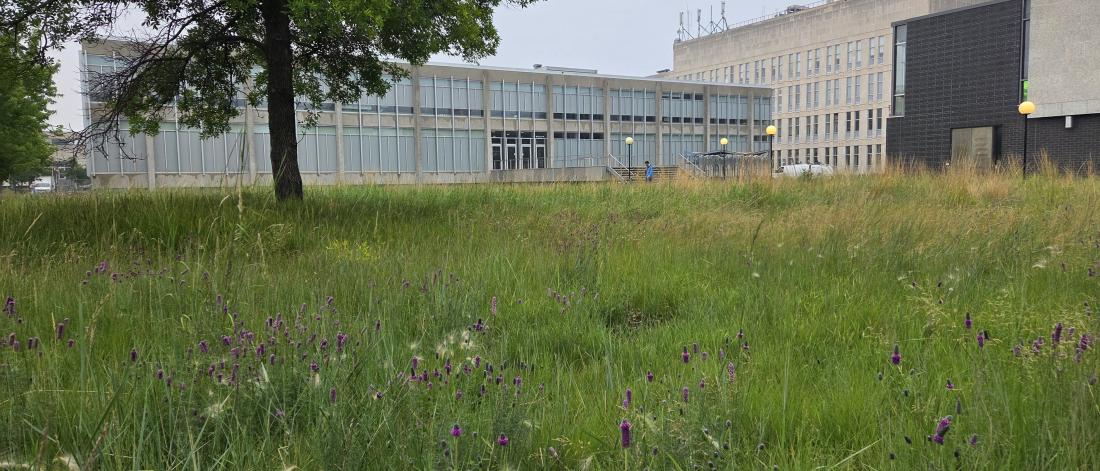
To increase biodiversity within the campus greenspaces, UM’s approach to native revegetation integrates prairie plantings and native tree and shrub species throughout the campus landscape. This approach supports climate resiliency, enhances habitat growth, reduces maintenance-related emissions and water use, and better reflects the Indigenous and ecological histories of the land on which the Fort Garry Campus is located.
Reforestation and native revegetation include the planting of hundreds of trees and shrubs, live willow cuttings, bio-bag, and seeding of native grasses and shrubs.
Native prairie plantings, when planned and implemented properly, require significantly less ongoing maintenance and are considered a more sustainable alternative to conventional plantings. The revegetation will complement adjacent natural areas on campus, contribute to local native biodiversity, and support healthy riparian forests.
Greenspaces rich in biodiversity
Science courtyard
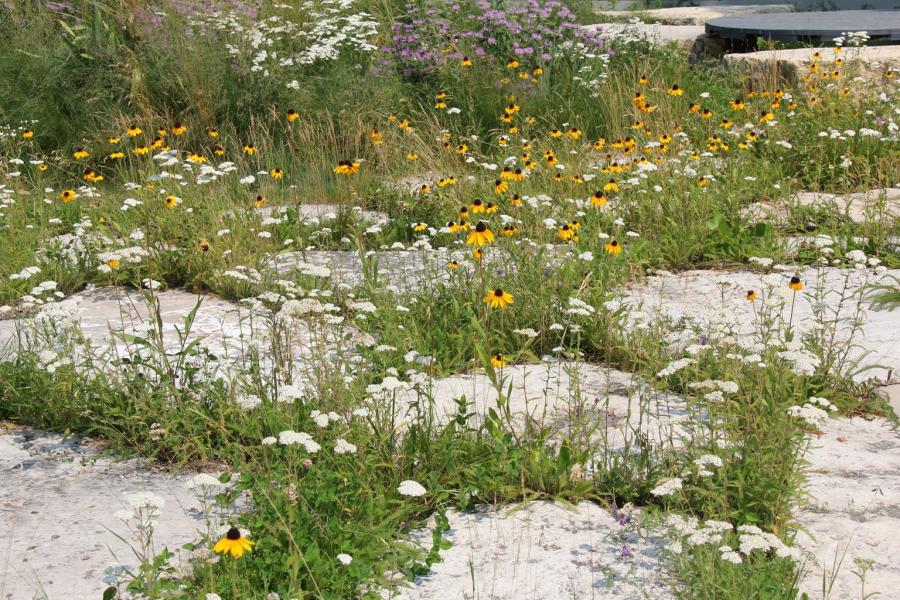
The Science Courtyard Living Lab includes seven species of native grasses and 27 species of flowering perennials. The project also explores pesticide-free soil preparation, demonstrating how sustainable landscape practices provide food and habitat for pollinators and support biodiversity on campus.
Plants found in this space include:
| Grasses |
|
| Forbs/Perennials |
|
To learn more about the space’s design and construction, read the Landezine article.
BioGarden
The BioGarden, located between the Buller Greenhouse and Biological Sciences, is a medicine plant and pollinator habitat curated by scientists and Indigenous scholars in the Faculty of Science, building from work begun in collaboration with the Office of Sustainability, Human Resources, Student Wellness, and Spiritual Care in 2023. Initially, this space was launched as Gardening with Purpose, a program designed to foster community connection while encouraging interaction with the land and nature. The initiative invited members of the University of Manitoba community to help cultivate annual and perennial plants. In 2025, Drs Az Klymiuk and Carla Zelmer stepped in to manage curation and care of the garden, supported by members of Biological Sciences, Wawatay and the broader Faculty of Science.
After touring the Buller Greenhouse as the initial seedling perennials were stratifying and germinating, Elder Norman Meade noted that the greenhouse contains plants from around the world, living together in harmony, and suggested that the BioGarden could evoke this ethos as well. To that end, some of the plants you will find here honour Indigenous peoples’ medicinal and cultural use traditions from around the world in peaceful coexistence.
The BioGarden functions as habitat for monarch butterflies, numerous species of bees and other insects, and small mammals; the garden is also a valuable teaching resource, including cultural teachings about medicinal plants. As a community resource accessible to all members of the UM community, the BioGarden supports biodiversity, wellness, and learning. We encourage you to take a moment out of your busy day, and linger here a little while. And if this space speaks to you, please speak to us! Drop us a line at biogarden@groups.umanitoba.ca
| Perennials planted in this space |
|
| Annuals planted in this space |
|
The BioGarden is wholly supported by generous donations of tools, seeds, plants and volunteer time. We especially thank the Campus Beautification volunteers, Buller Greenhouse staff, Kelly Leask (Prairie Originals), Klymiuk Lab volunteers and many more.
Russel building greenspace
The greenspace between the Russell Building and CAST received soil amendments to address compaction issues and is planted with a native tallgrass seed mixture. Following re-plating, the Faculty of Architecture included tulip bulbs to commemorate the 50th anniversary of the Landscape Architecture program.
Species on site include: various species of wheatgrass, Canada wildrye, June grass, big bluestem, little bluestem, switchgrass, side-oats grama, blue grama, buffalo grass and purple prairie clover
Stanley Pauley Engineering building
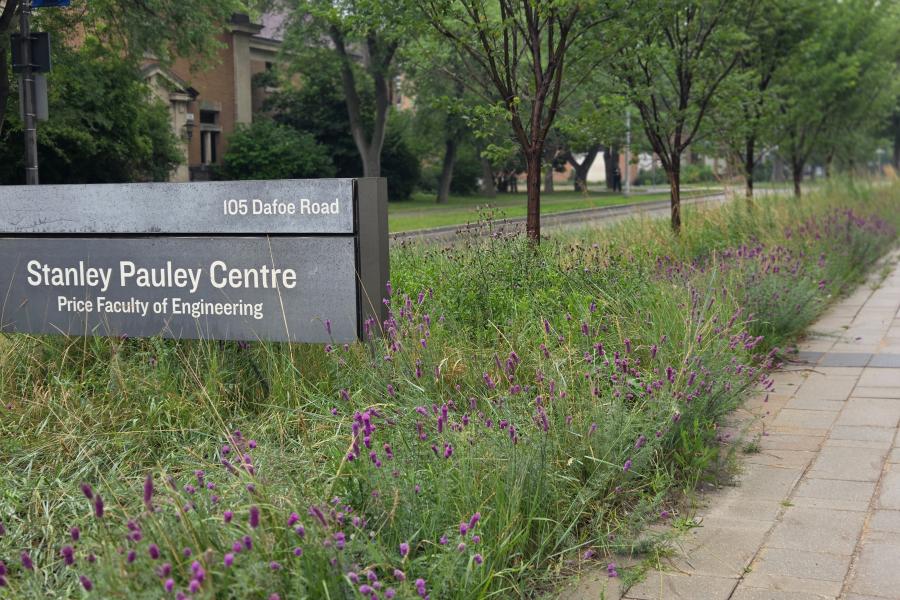
A native grass and flower mixture was planted following construction of the Stanley Pauley Engineering building.
Species on site include: variegated feather reed grass, tufted hair grass, purple cone flower, black eyed susan, blue oat grass, maiden grass, variegated moor grass, red switch grass and little bluestem
UMSU University Centre roof deck
The planter boxes contain a mixture of native prairie grasses and flowering wildflowers. Wildflower species include: giant hyssop, native swamp milkweed, white prairie clover, purple prairie clover, joe pye, false sunflower, bee balm, smooth aster, new england aster, culver’s root and golden alexander.
Campus boulevards
Following roadway renewal projects, campus boulevards have been replanted with tallgrass species towards the centre of the boulevard, transitioning to salt tolerant short grass species adjacent to the roadway.
Riverbank stabilization
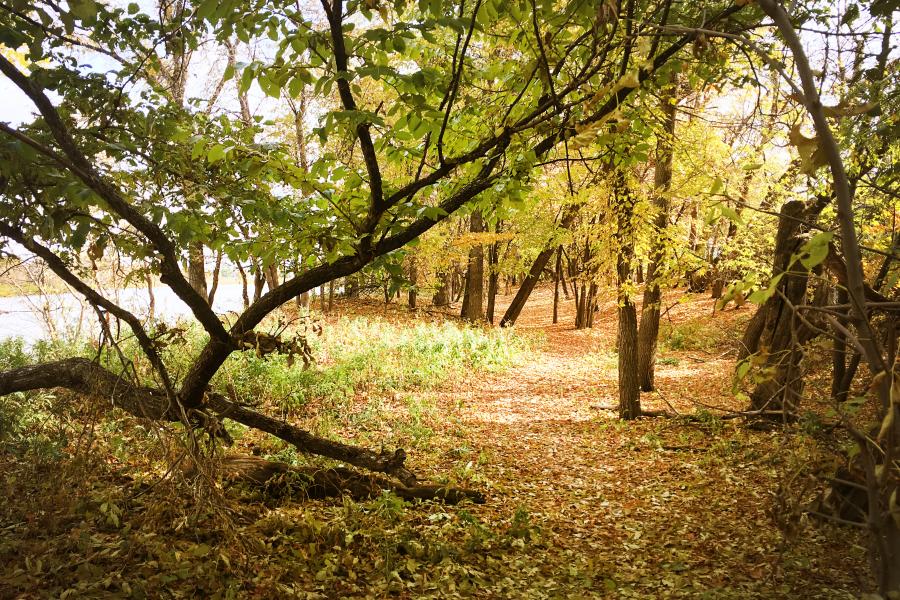
Native revegetation efforts along the riparian zone have been focused on maintaining a healthy riparian ecosystem, while using bioengineering strategies to help stabilize the riverbank following stabilization construction. Reforestation and native revegetation include the planting of hundreds of trees and shrubs, live willow cuttings, bio-bag and seeding of native grasses and shrubs.
Biodiversity assessment and framework
An ecological assessment is currently underway at the Fort Garry and Satellite campuses to develop a baseline understanding of campus biodiversity and identify any new or existing areas of concern. This work will help to inform a future Biodiversity Framework, Land Action Plan and Landscape Master Plan, ensuring that campus design, maintenance and open space planning incorporate conservation priorities, enhance biodiversity within the campus landscape, and integrate climate adaptation and resilience planning to support long-term ecological and environmental sustainability.
Goals for the biodiversity inventory and assessment include:
- Developing conservation strategies to preserve biodiverse rich areas, as well as strategies to remediate threats such as invasive species
- Creating planning and design recommendations focused on increasing biodiverse areas on campus
- Recommendations for how to maintain a more diverse campus landscape
- Map out next steps to integrate biodiversity on campus, incorporate Indigenous approaches to land stewardship, and embed sustainable practices into maintenance procedures
2018 Biodiversity Baseline Study and Assessment
BioBlitz Week 2026
September 28 to October 9, 2026 at Fort Garry Campus
A BioBlitz Week is an exciting, campus wide effort to explore and document the biodiversity that thrives in and around the university. Throughout the week students, faculty, staff and local community members use iNaturalist to photograph and record plants, animals, fungi, and other organisms they encounter on campus. Each observation contributes to a shared biodiversity dataset that helps researchers and land managers better understand the species living in our green spaces, track ecological changes over time, and identify areas that may need conservation attention. Beyond generating valuable scientific data, BioBlitz Week encourages the campus community to get outside, connect with nature, and discover just how much life exists right here at the university.
How to participate
Explore the campus, photograph the species you find, and upload them to help grow the campus inventory.
Participants will be required to create an account with iNaturalist. You can create an account on your web browser or via the app. To download the app visit the Apple Store or Google Play.
To join UM’s BioBlitz campaign, search under Projects for “University of Manitoba – BioBlitz Week” in the app or on a web browser. Once you are a member of the project, you are ready to start exploring!
Click the quick guide button below for a step-by-step instructions for how to use the app.
Why are we doing this?
A bioblitz helps advance the biodiversity dataset by giving the campus a clearer picture of the species that are already here, highlighting what is thriving, what needs support, and how future conservation and restoration efforts can have the greatest impact.
For more information or to get involved contact: sustainability@umanitoba.ca
Get involved
Campus Landscape Series
The Office of Sustainability and Campus Planning Office will be hosting lunch-hour educational sessions throughout the spring and summer to provide information on ongoing land stewardship projects, and to connect the campus community with those who plan, design, and maintain our landscape.
Contact us
Office of Sustainability
152 Physical Plant Building
89 Freedman Crescent
University of Manitoba (Fort Garry campus)
Winnipeg MB R3T 2N2
Campus Planning Office
150 Physical Plant Building
89 Freedman Crescent
University of Manitoba (Fort Garry campus)
Winnipeg MB R3T 2N2