
FRCPC
Program | Residents | Download Forms | Chief Welcome | PGY-1 Perspective | FAQ
Program Contact

Director Dr. Wes Palatnick
wpalatnick@wrha.mb.ca
Assistant Director Dr. Travis Minish
Program Assistant Monica Wilgosh
Phone: (204) 977-5664
Fax: (204) 789-3515
wilgosh@cc.umanitoba.ca
Chief Resident Email er.chief.uofm@gmail.com
Chief Resident
September 2010 to December 2010
Dr. Paul Ratana
Chief Resident
December 2010 to March 2011
Dr. Zoe Piggott
Chief Resident
March 2011 to June 2011
Dr. Ryan Sustrik
Chief Resident
June 2011 to September 2011
Dr. Jeff Klassen


Department of Emergency Medicine
RM. T-258 - 770 Bannatyne Ave.
Winnipeg, Manitoba, R3E 0W3


Top

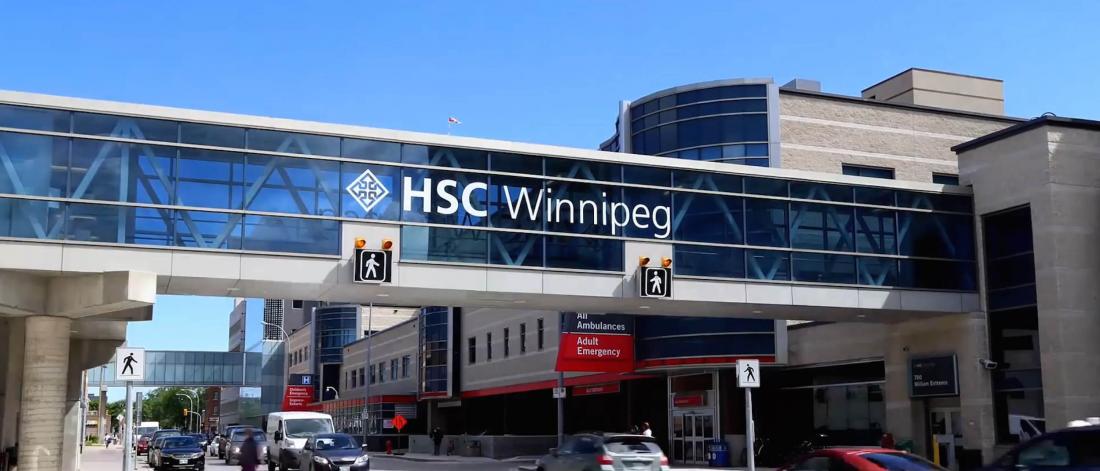
ResourcesThe Health Sciences Centre- General is an adult tertiary Emergency Department which serves the core area of Winnipeg. It has a high volume of high acuity patients with significant numbers of multiple trauma, toxicology, and disturbed psychiatric patients.

The Children's Hospital, Health Sciences Centre, is situated in the core area of Winnipeg where it provides primary, secondary, and tertiary pediatric care for Winnipeg, Manitoba, NW Ontario and Nunavut. All levels of injury and illness acuity are seen in this Emergency Department with significant multiple trauma, toxicology, and child abuse.

St. Boniface General Hospital Emergency Department treats patients of all ages. It serves as a community hospital for the francophone community of Winnipeg and surrounding rural francophone towns, as well as a tertiary care referral centre. Patient acuity is high with a higher proportion of internal medicine, cardiology, nephrology and geriatrics.

Top

Strengths of the Program
  1. Two members of the program committee are toxicologists. Both are very active in the program.
  2. One, Dr. M. Tenenbein, is a scholarly researcher with an international reputation. He coordinates the research program and supervises the research and critical appraisal seminars.
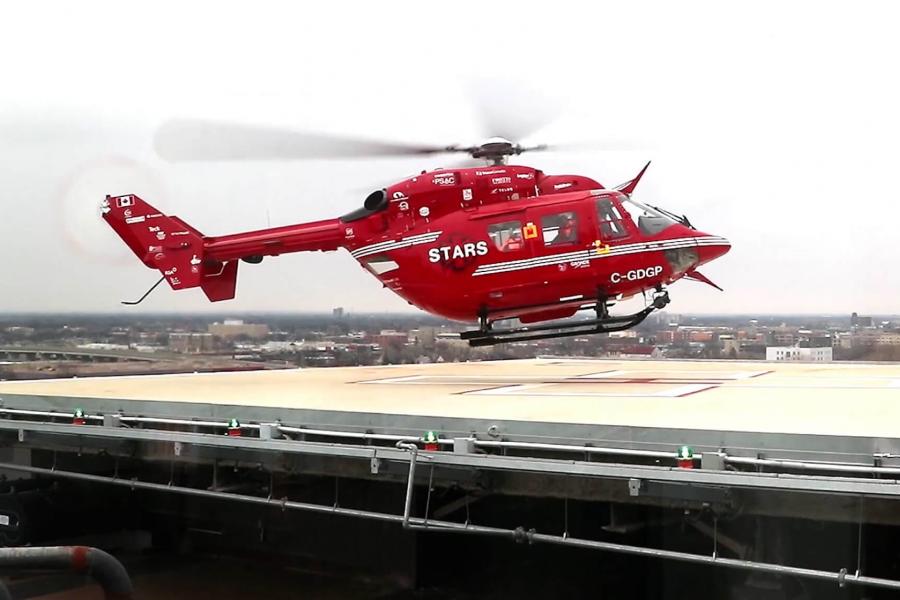
  3. The program has strong ties with both the provincial air ambulance service and the pre-hospital care system.
  4. High patient acuity with large volumes and high rates of pathology
  5. Protected weekly time for academic half-day
  6. Annual Resident's Retreat
  7. Cohesive resident group
  8. Monthly resident-faculty Journal Club
  9. ACLS, ATLS, PALS, AIME - all paid for under the contract
  10. One week education leave
  11. $1,000 Cdn/yr provided to each resident by faculty for scholarly activity/conferences
Top

Curriculum
PGY-1 PGY-2 PGY-3 PGY-4 PGY-5
Obstetrics andGynecology Emergency - HSC Orthopedics Emergency - Pediatric Emergency - HSC
Obstetrics andGynecology Emergency - HSC Elective Emergency - Pediatric Emergency - HSC
Surgery Anaesthesia Medical Intensive Care Pediatric Intensive Care Emergency - HSC
Surgery Anaesthesia Medical Intensive Care Emergency - HSC Emergency - SBGH
Internal Med Internal Med Emergency - HSC Emergency - HSC Emergency - SBGH
Internal Med Internal Med Emergency - HSC Emergency Medical Services Emergency - SBGH
Pediatrics Emergency - Pediatric Emergency - HSC Toxicology Elective
Pediatrics Emergency - Pediatric Coronary Care Trauma Surgery Elective
Emergency Coronary Care Emergency - SBGH Trauma Surgery Elective
Emergency Psychiatry Emergency - SBGH Surgical Intensive Care Elective
Community Emergency Emergency - SBGH Emergency - SBGH Emergency - SBGH Elective
Elective Emergency - SBGH Plastic Surgery Emergency - SBGH Elective
Vacation Vacation Vacation Vacation Vacation

PGY-1

The first year of specialty training is a basic clinical training year. Included are two-month rotations in Emergency Medicine, Internal Medicine, Surgery, Pediatrics, and Obstetrics and Gynecology, with one month each of community emergency medicine and elective time.

PGY-2 and 3
In the next two years of residency training, 12 months of training is provided in the three affiliated Emergency Departments. Other rotations include two months in each of Anaesthesia, Internal Medicine and Medical Intensive Care. There are one-month rotations in each of Psychiatry, Toxicology, Orthopedics, Emergency Medical Services, Plastic Surgery and one month of elective time.

PGY 4 & 5
During the senior years, a further twelve months of training is provided in the three affiliated Emergency Departments. Other rotations include two months in Acute and Trauma Surgery, one month in Pediatric ICU, one month in Surgical ICU and two months in the Coronary Care Unit.

At this time, the program offers six months of elective time. This can be taken as one block, or it can be subdivided and taken at different times to pursue varying areas of special interest. The amount of elective time is subject to annual review. In selected circumstances, the whole fifth year can be taken towards a Fellowship.

Summary
The program was established in 1991 and has undergone curriculum revisions since its initiation. Refinements in the curriculum will no doubt continue. Changes are at the discretion of the Residency Program Committee which consists of five faculty and two residents.

As can be seen from the curriculum summary above, each resident will receive 24 months of training in Emergency Medicine, including two two-month rotations in a tertiary Pediatric Emergency Department (Children's Hospital). The remaining 20 months will be split between the Health Sciences Centre-General, which is an Adult Emergency Department and St. Boniface General Hospital, which is undifferentiated (sees patients of all ages). In each case, half of the Emergency training will be provided during the first two years and the remainder during the senior portion of the residency.

Off-service rotations are provided in either the Health Sciences Centre or St. Boniface General Hospital, based on the availability of the most appropriate clinical experience.

Residents are junior residents in the first 24 months of training. Junior Residents care for all types of patients in the Emergency Department and participate in resuscitation and perform major procedures under the supervision of the Attending Emergency Physician or the Chief Resident.

Senior Residents, as well as providing care for all patients who present to Emergency, will function as resuscitation team leaders and will review patients seen by medical students and other residents, typically in Family Practice and more junior Emergency Medicine residents, both in the Royal College Program and in the CCFP-EM Program. The Senior Resident will, in conjunction with the Attending Emergency Physician, assume responsibility for the orderly flow and disposition of all patients within the department. The Senior Resident should be able to manage the volume of patients typically seen in a busy Emergency Department while simultaneously caring for several acutely ill or injured patients. Attending staff Emergency Physicians should have confidence in the assessments, treatment decisions, and disposition plans of the Senior Residents.

Top

Academic ProgramThere is an academic half-day on Wednesday afternoons from 1230 to 1700 hours. Residents are expected to attend the half-day and are to be relieved of clinical responsibilities from their various rotations in order to attend. Residents should be reminded that academic half-day is a privilege not to be taken lightly.

The half-day is organized as follows: For Week 1, there will be a Combined Emergency Rounds from 1230 to 1430 hours. There are generally two one-hour presentations during this time. Residents in the Royal College and CCFP-EM Programs are expected to make one presentation per year at Combined Emergency Rounds. These Rounds are held at the St. Boniface General Hospital Research Foundation Sam Cohen Auditorium in the first half of the year, and in the PsychHealth Building at the Health Sciences Centre for the second half of the year. Emergency Physicians from the community hospitals are invited to Combined Emergency Rounds and beginning in the 1998/99 academic year, each community hospital has been hosting one set of Rounds during the year.

For the rest of the academic half-day, including the 1500 to 1700 hour time period in Week 1 and the entire 1230 to 1700 hour time period in Week 2, there will be topic based seminars, Rosen chapter review sessions, Morbidity/Mortality rounds and case presentation sessions. There will also be seminar series on research methods, quality assurance, communication skills, ethics and administration. The topics selected in any given year for the seminars and Rosen chapter review sessions will cover the breadth of Emergency Medicine, however, they will be different from year to year. This is as opposed to covering a particular area of Emergency Medicine exhaustively before proceeding to the next area. So, for example, there will be topics in trauma selected each year that will be different from previous years rather than covering all of trauma in one year. The primary reason for this format is to provide a comprehensive overview of Emergency Medicine for the residents in the CCFP-EM Program. However, this approach is preferable for the Royal College residents as well. It is better to discuss topics related to an area such as trama each year rather than having long periods such as two years between any discussion of a subject area.

The presentation format for these sessions can be didactic, case-based seminar, major article review or literature review. Presentations may be by Emergency Medicine faculty, non-Emergency Medicine faculty, or by Royal College and/or CCFP-EM residents. There will be an Attending Staff Emergency Physician from either of the teaching hospitals’ faculties supervising all of these sessions, even if primary responsibility is by a non-Emergency Medicine faculty person.

Additionally, each subspecialty rotation has its own schedule of rounds which the residents may attend. Trauma Service Rounds are held monthly at the Health Sciences Centre. Residents will be advised as to the schedules of these rounds as they participate in a given rotation.

A further activity for the academic half-day is the Core Curriculum. This is a venture by the Postgraduate Medical Education Office at the University of Manitoba and is a mandatory activity for residents. This will always be in conflict with the Emergency Medicine half-day activities, however, residents are required by the PGME Office to attend the Core Curriculum. The topics covered are relevant to all training programs and provide a common basic curriculum for postgraduate medical education at our university.

Finally, the Health Sciences Centre and St. Boniface General Hospital Emergency Groups hold a combined Journal Club once per month to which the residents are invited and, in fact, are expected to attend. This informal academic activity is of significant educational value.

Top

ConferencesThe resident is allowed one major conference during the year in other than vacation time. This is the responsibility of the resident to arrange if occurring during an off-service rotation. At present, there is financial support of $1,000.00 per resident per year for the PGY1 to PGY5 years. This is provided by the Emergency Physicians of both the teaching hospitals. There is no financial support from the Department of Family Medicine. There may be financial support from the PGME Office on a case by case basis for presentation of original research.

OTHER COURSES:
Under the PARIM contract, the following mandatory mini-courses are paid for: ACLS, ACLS Instructor, ATLS, PALS, and AIME.

Top

ResearchResidents are instructed in all aspects of a research project including study design, grant submission, implementation, data analysis, paper submission and presentation. Residents are expected to complete at least one research project during their residency to the satisfaction of the Residency Program Committee. Presentation at an annual scientific meeting is desirable. It should be a goal of every resident in the program to see a research project published. Dr. Erin Weldon is the Program Research Director. Trevor Strome is the research associate. Residents should schedule a meeting with Dr. Erin Weldon early in their program. The development of a research project from concept to publication can be a slow and tedious process, and so approaching this component of the program aggressively early on is recommended.

View the Research Department's Page.


Top

EvaluationUpon completion of each rotation, the resident will be formally evaluated on an official In Training Evaluation Report (ITER). This is to be completed by the Rotation Coordinator or delegate and should be reviewed with the resident by the person filling it out. It should be signed by the resident and returned to the resident's academic file which is kept in the Office of the Director of the Emergency Department. ITERs should be sent to Monica Wilgosh, Program Assistant, room T258 - 770 Bannatyne Avenue, Winnipeg, Manitoba, R3E 0W3 .

The resident should expect feedback on his/her performance halfway through a rotation and Rotation Coordinators are informed of this expectation. However, if the resident has not received this feedback, they should actively pursue this to avoid surprises at the end of a rotation. A mid-term evaluation allows the resident to modify his/her behavior to enhance their performance.

Where appropriate, the resident is expected to complete a Procedures Form for each rotation.

It is the resident's responsibility to ensure that ITERs, Procedures Forms, and Rotation Evaluation Forms are completed for each rotation. The resident's academic file is used at the completion of training as part of the evaluation of training. Residents will also be asked to fill out faculty evaluation forms after each ER rotation.

There are a number of examinations conducted for the residents during training. A written examination, with questions made up by the faculty, is held twice per year, generally in November and May respectively.

At this time as well, Practice Oral Examinations are held three times per year to familiarize the resident with the Royal College Oral Examination process. In the final year of training, the resident will have an opportunity for more of these practice orals as part of exam preparation.

The American Board of Emergency Medicine offers an in-training examination every year. This multiple choice examination is identical in format to the A.B.E.M. fellowship examination. It is graded by the American Board of Emergency Medicine and the residents are advised of their overall performance relative to that of other trainees all over North America.

Finally, the Program Director will meet with each resident semi-annually to provide feedback on their performance and review the resident's file. It is expected that each resident in turn will offer feedback on the adequacy of the training they are receiving.
Certainly there are many opportunities for discussion concerning the program with both the Program Director and other Emergency faculty throughout the year.


Top

Program CommitteeThe program has a Residency Program Committee which generally meets quarterly with additional meetings related to the selection of the new residents. All the residents will receive a copy of the minutes of each meeting. The Committee is comprised of five faculty and two residents. The resident membership includes the Chief Resident and one other selected by the residents.


Top

VacationThe residents are entitled to four weeks of holidays during the year. This may be taken all at one time or divided into portions. If the resident chooses to divide the vacation time into portions, these are to be taken during the Emergency rotations for St. Boniface General Hospital or the Adult HSC rotations, and not during Pediatric Emergency or off-service rotations. If residents have requirements for specific days off at other times during the academic year, the schedule can usually be designed to accomodate these requests.

The four weeks of vacation time is to be used in each academic year and is not to be banked or carried from year to year.

The maximum time allowed for vacation during July and August is two weeks. This is because this is the busiest time for a number of rotations including Emergency, Acute and Trauma Surgery, and Orthopedics. The program schedule attempts to maximize the educational value of these rotations by scheduling them in the summer months.

Top

RegistrationIt is expected that each resident will ensure that he/she is registered with the University of Manitoba and with the College of Physicians and Surgeons of Manitoba on the Educational Register. As well, each resident is expected to have up-to-date CMPA coverage. Name tags appropriate for each institution can be arranged through each hospital's Emergency Department secretary - Anita at HSC, and Joan at SBGH. After two years of training, residents are eligible for a full licence under the College of Physicians and Surgeons of Manitoba.