
- Tracie Afifi
- Robert Balshaw
- Parinita Bhattacharjee
- James Blanchard
- Ties Boerma
- Marni Brownell
- Douglas Brownridge
- Sharon Bruce
- Mariette Chartier
- Maryanne Crockett
- Sandor Demeter
- Linda Diffey
- Malcolm Doupe
- Michelle Driedger
- Karen Duncan
- Joan Durrant
- John Ele-Ojo Ataguba
- Faran Emmanuel
- Evelyn Forget
- Shivalingappa Halli
- Andrew Hatala
- Shajy Isac
- Depeng Jiang
- Alan Katz
- Christine Kelly
- Sara Kreindler
- Josée Lavoie
Exemplary teaching and research

What we offer
We offer broad, multidisciplinary training in a range of fields in public health and preventive medicine, at levels ranging from undergraduate to PhD.
-
Undergraduate Medical Education (UGME)
Elective courses provide the opportunity for you to pursue a specific area of interest while gaining experience and knowledge that equips you to become a well-rounded physician in your chosen career field.
-
Public Health and Preventive Medicine Residency
The Public Health and Preventive Medicine Residency Program is a five-year medical specialty program for graduates of Canadian medical schools.
-
Micro-Diploma in Applied Health Services Research
The Manitoba Training Program for Health Services Research (MTP-HSR) provides applied health services research training to an interdisciplinary group of thesis-based MSc and PhD students.
Our story
Watch a brief video to learn more about our department and what we offer.
Current student resources
Our department provides teaching and mentorship in community health sciences to undergraduate medical students, graduate students (masters and doctoral), community medicine residents and post-doctoral fellows.
CHS Bold students
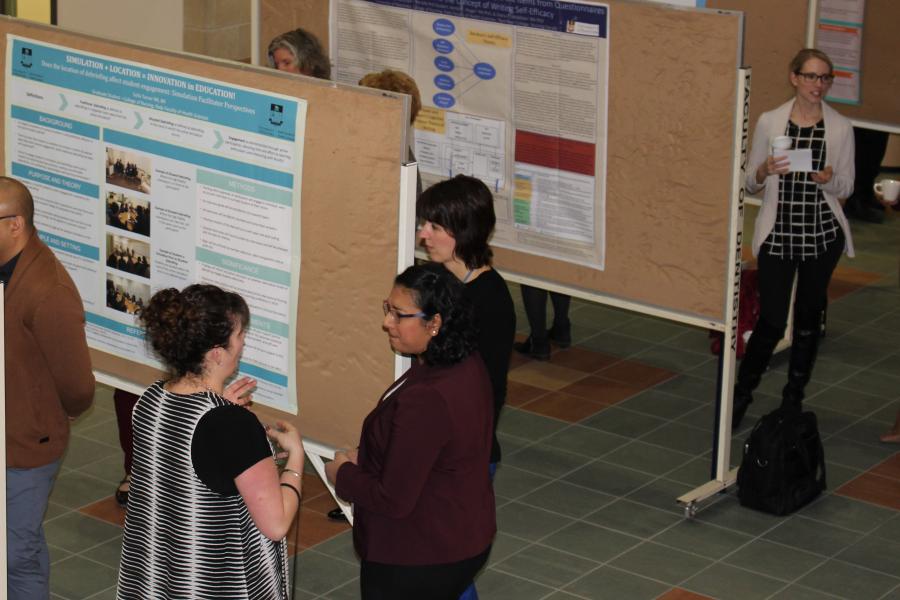
Manitoba Health Student Research Day
Manitoba Health Student Research Day offers CHS students the opportunity to showcase our discipline and academic department across the health and social spectrum. CHS graduate students and residents compete for 13 awards at the Manitoba Health Research Poster Competition scheduled for June each year.
Advisors
Overview
Explore the tabs to find faculty currently accepting graduate students.
Please note that not all advisors have funding. Students should discuss this question directly with potential advisors to learn more.
Accepting MSc students
| Faculty member | Appointment | Research interests |
|---|---|---|
| Tracie Afifi | Full-time | Child maltreatment, mental health, resilience, prevention, and intervention |
| John Ataguba | Full-time | Economics of ageing, health economics methodology, health equity, health financing; health inequality, social determinants of health |
| Zeb Aurangzeb | Part-time | Healthcare cost, health economics models, cost-effectiveness, cost-utility and budget impact analyses, economic evaluation of cancer drugs, health technology assessments, health financing, social determinants of health |
| Meghan Azad | Part-time | Developmental origins of health and disease, infant nutrition, breastfeeding, breast milk composition, child health, allergic disease, asthma, obesity, birth cohorts |
| Ramesh Banadakoppa Manjappa | Full-time | Maternal, newborn and child health, HIV/AIDS, global public health, program science |
| Marissa Becker | Full-time | Infectious diseases, HIV/AIDS, global public health, vulnerable populations, and program science |
| Clara Bohm | Part-time | Characterizing effect exercise and physical activity on functional status in kidney disease and dialysis, improving person-centered care and quality of care in hemodialysis, clinical trials, mixed methods, patient engagement |
| Songul Bozat-Emre | Part-time | Pharmacoepidemiology, vaccine effectiveness and safety, severe outcomes associated with COVID-19, unintended impacts of COVID-19, harms associated with substance use, and population-based administrative data |
| Douglas Brownridge | Full-time | Epidemiology of family violence |
| Robert Chase | Full-time | Occupational health – musculoskeletal injuries, global health, refugee and immigrant health, qualitative research methods, addiction, and mental health |
| Maryanne Crockett | Part-time | Pediatric infectious diseases, global health, maternal, newborn and child health, immigrant health |
| Linda Diffey | Full-time | Indigenous health, anti-racist pedagogy, Indigenous research methodologies, Indigenous resurgence |
| Ana Hanlon-Dearman | Part-time | Childhood developmental disabilities, specifically FASD and autism spectrum disorder |
| Michelle Driedger | Full-time | Metis health, decolonizing methods, public health and health risk communication, vaccine-hesitancy, doctor-patient conversations, qualitative methods, knowledge transfer in situations characterized by uncertainty, critical social science |
| Karen Duncan | Full-time | Family financial and economic security, family/friend caregiving, consumer insolvency, valuation of time, work-family interrelationships |
| Brenda Elias | Full-time | Indigenous health, social determinants of health, public health, survey research methods, mix methods (qualitative/quantitative) |
| Faran Emmanual | Full-time | HIV/AIDS surveillance, HIV/AIDS prevention programs, monitoring and evaluation systems, street children, universal health coverage |
| Ana Hanlon-Dearman | Part-time | Childhood developmental disabilities, specifically FASD and Autism Spectrum Disorder |
| Shiva Halli | Full-time | International health especially migration as a risk factor in the spread of HIV/STDS infection, immigrants’ health in Canada, violence against women, international demography, reproductive health |
| Andrew Hatala | Full-time | Medical anthropology, youth resilience and well-being, Indigenous health, transcultural psychiatry, culture and spirituality, qualitative health research, community-based research |
| Margaret Haworth-Brockman | Part-time | Sex- and gender-analyses, intersectionality, women’s health issues and related policies, perinatal care, knowledge translation, public health, infectious diseases |
| Travis Hrubeniuk | Part-time | Physical activity and chronic disease management, applied exercise physiology, population health |
| Depeng Jiang | Full-time | Person-centered statistical approach in health science, clinical trial design and intervention evaluation, latent variable analysis, and structure equation model (SEM), longitudinal data analysis and multilevel model, statistical models for behavioral data and computational methods |
| Esyllt W. Jones | Part-time | Multiple sclerosis, clinical epidemiology, comorbidity, pediatric MS, health services research, patient-reported outcomes |
| Christine Kelly | Full-time | Home care, long-term care, Canadian health and social policy, disability studies, gender, aging |
| Josée Lavoie | Full-time | Contracting in health, equity, Indigenous health, primary health care, community-based research, health care policy, international comparisons, financing, case study methodology |
| Lisa Lix | Full-time | Methods for data quality assessment, chronic disease surveillance methods, risk prediction models, analysis of longitudinal/repeated measures; patient-reported outcome (PROMs) measures; health services research methodology, robust statistics, machine-learning methods |
| Shuangbo Liu | Part-time | Acute coronary syndrome outcomes, cardiovascular diseases, women’s heart health, clinical epidemiology, and health services |
| Deborah McPhail | Full-time | Class structures and health inequalities , colonialism in health and illness , critical obesity studies , critical race theory , gender studies / gender and health , Health inequity , qualitative and feminist research methods , social theories of health and illness |
| Ruth Ann Marrie | Part-time | Multiple sclerosis, clinical epidemiology, comorbidity, pediatric multiple sclerosis, health services research, patient-reported outcomes |
| Lyle McKinnon | Part-time | HIV prevention, Mucosal immunology and immune-regulation, epidemiology of HIV in key populations in Kenya, South Africa, Uganda and Thailand, Sexually Transmitted Infections, microbiome, and vaccine responsiveness, combining biomedical and epidemiological analysis of HIV/sexually transmitted infection risk |
| Deborah McPhail | Full-time | Health inequity, critical obesity studies, qualitative and feminist research methods, social theories of health and illness, gender studies / gender and health, critical race theory, colonialism in health and illness, class structures and health inequalities |
| Javier Mignone | Full-time | Social determinants of health, Indigenous health, intercultural health, mental health, program evaluation, construct measurement |
| Caroline Piotrowski | Full-time | Trauma and resilience in children and youth, sibling relationships, posttraumatic growth, trauma-informed care, violence and injury prevention, effects of exposure to violence |
| Claudio Rigatto | Part-time | Telemonitoring in high-risk CKD, biomarkers of cardiovascular disease in CKD, biomarkers of AKI, development and validation of risk prediction models in kidney disease |
| Kerstin Roger | Full-time | Health and aging, caregiving and family/community interface with healthcare, intercultural determinants of health and wellness, death and dying, qualitative/mixed methods |
| Razvan Romanescu | Full-time | Statistical genetics methods for familial and unrelated samples, genetic epidemiology, likelihood-based inference for health data, infectious disease prediction models, biostatistics |
| Kelly Russell | Part-time | Sport-related injury, traumatic brain injuries, childhood injury, epidemiology |
| Deepa Sankaran | Part-time | Maternal, neonatal and child health and nutrition, public health nutrition, implementation science, global health |
| Robert Schroth | Part-time | Early childhood caries, early childhood oral health, vitamin d, oral health, Indigenous child health, program evaluation, dental epidemiology |
| Souradet Shaw | Full-time | Sexually transmitted and bloodborne infections, global public health, social epidemiology, public health surveillance, vulnerable populations |
| Shahin Shooshtari | Full-time | Longitudinal research, aging, health and well-being in intellectual and developmental disabilities, community health assessment |
| Kathryn Sibley | Full-time | Knowledge translation, implementation science, aging, rehabilitation, exercise |
| Navdeep Tangri | Full-time | Clinical risk prediction, chronic kidney disease, epidemiology, dialysis |
| Mahmoud Torabi | Full-time | Biostatistics, cluster detection, longitudinal data analysis, small area estimation, spatial statistics, survival data analysis |
| Marcelo Urquia | Full-time | Maternal and child health, perinatal epidemiology, immigration and ethnic diversity, domestic violence, health equity, gender equity, health services research, sociocultural determinant of health and wellbeing, applied population |
| Reynold Washington | Part-time | Infectious diseases (HIV/AIDS, TB), MNCH, health services training systems, public health surveillance: India |
| Jennifer Yamamoto | Part-time | Diabetes in pregnancy, specifically understanding how diabetes technologies can be leveraged to improve pregnancy outcomes for people living with diabetes and their children |
| Ryan Zarychanski | Part-time | Randomized controlled trials, platform trials, Bayesian statistics, systematic reviews/meta-analysis, anticoagulation, hematologic aspects of critical illness, transfusion medicine |
Accepting PhD students
| Faculty member | Appointment | Research interests |
|---|---|---|
| Tracie Afifi | Full-time | Child maltreatment, mental health, resilience, prevention, and intervention |
| John Ataguba | Full-time | Economics of ageing, health economics methodology, health equity, health financing; health inequality, social determinants of health |
| Zeb Aurangzeb | Part-time | Healthcare cost, Health economics models, cost-effectiveness, cost-utility and budget impact analyses, economic evaluation of cancer drugs, health technology assessments, health financing, social determinants of health |
| Meghan Azad | Part-time | Developmental origins of health and disease, infant nutrition, breastfeeding, breast milk composition, child health, allergic disease, asthma, obesity, birth cohorts |
| Ramesh Banadakoppa Manjappa | Full-time | Maternal, newborn and child health, HIV/AIDS, global public health, program science |
| Marissa Becker | Full-time | Infectious diseases, HIV/AIDS, global public health, vulnerable populations, and program science |
| Clara Bohn | Part-time | Characterizing effect exercise and physical activity on functional status in kidney disease and dialysis, improving person-centered care and quality of care in hemodialysis, clinical trials, mixed methods, patient engagement |
| Douglas Brownridge | Full-time | Epidemiology of family violence |
| Malcolm Doupe | Full-time | Health services research, aging and the use of health care services, implementation science |
| Michelle Driedger | Full-time | Metis health, decolonizing methods, public health and health risk communication, vaccine-hesitancy, doctor-patient conversations, qualitative methods, knowledge transfer in situations characterized by uncertainty, critical social science |
| Karen Duncan | Full-time | Family financial and economic security, family/friend caregiving, consumer insolvency, valuation of time, work-family interrelationships |
| Brenda Elias | Full-time | Indigenous health, social determinants of health, public health, survey research methods, mix methods (qualitative/quantitative) |
| Songul Bozat-Emre | Part-time | Pharmacoepidemiology, vaccine effectiveness and safety, severe outcomes associated with COVID-19, unintended impacts of COVID-19, harms associated with substance use, and population-based administrative data |
| Shiva Halli | Full-time | International health especially migration as a risk factor in the spread of HIV/STDS infection, immigrants’ health in Canada, violence against women, international demography, reproductive health |
| Andrew Hatala | Full-time | Medical anthropology, youth resilience and well-being, Indigenous health, transcultural psychiatry, culture and spirituality, qualitative health research, community-based research |
| Depeng Jiang | Full-time | Person-centered statistical approach in health science, clinical trial design and intervention evaluation, latent variable analysis, and structure equation model (SEM), longitudinal data analysis and multilevel model, statistical models for behavioral data and computational methods |
| Esyllt Jones | Part-time | Multiple sclerosis, clinical epidemiology, comorbidity, pediatric multiple sclerosis, health services research, patient-reported outcomes |
| Christine Kelly | Full-time | Home care, long-term care, Canadian health and social policy, disability studies, gender, aging |
| Josée Lavoie | Full-time | Contracting in health, equity, Indigenous health, primary health care, community-based research, health care policy, international comparisons, financing, case study methodology |
| Ruth Ann Marrie | Part-time | Multiple sclerosis, clinical epidemiology, comorbidity, pediatric multiple sclerosis, health services research, patient-reported outcomes |
| Lyle McKinnon | Part-time | HIV prevention, Mucosal immunology and immune-regulation, epidemiology of HIV in key populations in Kenya, South Africa, Uganda and Thailand, Sexually Transmitted Infections, microbiome, and vaccine responsiveness, combining biomedical and epidemiological analysis of HIV/sexually transmitted infection risk |
| Deborah McPhail | Full-time | Class structures and health inequalities , colonialism in health and illness , critical obesity studies , critical race theory , gender studies / gender and health , Health inequity , qualitative and feminist research methods , social theories of health and illness |
| Javier Mignone | Full-time | Social determinants of health, Indigenous health, intercultural health, mental health, program evaluation, construct measurement |
| Caroline Piotrowski | Full-time | Trauma and resilience in children and youth, sibling relationships, posttraumatic growth, trauma-informed care, violence and injury prevention, effects of exposure to violence |
| Claudio Rigatto | Part-time | Telemonitoring in high-risk CKD, biomarkers of cardiovascular disease in CKD, biomarkers of AKI, development and validation of risk prediction models in kidney disease |
| Kerstin Roger | Full-time | Health and aging, caregiving and family/community interface with healthcare, intercultural determinants of health and wellness, death and dying, qualitative/mixed methods |
| Razvan Romanescu | Full-time | Statistical genetics methods for familial and unrelated samples, genetic epidemiology, likelihood-based inference for health data, infectious disease prediction models, biostatistics |
| Kelly Russell | Part-time | Sport-related injury, traumatic brain injuries, childhood injury, epidemiology |
| Deepa Sankaran | Part-time | Maternal, neonatal and child health and nutrition, public health nutrition, implementation science, global health |
| Robert Schroth | Part-time | Early childhood caries, early childhood oral health, vitamin d, oral health, Indigenous child health, program evaluation, dental epidemiology |
| Souradet Shaw | Full-time | Sexually transmitted and bloodborne infections, global public health, social epidemiology, public health surveillance, vulnerable populations |
| Shahin Shooshtari | Full-time | Longitudinal research, aging, health and well-being in intellectual and developmental disabilities, community health assessment |
| Kathryn Sibley | Full-time | Knowledge translation, implementation science, aging, rehabilitation, exercise |
| Navdeep Tangri | Full-time | Clinical risk prediction, chronic kidney disease, epidemiology, dialysis |
| Mahmoud Torabi | Full-time | Biostatistics, cluster detection, longitudinal data analysis, small area estimation, spatial statistics, survival data analysis |
| Marcelo Urquia | Full-time | Maternal and child health, perinatal epidemiology, immigration and ethnic diversity, domestic violence, health equity, gender equity, health services research, sociocultural determinant of health and wellbeing, applied population |
| Reynold Washington | Part-time | Infectious diseases (HIV/AIDS, TB), MNCH, health services training systems, public health surveillance: India |
| Ryan Zarychanski | Part-time | Randomized controlled trials, platform trials, Bayesian statistics, systematic reviews/meta-analysis, anticoagulation, hematologic aspects of critical illness, transfusion medicine |

Awards and scholarships
The University of Manitoba issues more than $17 million to students each year in the form of scholarships and bursaries. Find out how you can access funding so you can focus on your studies.
Community Health Sciences
Community Health Sciences Graduate Student Travel Awards
The Community Health Sciences Graduate Student Travel Awards support graduate students in Community Health Sciences to present their research at conferences.
Purpose: The purpose of these awards is to assist graduate students in sharing their research findings and advancing their academic and professional development.
Eligibility: Current full-time and part-time graduate students in Community Health Sciences are eligible for these awards. Applicants must be presenting a paper or a poster related to their research at a conference held outside the city of Winnipeg.
Criteria: Students are typically eligible to receive funding once per degree program.
How to apply: To apply, fill out the application form available on UM Learn.
Community Health Science (CHS) and Public Health and Preventive Medicine (PHPM) Education and Research Travel Award
The Community Health Science (CHS) and Public Health and Preventive Medicine (PHPM) Education and Research Travel Award supports graduate students and residents in the Department of Community Health Sciences who wish to attend academic meetings relevant to their studies. This award provides financial assistance to facilitate their participation in educational conferences, meetings, and courses related to Community Health Sciences and Public Health and Preventive Medicine.
Purpose: The purpose of the award is to enable students to enhance their academic and professional development by attending events that contribute to their knowledge and skills in Community Health Sciences and Public Health and Preventive Medicine. Priority is given to those who will present papers or posters at scientific meetings or conferences.
Eligibility:
- Graduate students in the Department of Community Health Sciences.
- Residents in the Public Health and Preventive Medicine (PHPM) Post Graduate Education Program in the Department of Community Health Sciences.
Criteria: Preference is given to candidates who will present a paper or poster at a scientific meeting or conference. Evidence of acceptance of the presentation must be provided. Applicants must also include details about the event, its location, dates, and any other funding sources available for their travel.
How to apply: To apply, complete the application form available onUM Learn. Submit the application letter and supporting materials electronically.
Deadline: Applications must be submitted by April 30 at 12:00 pm. Late applications will not be considered.
For more information, contact the department.
David G. Fish Memorial Scholarship
The David G. Fish Memorial Scholarship honors the memory of Dr. David G. Fish, the founding Department Head of the Department of Social/Preventative Medicine at the University of Manitoba. Established by his family, friends, and colleagues, an endowment fund was created at the University, with contributions from the Manitoba Scholarship and Bursary Initiative.
Purpose: This scholarship commemorates Dr. Fish's dedication to graduate education and international health. It supports graduate students in conducting research abroad, reflecting Dr. Fish's vision and achievements in the field of international health.
Eligibility: The scholarship is open to graduate students pursuing research abroad. Students from various academic backgrounds may apply, provided their research aligns with the scholarship's focus on international health.
Criteria: Applicants must demonstrate a commitment to conducting research that contributes to the field of international health. The research proposal should outline the student's objectives, methodology, and expected outcomes. Additionally, applicants should highlight their academic achievements and relevant experiences.
How to apply: To apply, students should submit a research proposal outlining their project's objectives, methodology, and significance in the field of international health. Application instructions and requirements can be found on the scholarship's official website or through the University's scholarship portal.
Deadline: The application deadline for the David G. Fish Memorial Scholarship is typically announced each year. Students should ensure they submit their applications by the specified deadline to be considered for the scholarship.
For more information: For further details about the scholarship, including application guidelines and deadlines, students are encouraged to visit the Graduate Studies Awards Database.
Greene Memorial Fellowship
The Greene Memorial Fellowship was created by Joe Greene to support nurses pursuing advanced studies in community health or public health at the University of Manitoba. This fellowship aims to provide financial assistance to nurses dedicated to enhancing their education and expertise in these fields.
Purpose: The purpose of the Greene Memorial Fellowship is to offer financial support to nurses who are advancing their knowledge and skills in community health or public health. By providing scholarships, the fellowship aims to encourage nurses to pursue further education and contribute to the improvement of healthcare in their communities.
Eligibility: The fellowship is available to nurses who are enrolled in graduate programs related to community health or public health at the University of Manitoba. Recipients may hold the fellowship concurrently with other awards, subject to the policies of the Faculty of Graduate Studies. Previous recipients are eligible to reapply, although the fellowship is not automatically renewable.
Criteria: Applicants must be nurses actively pursuing advanced studies in community health or public health at the University of Manitoba. Preference may be given to candidates who demonstrate a strong commitment to improving healthcare in their communities. Previous academic achievements and relevant experiences may also be considered during the selection process.
How to apply: To apply for the Greene Memorial Fellowship, eligible candidates should submit an application following the guidelines provided by the University of Manitoba. Application materials typically include a completed application form, academic transcripts, letters of recommendation, and a personal statement outlining the applicant's academic and career goals in community health or public health.
Deadline: The deadline for submitting applications for the Greene Memorial Fellowship is usually announced each year. Applicants should ensure they submit their complete application by the specified deadline to be considered for the fellowship.
For more information: For more information about the Greene Memorial Fellowship, including application procedures and deadlines, interested students should visit the Graduate Studies Awards Database.
Jenny Fraser Memorial Award
The Jenny Fraser Memorial Award was established in memory of Jenny Fraser, a graduate student in the Master of Science in Family Social Sciences program at the University of Manitoba. Following her passing in 2010, her family and friends created an endowment fund to provide a scholarship in her honor. Contributions from the Manitoba Scholarship and Bursary Initiative have also supported this fund.
Purpose: The purpose of the Jenny Fraser Memorial Award is to inspire the growth of professionals committed to enhancing the well-being of children and youth. This award aims to recognize and support individuals dedicated to making a positive impact on the lives of young people.
Eligibility: The Jenny Fraser Memorial Award is available to students pursuing studies related to the improvement of children's and youth's lives. Eligible candidates may include graduate students in programs relevant to family social sciences or related fields at the University of Manitoba.
Criteria: Applicants for the Jenny Fraser Memorial Award should demonstrate a strong commitment to the betterment of children and youth. This may be evidenced through their academic pursuits, volunteer work, or professional experiences related to supporting young people and their families.
How to apply: To apply for the Jenny Fraser Memorial Award, eligible students should follow the application procedures outlined by the University of Manitoba. Application requirements typically include completing an application form, providing academic transcripts, and submitting any additional documents or statements required for consideration.
Deadline: The deadline for submitting applications for the Jenny Fraser Memorial Award is usually announced each year. Applicants should ensure they submit their complete application by the specified deadline to be considered for the scholarship.
For more information: For further details regarding the Jenny Fraser Memorial Award, including application guidelines, deadlines, and additional information, students are encouraged to visit Graduate Studies Awards Database.
John (Jack) MacDonald Lederman and John Macdonell Bursary
The John (Jack) MacDonald Lederman and John Macdonell Bursary was established at the University of Manitoba through a generous testamentary gift of $144,611 from Mr. John McIntyre Stoddart. This bursary aims to provide financial assistance to graduate students enrolled in Community Health Sciences at the University.
Purpose: The purpose of the bursary is to offer financial support to graduate students pursuing studies in Community Health Sciences at the University of Manitoba. It aims to alleviate financial barriers and enable students to focus on their academic pursuits.
Eligibility: To be eligible for the John (Jack) MacDonald Lederman and John Macdonell Bursary, students must meet the following criteria:
- Enrolled full-time in the Faculty of Graduate Studies in a Master’s or Doctoral program in the Department of Community Health Sciences in the Faculty of Medicine at the University of Manitoba.
- Main research focus on health economics.
- Minimum degree grade point average of 3.0.
- Demonstrated financial need on the standard University of Manitoba bursary application form.
Criteria: The bursary is awarded annually to one graduate student meeting the eligibility requirements. Preference is given to students with a primary research focus on health economics. Financial need and academic performance are also considered during the selection process.
How to apply: Students can apply for the bursary by completing the application form, which is typically available by mid to late August each year. The application must be submitted by the closing date of October 1. Applicants should ensure they meet all eligibility criteria and provide necessary documentation to support their application.
Deadline: The closing date to apply for the John (Jack) MacDonald Lederman and John Macdonell Bursary is October 1 each year. Late applications will not be accepted, so students are encouraged to submit their applications before the deadline.
For more information: For further inquiries regarding the bursary, students can email CHSInfo@umanitoba.ca.
Manitoba Family Year 1994 Legacy Scholarship
The Manitoba Family Year 1994 Legacy Scholarship was established to commemorate the United Nations International Year of the Family in 1994. In recognition of the significant involvement of Manitoba citizens during this year, the Premier's Family Year-94 Volunteer Council and the Government of Manitoba created a fund of $50,000. The University of Manitoba Graduate Fellowship Matching Funds Program also provided matching funds to support this initiative.
Purpose: The purpose of the Manitoba Family Year 1994 Legacy Scholarship is to support and encourage research on the family. This scholarship aims to recognize academic excellence among graduate students studying in the Department of Family Social Sciences at The University of Manitoba.
Eligibility: The scholarship is available to graduate students enrolled in the Department of Family Social Sciences at The University of Manitoba. Eligible candidates must be pursuing studies related to family research.
Criteria: Applicants for the Manitoba Family Year 1994 Legacy Scholarship should demonstrate academic excellence and a commitment to research on family-related topics. The scholarship is awarded based on merit, with consideration given to the applicant's academic achievements and research goals.
How to apply: Students interested in applying for the scholarship should follow the application procedures provided by The University of Manitoba. Application requirements typically include completing an application form, providing academic transcripts, and submitting any additional documents required for consideration.
Deadline: The deadline to apply for the Manitoba Family Year 1994 Legacy Scholarship is usually announced each year. Applicants should ensure they submit their complete application by the specified deadline to be considered for the scholarship.
For more information: For further information about the Manitoba Family Year 1994 Legacy Scholarship, interested students can visit the Faculty of Graduate Studies Awards Database.
University of Manitoba
Community Health Sciences
Community Health Sciences Graduate Student Travel Awards
Community Health Sciences encourages graduate students to submit and present papers at conferences.
Eligibility: Current full-time and part-time graduate students in Community Health Sciences who will present a paper or a poster related to their research at a conference held outside the city of Winnipeg.
Normally students will not receive funding more than once per degree program.
To apply, complete the application form available in UM Learn.
Community Health Science (CHS) and Public Health and Preventive Medicine (PHPM) Education and Research Travel Award
Available for: eligible travel between July 1 to June 30 (of the following year).
Deadline: applications are due April 30 by 12:00 pm (late applications will not be considered)
Eligibility:
- Graduate students in the Department of Community Health Sciences to travel to academic meetings in support of their studies in Community Health Sciences and/or;
- Residents in the Public Health and Preventive Medicine (PHPM) Post Graduate Education Program in the Department of Community Health Sciences to travel to educational conferences, meetings and courses consistent with their program.
Details:
Preference will be given to candidates who will be presenting a paper or a poster at a scientific meeting or conference. Evidence documenting the acceptance of a paper or poster presentation must be included with the request for funding. Candidates will be required to submit their application letters and any supporting materials electronically.
The application letter will need to include a description of conference/meeting/course, its location and dates as well as other sources of funds available to support their travel.
A maximum of 50 per cent of travel expenses in funding will made available per student per academic meeting, dependent on available funds. Graduate students may receive funding from this award up to a maximum of two times. A graduate student may apply no more than once during any two-year period in the program, based on the academic year.
Funding support is available for PHPM residents to travel to educational conferences, meetings and courses, consistent with the training objectives of the relevant Royal College of Physicians and Surgeons Residency Program.
Due to limited funds being available, students will be asked if there are other sources of funding available to support their travel (e.g., from grants). As some fellowships include funding support for travel to academic meetings, students receiving these awards may not be approved for funding from the MMCF – Community Medicine Education and Research Travel Award. In such requests, any extenuating circumstances should be detailed in the application letter.
Normally students will not receive funding more than once per degree program.
To apply, complete the application form available in UM Learn.
For more information, contact the department.
David G. Fish Memorial Scholarship
In memory of Dr. David G. Fish, his family, friends and colleagues have established an endowment fund at the University of Manitoba. The Manitoba Scholarship and Bursary Initiative has made a contribution to this fund.
Dr. David G. Fish (1929–2000) was the founding Department Head of the Department of Social/Preventative Medicine at the University of Manitoba. He devoted his career to graduate education and international health.
This fund commemorates Dr. Fish, his vision, and his accomplishments and also reflects his interest in research on international health by offering scholarship support for graduate students who undertake research abroad.
Greene Memorial Fellowship
Joe Greene has established a fund to provide scholarships for Nurses who pursue further studies in community health or public health at the University of Manitoba.
Recipients may hold the Greene Memorial Fellowship concurrently with any other awards, consistent with policies in the Faculty of Graduate Studies.
The Fellowship is not automatically renewable but previous recipients may apply.
Jenny Fraser Memorial Award
In memory of Jenny Fraser, a graduate student in the Master of Science in Family Social Sciences program at the time of her death in 2010, family and friends established an endowment fund at the University of Manitoba to offer a scholarship in her name. The Manitoba Scholarship and Bursary Initiative has made a contribution to the fund.
The purpose of the award is to encourage the development of professionals who are dedicated to improving the lives of children and youth.
John (Jack) Macdonald Lederman and John Macdonell Bursary
Through a testamentary gift, Mr. John McIntyre Stoddart made a gift of $144,611 to the University of Manitoba to establish the John (Jack) MacDonald Lederman and John MacDonell Bursary.
The purpose of the bursary is to provide financial support to graduate students in Community Health Sciences at the University of Manitoba.
Each year the available annual income will be used to offer one bursary to a graduate student who: is enrolled full-time in the Faculty of Graduate Studies in a Master’s or Doctoral program in the Department of Community Health Sciences in the Faculty of Medicine at the University of Manitoba has health economics as a main research focus has achieved a minimum degree grade point average of 3.0. has demonstrated financial need on the standard University of Manitoba bursary application form.
The application is usually available by mid to late August each year. The closing date to apply is October 1 each year.
If you have questions related to the award, please email CHSInfo@umanitoba.ca.
Manitoba Family Year 1994 Legacy Scholarship
To commemorate 1994, the United Nations International Year of the Family, and the major participation of Manitoba citizens, the Premier's Family Year-94 Volunteer Council and the Government of Manitoba have established a fund of $50,000 including matching funds provided by The University of Manitoba Graduate Fellowship Matching Funds Program.
The Manitoba Family Year 1994 Legacy Scholarship will be awarded to a graduate student studying in the Department of Family Social Sciences at The University of Manitoba.
The objective of the scholarship is to support and encourage research on the family and to recognize academic excellence.
Faculty of Graduate Studies
Dean of Graduate Studies Student Achievement
The Dean of Graduate Studies Student Achievement Prize recognizes the outstanding academic achievement, strong leadership skills, and notable personal service of a University of Manitoba graduate student to the University, other students, and the community.
Faculty of Graduate Studies Travel Awards
The Faculty of Graduate Studies allocates funds to assist master's and PhD students with costs for travel for presentations of papers, posters, or other creative work pertinent to their studies.
Approved events include conferences, major festivals or other artistic events sponsored by recognized national or international organizations.
It is incumbent on the individual traveling to be aware of the risks when traveling. If you are traveling abroad, ensure you visit the Department of Foreign Affairs and International Trade (DFAIT) web site for details on the country to which you are traveling.
In addition, it is recommended that you visit the International Centre's website for international travel tools, guidelines and helpful resources to support you on your travels
Governor General Gold Medal – Faculty of Graduate Studies
The Governor-General of Canada offers two annual gold medals called The Governor General’s Gold Medal to recognize the outstanding performance of graduate students.
These awards are based on overall academic excellence.
Johnson, Rose Mary and Frederick Allan Scholarship
Dr. Frederick A. Johnson (B.Sc. (Hons.)/45) has established an endowment fund at the University of Manitoba.
The fund will be used to offer awards for students who have successfully completed a Bachelor of Nursing degree and are preparing for a career in health administration.
Manitoba Centre For Health Policy (MCHP)
Evelyn Shapiro Award for Health Services Research
The Evelyn Shapiro Award for Health Services Research honours the distinguished career of Professor Evelyn Shapiro, particularly her contributions to health services research, especially in the field of health policy concerning the care and services for older adults.
Professor Shapiro played a key role in developing Manitoba's home care program and contributed nationally to the implementation of similar programs across Canada. As a lead researcher at the Manitoba Centre for Health Policy, her innovative and policy-relevant research gained global recognition.
Her numerous accolades include the Commemorative Medal for the 125th Anniversary of the Confederation of Canada, an honorary doctorate degree from the University of Manitoba, and the Canadian Medical Association Medal of Honour—the highest non-physician award.
In 2007, Professor Shapiro was appointed a Member of the Order of Canada. To commemorate her retirement, the Evelyn Shapiro Award for Health Services Research was established, supporting graduate students whose theses utilize the Population Health Research Data Repository.
Even after her retirement, Professor Shapiro continued as a senior scholar in CHS until her passing in 2010.
Roos Prize for Best Publication in Population Health
An endowment fund was established at the University of Manitoba in 2010, to offer the Roos Prize for Research in Population Health.
The prize was created to honour the pioneering work of Drs. Leslie and Noralou Roos in the use of administrative data for research, their extensive publication and knowledge sharing reputations, and their role in the creation of the Manitoba Centre for Health Policy (MCHP).
The purpose of the prize is to recognize excellence in sharing research findings by rewarding high quality publications.
Manitoba Training Program (MTP)
Manitoba Training Program for Health Services Research
The Manitoba Training Program for Health Services Research (MTP) is a practical training initiative designed for students actively involved in health services research.
MTP provides Master's students with $17,850 and PhD students with $22,500 annually, disbursed through university payroll in bi-weekly installments.
Ongomiizwin
Christine Egan Memorial Scholarship (for Nunavut Inuit)
In memory of Dr. Christine Egan (PhD/99), who died tragically on September 11, 2001, her family, friends, and estate have established an endowment fund at the University of Manitoba.
The purpose of the fund is to perpetuate her values of generosity and caring for others and her commitment to health and education in Nunavut and to expand opportunities for the Inuit of Nunavut to study nursing by providing scholarship support to promising Nunavut nursing students.
The scholarship is provided by interest from a permanent endowment. The approximate amount available for the 2023-2024 academic year is $16,000 distributed among successful applicants.
Applicants must meet the following criteria:
- Are Nunavut Inuit
- Have completed at least one year of a Baccalaureate Nursing degree at a post-secondary institution in Canada
- Have achieved a minimum degree grade point average of 2.5 (or equivalent) in their most recent year of full-time study
- Are enrolled full-time in the second, third, or fourth year of a Baccalaureate Nursing degree at a post-secondary institution in Canada or are nurses who are enrolled full-time in post-graduate study in Nursing or a related field at a post-secondary institution in Canada
- Have demonstrated that they are committed to a career in nursing in Nunavut
Applicants must submit an application that includes:
- A cover letter indicating why they would be a suitable recipient of this scholarship
- A completed application forms
- A curriculum vitae
- An official copy of their academic transcripts
- Confirmation of registration at a post-secondary institution in Canada
- Two confidential letters of reference from persons familiar with their academic and/or clinical work
Both achievement and need will be considered in selecting the successful applicants.
Deadline
This year's deadline is October 6, 2023.
Please submit all materials to Shelby Davis.
Public Health and Preventive Medicine Residency Program
Community Health Science (CHS) and Public Health and Preventive Medicine (PHPM) Education and Research Travel Award
Available for: Eligible travel between July 1 to June 30 (of the following year).
Deadline: Applications are due by April 30 at 12:00 pm (late applications will not be considered).
Eligibility:
- Graduate students in the Department of Community Health Sciences traveling to academic meetings supporting their studies in Community Health Sciences.
- Residents in the Public Health and Preventive Medicine (PHPM) Post Graduate Education Program in the Department of Community Health Sciences traveling to educational conferences, meetings, and courses consistent with their program.
Details:
- Preference given to candidates presenting a paper or poster at a scientific meeting or conference.
- Evidence of acceptance of a paper or poster presentation must accompany the funding request.
- Applications and supporting materials must be submitted electronically.
Application letter:
- Include conference/meeting/course description, location, dates, and other sources of funds available for travel support.
Funding:
- Maximum of 50% of travel expenses per student per academic meeting (dependent on available funds).
- Graduate students may receive funding up to two times from this award.
- PHPM residents eligible for funding consistent with the training objectives of the Royal College of Physicians and Surgeons Residency Program.
Additional notes:
- Students will be asked about other available funding sources.
- Students with funding from fellowships supporting travel may not be approved for this award.
- Extenuating circumstances should be detailed in the application letter.
- Normally, students will not receive funding more than once per degree program.
How to apply:
Complete the application form available in UM Learn.
For more information, contact the department.
Rady Faculty of Health Sciences
Dr. Forough Khadem Scholarship
To honour the life, spirit, and work of Dr. Forough Khadem, a scholarship fund has been established at the University of Manitoba. Dr. Khadem, who tragically lost her life in the Tehran plane crash on January 8, 2020, was pursuing her PhD in Immunology at the University.
Purpose:
The scholarship aims to recognize an outstanding international female graduate student at either the master’s or doctoral level. The ideal candidate demonstrates leadership, a passion for making a global impact through science, and embodies a pioneering spirit.
Criteria:
Starting from 2021-2022, the annual income from the fund will be utilized to offer one scholarship to a graduate student who:
- Is an international female student
- Is enrolled full-time in the second year or higher in a thesis-based master’s or doctoral program offered by the Faculty of Graduate Studies
- Has a minimum GPA of 3.5 based on the last 60 credit hours (or equivalent) of study
- Demonstrates leadership, a desire to impact the world through science, and embodies a pioneering spirit
- Has a primary advisor who is a faculty member of the Rady Faculty of Health Sciences
Contact:
For questions related to the award, please email RFHSgraduateawards@umanitoba.ca.
Dean of the Rady Faculty of Health Sciences Student Achievement
Available funds from the Rady Faculty of Health Sciences will be used to offer the Dean of the Rady Faculty of Health Sciences Graduate Student Achievement Prize.
The purpose of this prize is to recognize the outstanding academic achievement, strong leadership skills, and notable personal service of students in the Dr. Gerald Niznick College of Dentistry, Max Rady College of Medicine, College of Nursing, College of Pharmacy, and College of Rehabilitation Sciences.
The availability of funds for this prize will be confirmed annually by the Rady Faculty of Health Sciences.
In years when funds are available, the Dean of the Rady Faculty of Health Sciences Graduate Student Achievement Prize will be offered to graduate students who:
- have been enrolled full-time in a Master’s or Doctoral program offered by a College in the Rady Faculty of Health Sciences at the University of Manitoba for at least one year at the time of nomination;
- have achieved a minimum grade point average of 3.5 based on the last 60 credit hours (or equivalent) of study; and,
- have demonstrated strong skills and potential in leadership, community engagement, social accountability, and/or volunteerism
If you have questions related to the award, please email RFHSgraduateawards@umanitoba.ca.
Undergraduate Medical Education (UGME)
Health Advocacy
This award was established to recognize excellence in medical students’ advocacy activity in the field of population and public health sciences.
The $1,000 prize will be awarded to the small group of students (maximum six students) in the Community Health Sciences Clerkship who produce the best advocacy project as part of their Advocacy Physician Development Curriculum sessions.
Submissions are usually received in September.
For more information, email chsugme@umanitoba.ca.
Population Health Leadership
This award was established to recognize excellence in medical students’ leadership and promotion of public and population health.
The $300 prize will be awarded to the graduating student who has demonstrated contribution and leadership during their medical school training in the areas of public and population health promotion through any of the following: course work, service learning, interprofessional activities, student leadership, volunteer activities and/or extracurricular activities.
Applicants may be nominated or may self-nominate by submitting a short letter (750 word maximum).
In the letter, the applicant should describe their contribution(s) to public or population health promotion and engagement in collaboration (e.g., community organizations, allied health professionals or other groups) and how these contributions and collaborations have shaped or influenced the applicant’s approach to medicine.
Submissions are usually received in March/April.
For more information, email chsugme@umanitoba.ca.
department Research
Our researchers
Community Health Sciences draws from disciplines across the faculty, resulting in a team of researchers with great depth and experience. Explore the links below to learn more about each of these exemplary clinicians and scientists.
-
-
- Lisa Lazarus
- Shuangbo Liu
- Lisa Lix
- Robert Lorway
- Salah Mahmud
- Ramesh Banadakoppa Manjappa
- Leigh McClarty
- Deborah McPhail
- Verena Menec
- Colleen Metge
- Stephen Moses
- Vasanthakumar Namasivayam
- Nathan Nickel
- Pamela Orr
- Mike Pickles
- Caroline Piotrowski
- Claudio Rigatto
- Kerstin Roger
- Razvan Romanescu
- Noralou Roos
- Souradet Shaw
- Shahin Shooshtari
- Kathryn Sibley
- Audrey Swift
- Tamara Taillieu
- Mahmoud Torabi
- Donna Turner
- Marcelo Urquia
- Reynold Washington
- Terry Wuerz
Research programs and units
Research programs and units within the department of Community Health Sciences focus on particular areas of research and service. Some of our faculty members work within these areas, while others work within the department at large.
Research programs
Childhood Adversity and Resilience (CARe) research team
The CARe research team is led by Dr. Tracie Afifi, associate professor in the Department of Community Health Sciences, and includes team members at the masters, phd and post-doctoral levels.
The CARe research team uses quantitative statistical approaches to study the relationships between child maltreatment (physical punishment, physical abuse, sexual abuse, emotional abuse, emotional neglect, physical neglect and exposure to intimate partner violence, bullying and mental and physical health outcomes across the lifespan.
More about the CARe team
The overall goal of the CARe research team is to prevent childhood maltreatment and thereby change a child’s trajectory, improve health and strengthen families. To reach this goal, the CARe research team works towards four objectives:
- To understand the size and scope of child maltreatment using nationally-representative data
- To identify protective factors associated with decreased likelihood of child maltreatment and bullying
- To develop new evidence-based intervention strategies or modify existing programs
- To evaluate new or modified intervention strategies and programs to determine effectiveness in preventing child maltreatment and bullying and associated mental and physical health impairment.
The CARe research team is affiliated with the Manitoba Population Mental Health Research Group.

Research units
Qualitative Research Group
The Qualitative Research Group (QRG) connects qualitative research findings to real world outcomes locally and internationally, working toward positive change in the community and a better understanding of the world around us.
The group began in the spring of 2008 and now has over 200 participants from the University of Manitoba working in health sciences, psychology social work, sociology, anthropology, and a number of other disciplines. Researchers from across Canada and around the world also contribute to QRG content and participate in QRG events.
Violence & Injury Prevention Research Group
The Violence & Injury Prevention Research Group brings together researchers, knowledge users and community stakeholders with diverse interests and backgrounds who share expertise in injury and violence for the purposes of:
- creating and organizing social connections that foster the cross-fertilization of ideas and methods across disciplines and units
- strengthening existing research and practice through networking and collaborative activities
- promoting new collaborative opportunities across a wide range of interdisciplinary researchers from Manitoba, Canada, and internationally, such that innovative new directions for research and practice can be identified and pursued
Student supports
Community and outreach
Community outreach is a top priority for our department. We provide exemplary service models to individuals, communities, institutions and governments to the fullest extent, leading the way in community medicine.
-
Community Health Information and Research Partnerships (CHIRP)
CHIRP is a student-driven initiative that aims to support Winnipeg's community-based organizations (CBOs) with their research and evaluation needs by connecting them to passionate students, faculty and other helpful resources at the University of Manitoba.
CHIRP projects not only provide learning and networking opportunities for students, but allow them to utilize their academic and classroom skills towards addressing barriers to health equity in Winnipeg.
For more information, contact us at uchirp.mb@gmail.com or visit our Facebook page.
-

-
Biomedical Youth Program
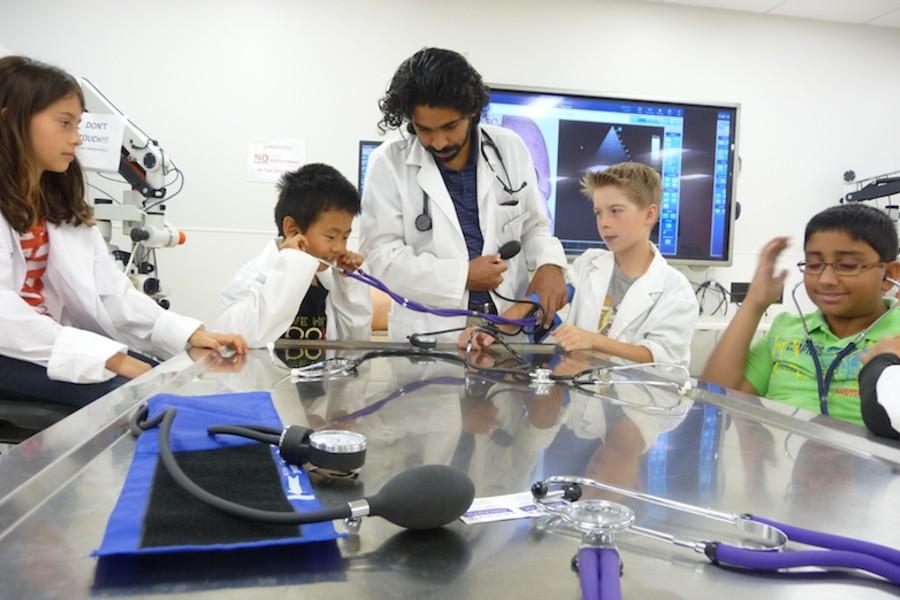
The Biomedical Youth Program summer camp is offered free of charge to students in Grades 5-12 who are interested in science. Each year, youth from the inner city, northern communities and across Winnipeg get the the chance to fill in teeth, swab cheek cells, test blood pressure and try out test out all kinds of research and health-related procedures.
-
Faculty and staff
Our team
Our faculty and staff are committed to supporting learners, colleagues and the community. Contact us to learn more about our department and what we have to offer.
Events
News and stories
View more news and stories-

Rady researchers receive early career transition awards
Rady Faculty of Health Sciences
-
Winnipeg Free Press: Satirical musical tackles health-care woes in bite-sized chunks
Rady Faculty of Health Sciences, UM Today
-

The Globe and Mail: 2024 Gairdner Award recipients paved way for revolutions in cancer treatment, genomics, and global health
Rady Faculty of Health Sciences, UM Today
You may also be looking for
Contact us
-
Graduate program inquiries
Elaine Kraeker
elaine.kraeker@umanitoba.ca
Community Health Sciences
Max Rady College of Medicine
Room S113 - 750 Bannatyne Avenue
University of Manitoba (Bannatyne campus)
Winnipeg, MB R3E 0W3 Canada
204-789-3655