
What we offer



Summer programs
Summer Early Exposure Program
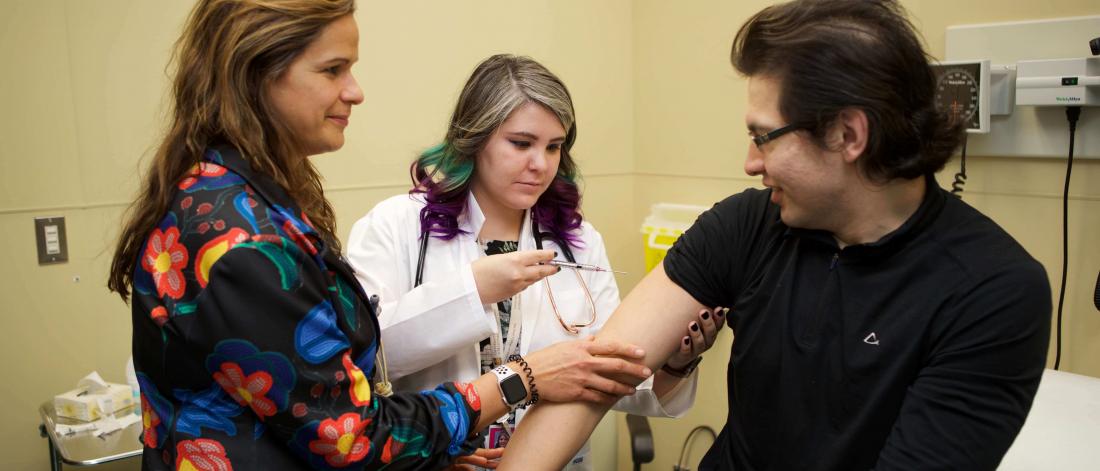
The Summer Early Exposure Program offers students the opportunity to experience a clinical setting during Med I and Med II.
About the Summer Early Exposure program
Exposures can take place in Winnipeg, across Canada or internationally. A variety of policies apply in each case - please consult Entrada for full details.
Students receive credit on their Medical Student Performance Report for each successfully registered and completed Summer Early Exposure.
Student is responsible for setting up the exposure and for ensuring all student evaluations and preceptor evaluations are completed and submitted to UGME.
All Summer Early Exposure forms are located on Summer Early Exposure's Entrada community page.
You must do an exposure if you wish to do job shadowing over the summer. If you are registered for an exposure you are automatically covered by malpractice/liability insurance and in turn are able to do shadowing.
Time commitment
The Early Exposure Program runs annually from May 30 to August 15.
Each Exposure requires a minimum of 80 hours (typically 10 full days of 8-hour shifts).
Days do not need to be consecutive and can be spread out throughout the summer.
Visiting pre-clerkship students
Visiting pre-clerkship students must meet the following requirements to be eligible to participate in the Summer Early Exposure Program:
- Organize your own Summer Early Exposure.
- Complete the application form [PDF] for visiting students.
- Register as a visiting student for the Summer Early Exposure Program through the UGME Office. This registration occurs after we receive your application.
- Ensure payment of the University of Manitoba registration fee in full before participation on the ward/clinic and meeting all application requirements. Instructions for payment will be provided.
- Complete the PHIA Confidentiality Training online before the exposure starts. Instructions will be sent to you regarding this training.
How to apply
To apply for an exposure, follow the steps below.
- Read the program policy (available on Entrada)
- Review your options (.pdf)
- Set up the exposure (preceptor's email addresses cannot be listed but we trust you can use your resources to find their contact information)
- Complete the application form (.pdf)
- Wait for UGME to email you to pay registration fee (only one fee no matter how many exposures you do).
- The deadline for all applications is June 30 (annually). To allow for processing, submit your application to UGME two weeks prior to the start date of the exposure.
If your exposure takes place out-of-province or internationally, additional documentation will be required. Please contact electivesugme@umanitoba.ca for details.
For more information about the Summer Early Exposure Program, email electivesUGME@umanitoba.ca.
Summer Research Program
This program offers medical students (either in their first or second summer) the opportunity to engage in original research, either basic or clinical, under the supervision of a Max Rady College of Medicine supervisor.
About the Summer Research program
The specific aim of the program is to develop student skills within the following areas:
- Critical evaluation of data
- Effective communication of results
- Experimental design
- Hypothesis testing
This is a non-degree course but will be recorded on your transcript.
Time commitment
The program runs for approximately 12 weeks during the summer recess between either year one and two OR year two and three of their medical training program (dependent upon program time allowances). Your chosen project must be feasible within this time frame.
This program is considered full-time with a two-week paid vacation. Clinical exposure of 0.5 to 1.0 days per week (setting of the students choosing with supervisors’ approval) is suggested but not mandatory.
Compensation
All students receive stipendiary support, presently $7,500 for the summer. The program pays the students directly via direct deposit). Students must submit a direct deposit form directly to payroll immediately upon acceptance into the program.
How to apply
A call for applications will be circulated to medical students annually, including abstracts from potential supervisors.
Once you have located a supervisor who has agreed to work with you on a project, you must begin preparing three documents that will be required for the application process:
- Research proposal
- Abstract
- Student role document
Samples of these documents and additional application information are available here.
For more information about the Summer Research Program, email advanceddegreesmedicine@umanitoba.ca
Electives
The electives program provides an opportunity for self-education in an area of your own interest. Courses are listed below.
Anesthesia
UM and Canadian medical school students
- a minimum of 2 weeks to a maximum of 4 weeks duration is suggested; approval is subject to availability.
- prior experience in anesthesia (2 weeks) is required before requesting an elective rotation.
International medical students
- electives must be 2 weeks duration and are subject to availability.
- prior experience in anesthesia (2 weeks) is required before requesting an elective rotation.
Content
- Daily OR assignments during which the student will work one-on-one with the anesthesiologist or the resident / fellow.
- Students should review the slate and the patient charts the day before and contact the attending anesthesiologist to discuss the cases in preparation for the next day’s slate.
- Attendance at academic half day on Wednesday mornings; Anesthesia Grand Rounds at 0745 and Anesthesia Resident Seminar at 0900. Information for the academic half days will be provided in advance.
- Electives sites are the Health Sciences Centre (HSC) and at St. Boniface General Hospital (SBGH).
Areas of subspecialty experience:
| Subspecialty | Site |
|---|---|
| Cardiac | St. Boniface Hospital |
| Obstetrical | Health Sciences Centre / St. Boniface Hospital |
| Acute Pain | Health Sciences Centre |
| Chronic pain | Health Sciences Centre |
| Pediatrics | Health Sciences Centre Children's Hospital |
All electives must begin with at least one week in the adult general OR. Students may request a maximum of two days in a subspecialty area; days will be scheduled as availability allows.
Call responsibility
Call is not a mandatory part of the anesthesia elective. Students who would like to volunteer for a call shift must discuss this with the Anesthesia Site Coordinator and / or Senior anesthesia slating resident. All call shifts end at 22h00 in order for students to obtain adequate rest prior to regular scheduled assignments the next day.
Orientation
The student will meet with the anesthesia undergraduate program assistant on the first day of their elective to review the forms and expectations of the rotation.
Student evaluation
Students are required to provide the link for the UG Daily Evaluation survey to be completed by their primary preceptor (faculty, fellow or resident).
An exit interview will be performed at the end of the rotation. At this meeting, the Undergraduate Site Director will review the UG Daily Evaluations report and discuss the student’s performance during the elective. The Site Director will collate the information collected on the UG Daily Evaluations report to complete the student’s final evaluation.
If the there are any concerns regarding a student’s performance, a mid-rotation interview will be conducted.
Mission statement: undergraduate anesthesia program
To teach fundamental knowledge and skills that will enable you to deliver optimal care to patients in elective and emergent clinical situations.
Educational objectives of anesthesiology elective
By the end of this elective period the student shall:
- be able to provide airway support
- be able to gain airway access in most patients
- be able to perform an adequate preoperative assessment in a healthy patient
- be able to outline the options for anesthesia, and the general differences
- be able to estimate fluid requirements and provide a rationale
For students considering a career in anesthesia, this elective will also provide the student with the capacity to:
- be able to describe the daily activities that make up Anesthesia practice
- be able to outline the areas of skill and knowledge that are integral to Anesthesia practice
- be able to summarize the advantages and disadvantages of Anesthesia for them as a career choice
Medical expert
The student will understand the anesthesiologist’s role in the perioperative management of the surgical patient, as it applies to:
- pre-op assessment
- optimization
- intraoperative management
- pain management and recovery
- describe the principles of a preoperative assessment including an airway examination and apply this knowledge in a clinical setting
- discuss the principles of intravenous therapy and perform intravenous access on a patient using a sterile technique
- formulate a differential diagnosis of hypoxemia and describe the delivery of oxygen in the health care setting
- describe a basic general anesthetic technique and commonly used pharmacologic agents including their mechanism of action
- discuss the basic principles of airway management in the unconscious patient
- perform bag, mask ventilation and intubation of the trachea in a simulated environment and clinical setting
- formulate an approach for the management of acute pain and describe basic analgesic options including the World Health Organization pain ladder
Technical skills
- intravenous cannulation
- lumbar puncture
- mask ventilation
- orotracheal intubation
- drug prep, admin and safety
Communicator
As Communicators, students will facilitate the doctor-patient relationship
- establish rapport, trust and a therapeutic relationship with patients and families
- listen effectively
- elicit relevant information and perspectives of patients, families, and the health care team
- convey relevant information and explanations to patients, families and the health care team
- convey effective oral and written information about a medical encounter
- maintain clear, accurate, appropriate, and timely records of clinical encounters/ operative procedures
- address challenging communication issues effectively
- obtain informed consent
- disclose adverse events
- addressing anger, confusion and misunderstanding using a patient centric approach
Collaborator
As Collaborators, the students will work effectively within the anesthesiology and surgery team to achieve optimal patient care:
- demonstrate a team approach to health care
- participate effectively in an inter-professional and interdisciplinary health care team
- recognize and respect the diversity of roles, responsibilities, and competences of other health professionals in the management of the surgical patient
- work with others to assess, plan, provide, and integrate care of the surgical patient
Manager
As Managers, students will participate in the activities of the anesthesiology service, making decisions, allocating resources, and contributing to the effectiveness of the health care team:
- employ information technology appropriately for patient care
- allocate finite health care resources appropriately
Health advocate
As health advocates, students will responsibly use their expertise and influence to advance the health and well-being of individual patients, communities and populations:
- concern for the best interest of patients
- identifying health needs of individual patients, and advocate for the patient, where appropriate
- promote and participate in patient safety
Scholar
As scholars, students will demonstrate a lifelong commitment to learning:
- demonstrate the ability for continuing self-learning
- discuss the principles of general / medical physiology and the application of basic sciences to anesthesiology
- demonstrate appropriate presentation skills, including formal and informal presentations
- critically evaluate medical information and its sources and apply this appropriately to clinical decisions
- critically appraise the evidence in order to address a clinical question
- integrate critical appraisal conclusions into clinical care
Professional
As professionals, students are committed to health and well-being of individuals through ethical practice, profession-led regulation and high personal standards of behavior:
- exhibit professional behaviors in practice, including honesty, integrity, commitment, compassion, respect and altruism
- demonstrate a commitment to delivering the highest quality care
- recognize and respond appropriately to ethical issues encountered in practice
- recognize and respect patient confidentiality, privacy and autonomy
- participation in peer review
- manage conflicts of interest and maintain appropriate relations with patients
- demonstrate awareness of industry influence on medical training and practice
- recognition of personal and clinical limitations
Suggested readings
- Morgan and Mikhail's Clinical Anesthesiology, 5th Edition (McGraw Hill)
- Crisis Management in Anesthesiology (Elsevier)
- The Ottawa Anesthesia Primer
- U Toronto Anesthesiology QR: A Quick Reference for medical students learning anesthesiology
Any questions regarding the rotation or concerns that a student has while on the service can be directed to the undergrad site director, the undergraduate program director or the undergraduate program assistant.
Undergraduate program contact list
Community Health Sciences
Discipline: Community Health Sciences
Subspecialties:
Indigenous Health: Policy, programs and planning [PDF]
Manitoba Centre for Health Policy [PDF]
Public health/preventive medicine (FNIHB) [PDF]
Emergency Medicine
Discipline: Emergency Medicine [PDF]
Family Medicine
Discipline: Family Medicine [PDF]
Health Care Ethics
Discipline: Health Care Ethics [PDF]
Internal Medicine
Discipline: Internal Medicine
Subspecialties:
Clinical immunology and adult allergy [PDF]
Medical Genetics
Discipline: Medical Genetics [PDF]
Medical Microbiology and Infectious Diseases
This rotation provides an educational experience in the common infectious problems experienced by patients. One-on-one teaching, small group tutorials and weekly grand rounds support an evidence-based approach to infectious disease problems. For more information, view the Infectious Diseases Residency page.
Ongomiizwin Health Services
Discipline: Ongomiizwin Health Services
Sub-specialties:
Obstetrics and Gynecology
Ophthalmology
Discipline: Ophthalmology [PDF]
Otolaryngology
Discipline: Otolaryngology [PDF]
Pathology
Discipline: Pathology [PDF]
Pediatrics
Discipline: Pediatrics
Psychiatry
Radiation Oncology
Discipline: Radiation Oncology [PDF]
Radiology
Discipline: Diagnostic Radiology [PDF] | Core Rotaion [PDF]
Special Topics in Population/Public Health
Surgery
General surgery, subspecialties:
- A service [PDF]
- Acute Care Service [PDF]
- B service [PDF]
- General pediatric surgery [PDF]
- Gold service [PDF]
- Green service [PDF]
- Orange service [PDF]
- Thoracic [PDF]
Orthopedics, subspecialties:
- Pediatric orthopedic surgery [PDF]
- Reconstructive orthopedic surgery [PDF]
- Spine orthopedic surgery [PDF]
- Sports orthopedic surgery [PDF]
- Trauma orthopedic surgery [PDF]
For more information, contact electivesugme@umanitoba.ca.
Visiting electives program
Max Rady College of Medicine accepts a limited number of visiting medical students enrolled in medical schools other than the University of Manitoba for short periods of elective study.
Please visit the AFMC Portal for guidelines and to submit an application.
International selectives
Max Rady College of Medicine offers a variety of selectives abroad, including:
Prior to departure, you must:
- complete pre-departure training through UMLearn
- complete and submit an emergency contact and liability waiver form, available on Entrada.
We also suggest that you attend the WRHA Travel Medical Clinic [PDF]and ensure you have the proper immunizations.
Advice and support
For advice on electives choices and planning, it is recommended that students discuss their situation with a mentor and or faculty member they trust to seek professional insight. Student Affairs is always available to provide assistance and insight on making informed electives choices.
Eliya Ichihashi
Electives administrator
204-789-3291
electivesUGME@umanitoba.ca
Dr. James Butler
Electives director
james.butler@umanitoba.ca
Incoming students
We offer a wide selection of resources to help support your studies at Max Rady College of Medicine.
-
Incoming UGME students
Get started on the right foot with resources just for new medical students.
-
Wellness
We're here to support the health and well-being of medical learners and their families by providing trusted, convenient and accessible information.
-
Professionalism
Learn more about the professional standards that govern our profession and our program.
Visit the resources page for more information and additional supports.
Online tools
These program-specific materials can be found on Entrada:
- Appeals
- Examinations
- Forms
The following resources can be found online:
Accreditation
Max Rady College of Medicine is fully accredited by the Committee on Accreditation of Canadian Medical Schools (CACMS).
The Integrated Accreditation provides a SharePoint portal to provide faculty and staff with key accreditation working documents, forms and information.
Connect with us

You may also be looking for
Events
View more eventsContact us
Undergraduate Medical Education (UGME)
260 Brodie Centre, 727 McDermot Avenue
University of Manitoba, Bannatyne Campus
Winnipeg, MB R3E 3P5 Canada