
Green thumb begets small business for engineering student
Study with us
Biosystems Engineering students learn to integrate the knowledge of biological sciences into engineering applications in order to develop practical solutions to problems associated with biological systems. Biosystems professors often employ students to work on exciting research projects during the summer months, giving them an opportunity to apply their knowledge and also earn a salary. Small class sizes allow one-on-one interactions with professors and provide students with great opportunities to develop their communication skills through in-class presentations.
Our program strives to graduate design-ready engineers prepared for professional practice by providing students with a broad foundation in the application of engineering principles to biological systems. Our program is accredited by the Canadian Engineering Accreditation Board.
Programs of study
Biosystems engineers have a tendency to pursue careers where they can help people, preserve the environment and tackle societal problems.
Undergraduate student resources
As a Biosystems undergraduate student, you can take advantage of opportunities and supports from academic focus areas to student groups.
Graduate student resources
Students can access opportunities, supports and resources from the Department of Biosystems Engineering, the Price Faculty of Engineering, the Faculty of Graduate Studies and UM.
-
Academic Calendar
Explore program requirements and detailed descriptions for required and elective courses throughout the electrical and computer engineering programs.
-
Supplemental Regulations (PDF)
The Supplemental Regulations contain the formal academic regulations governing Faculty of Graduate Studies programs generally and electrical and computer engineering programs in particular.
Finding a graduate studies advisor
If you are applying for MSc or PhD, before submitting an application for admission to the Faculty of Graduate Studies you must first find a faculty advisor who will accept you into their research group. The advisor will initially review your academic background, research intent, previous experience and CV and may grant tentative acceptance into the program.
To find an advisor prior to application, you must contact a faculty member whose research area aligns with your own interests. Department of Biosystems Engineering faculty members, and links to their research areas, can be found on the faculty and staff page. Please contact faculty members by email, and include the following:
- A current CV including publications, posters and conference participation; honours, awards and acknowledgements; and jobs pertaining to the field
- Copies of all post-secondary transcripts
- A one-page statement of research intent summarizing your proposed research project. If you have several research interests, please customize your statement for each faculty member you are interested in working with.
If you do not hear back in about eight weeks, that professor may not be interested in your application at this time.
Please note that tentative acceptance from an advisor does not guarantee admission into the program.
Alumni
Biosystems Engineering alumni can work in Industries such as agriculture, environment, government, oil and gas, research and design, and pharmaceutical development applying the skills they learn throughout their degree.

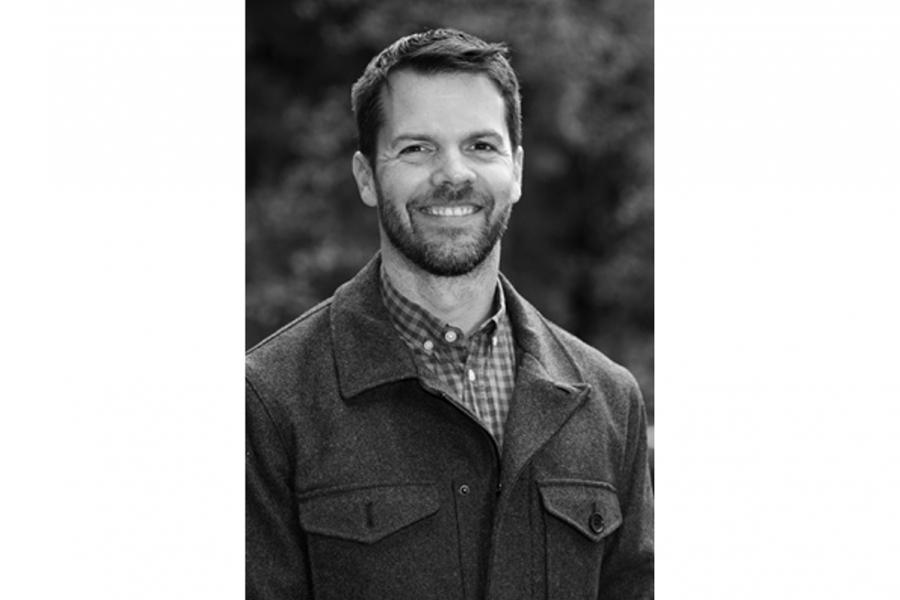
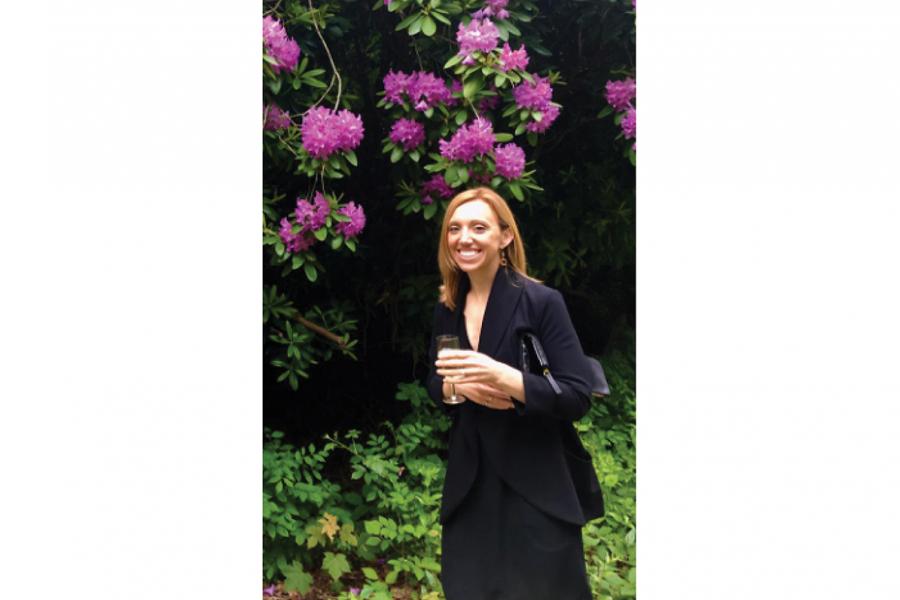














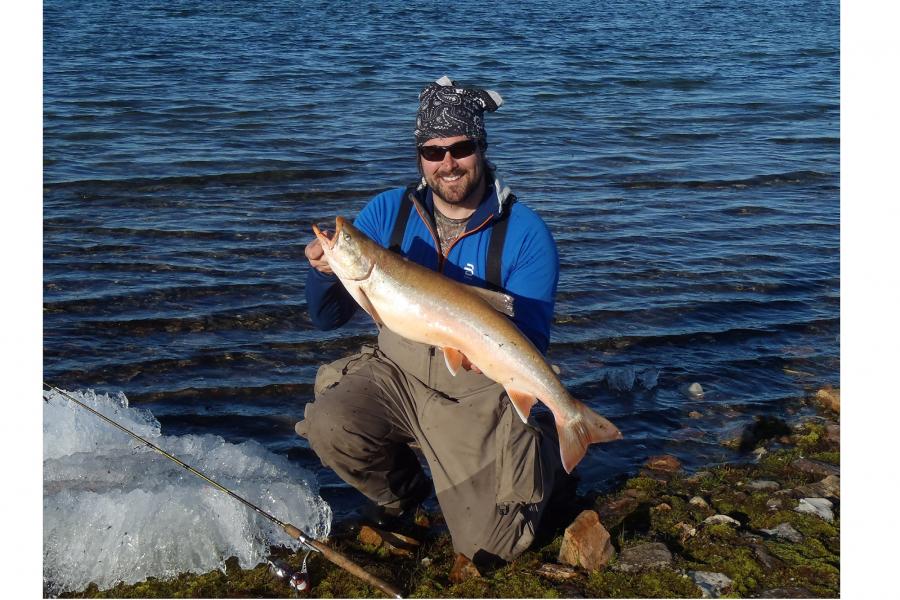





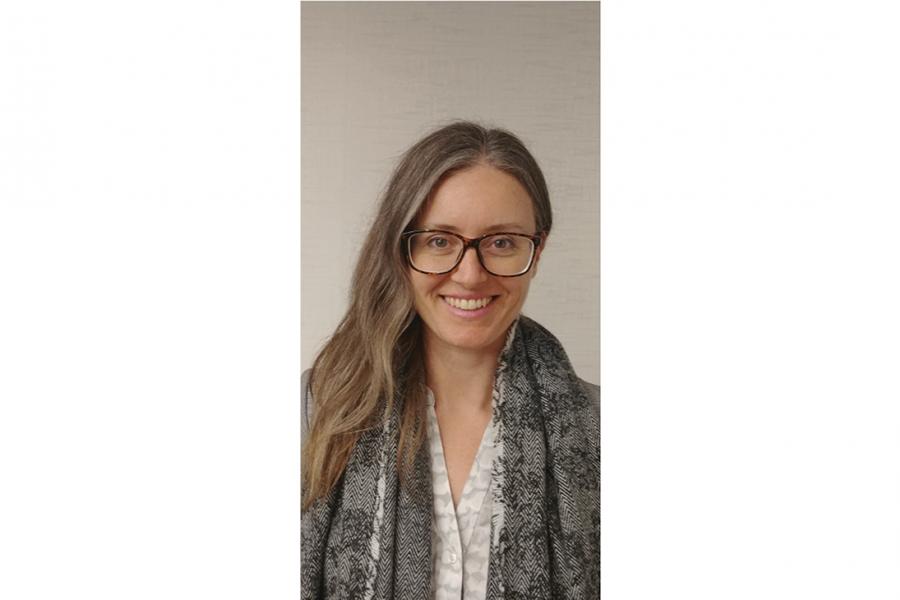
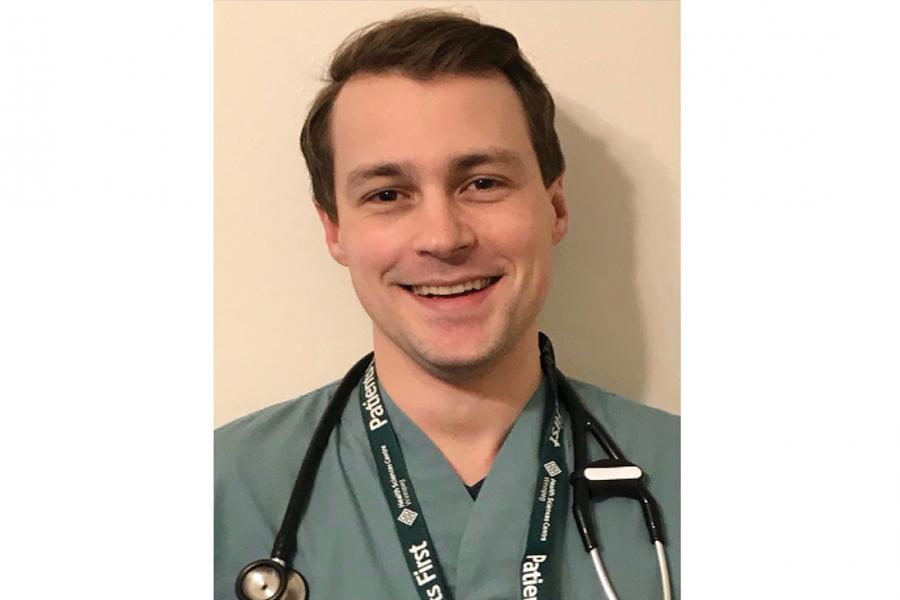







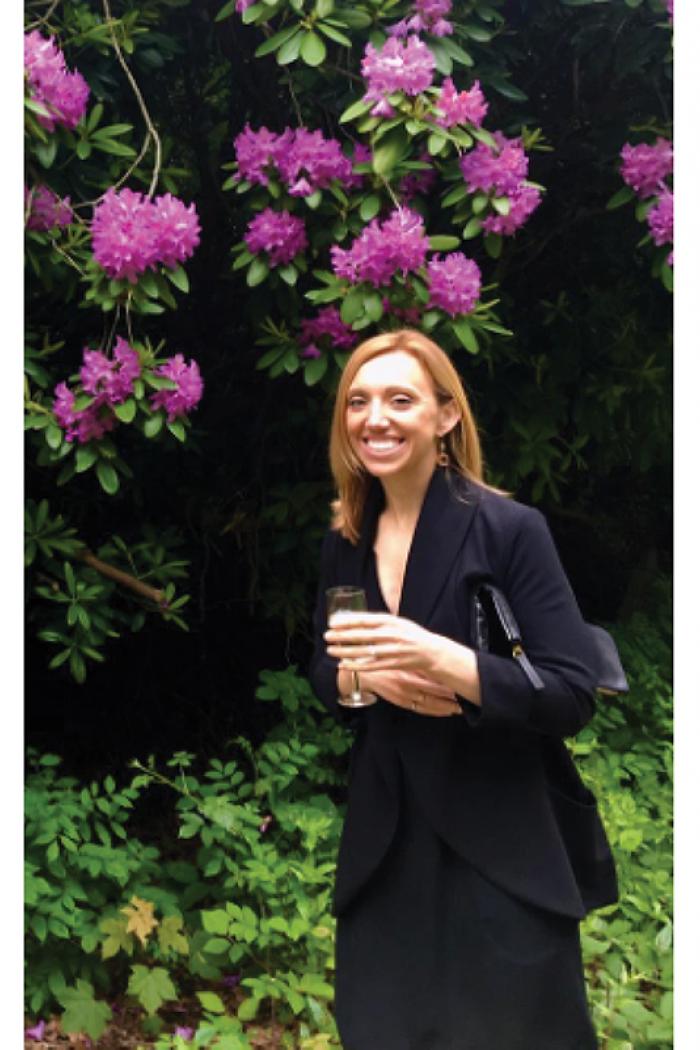









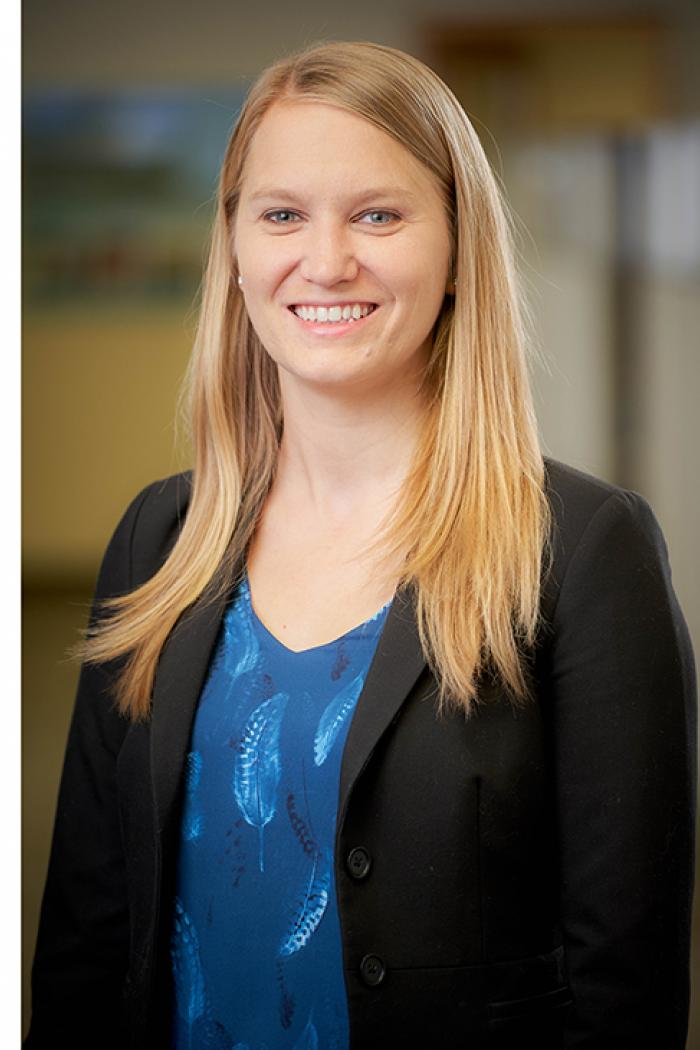










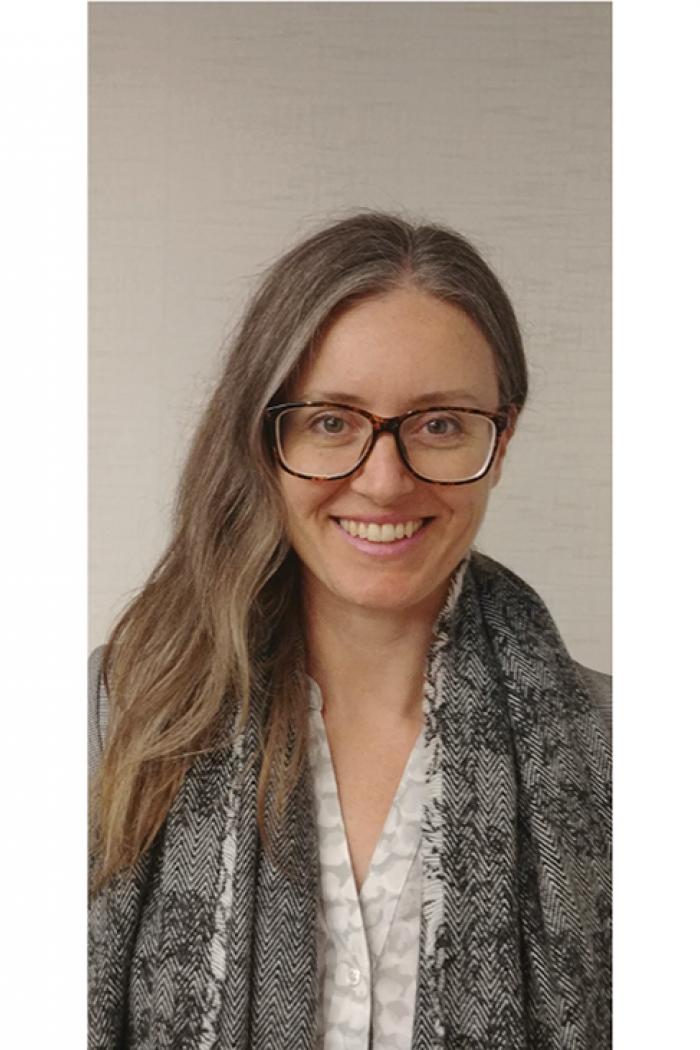





Alumni of Influence Awards
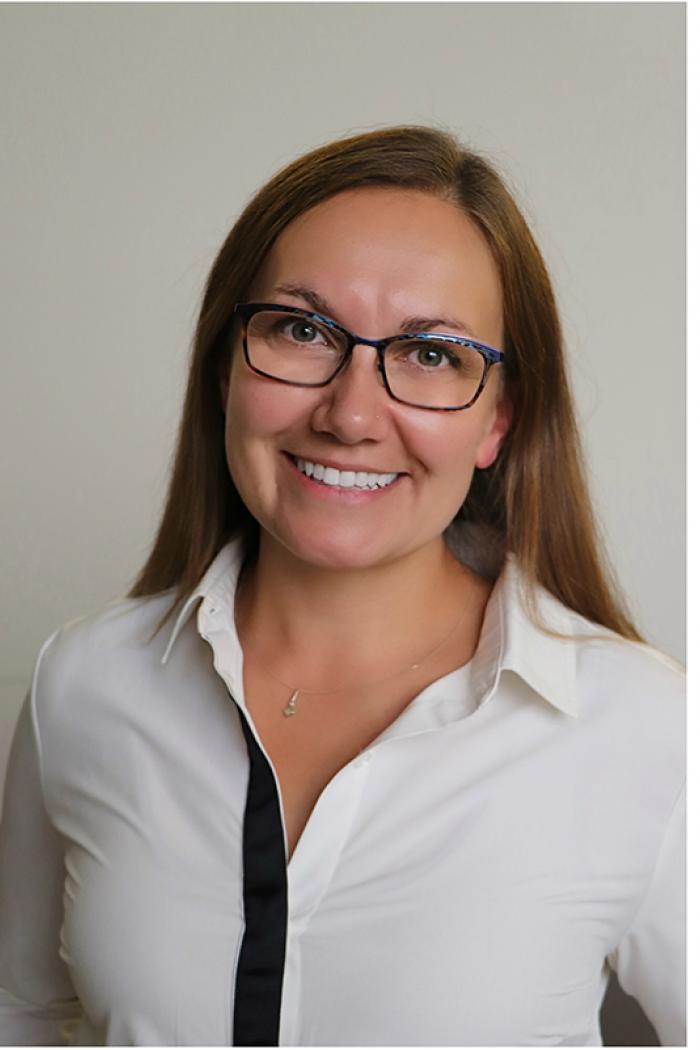
We are thrilled to honour and celebrate the accomplishments of our talented Biosystems Engineering alumni. The Alumni of Influence Awards were established in 2021, the 50th anniversary of the first Bachelor's degree in Agricultural Engineering being awarded by the University of Manitoba. These awards are meant to recognise the exceptional achievements of our alumni who have completed either undergraduate or graduate studies.
We encourage you to nominate an alumnus for an Alumni of Influence Award if you know of someone who you think deserves to be recognised for their achievements. To submit your nomination, just complete the form below.
Thank you for helping us celebrate the achievements of our Biosystems Engineering alumni.
Research
Faculty and students in the Department of Biosystems Engineering conduct world-class research in the fields of Alternative energy and buildings, biological production of biofuels and bioproducts, computational methods for biomedical/biological imaging, grain storage and handling, remediation of contaminated soils and groundwater, and medical textiles.
Research labs
Agricultural Ergonomics Lab
- Ergonomic & safety issues associated with agricultural machines
Contact
Dr. Danny Mann
Danny.Mann@umanitoba.ca
204-474-7149
Biofuels & Biotechnology Lab
- Biological production of biofuels and bioproducts
Contact
Dr. David Levin
David.Levin@umanitoba.ca
204-474-7429
Biomaterials Synthesis & Surface Engineering Lab
- Surface engineering of polymeric materials for medical and biomedical applications (surgical drapes, catheters, vascular grafts, ligament & tendon prostheses) to enhance biological interactions.
Contact
Dr. Song Liu
Song.Liu@umanitoba.ca
204-474-9616
Bioprocessing Engineering Lab
- Smart technologies in food process engineering, food quality and safety assessment, sensing and chemical mapping, computational tools and visual analytics.
Contact
Dr. Chyngyz Erkinbaev
Chyngyz.Erkinbaev@umanitoba.ca
204-474-6977
Computational Optimization & Geometric Modelling Lab
- Use of computational methods for biomedical/biological imaging, pattern recognition, spectroscopy and hyperspectral imaging.
Contact
Dr. Jason Morrison
Jason.Morrison@umanitoba.ca
204-474-8496
Grain Storage Research Lab
- Grain storage and handling; modelling of the stored-grain ecosystem.
Contact
Dr. Digvir Jayas
Digvir.Jayas@umanitoba.ca
204-474-9404
Imaging & Food Quality Assessment Lab
- Providing safe and healthy food to humans and livestock through improved imaging.
Contact
Dr. Jitendra Paliwal
Jitendra.Paliwal@umanitoba.ca
204-474-8429
Medical Textile Lab
- Functional electrospun nanofibers for biomedical applications including wound care and tissue engineering.
Contact
Dr. Wen Zhong
Wen.Zhong@umanitoba.ca
204-474-9913
Odour Research Lab
- Quantification and analysis of odour samples; evaluation of various odour-reduction technologies.
Contact
Dr. Qiang Zhang
Qiang.Zhang@umanitoba.ca
204-474-9819
Soil Dynamics & Machinery Lab
- Soil-tool-material interactions associated with tillage machines; processing of agricultural fibres.
Contact
Dr. Ying Chen
Ying.Chen@umanitoba.ca
204-474-6292
Soil & Water Engineering Lab
- Irrigation, drainage, remediation of contaminated soils and groundwater; instrumentation for soil & water monitoring.
Contact
Dr. R. Sri Ranjan
Sri.Ranjan@umanitoba.ca
204-474-9344
Stored Grain Ecosystem Lab
- Studies on insect biology, detection and control of insects & moulds, mathematical modeling of the stored-grain ecosystem.
Contact
Dr. Fuji Jian
Fuji.Jian@umanitoba.ca
204-474-7965
Waste Management Lab
- Treatment of livestock waste, municipal wastewater, and industrial wastewater.
- Anaerobic digestion, biopolymer production, biomass processing.
Contact
Dr. Nazim Cicek
Nazim.Cicek@umanitoba.ca
204-474-6208
-
Our researchers
Learn about our faculty member breaking new ground in the field of biosystems engineering.
-
Undergraduate research awards
Each summer, students have the opportunity to work alongside professors in their research labs.
-
Price Faculty of Engineering research
Explore the research underway throughout the faculty.
Sustainability-in-Action Facility
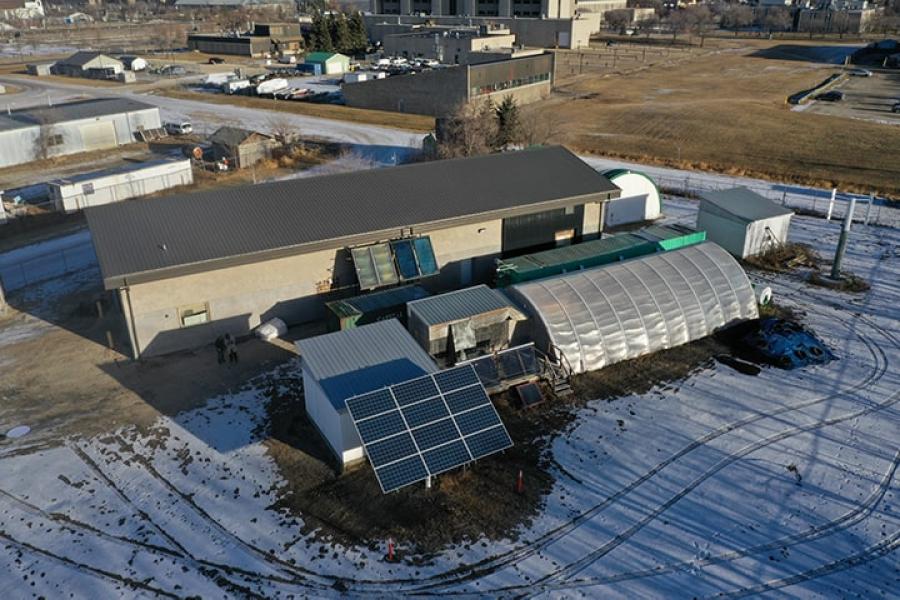
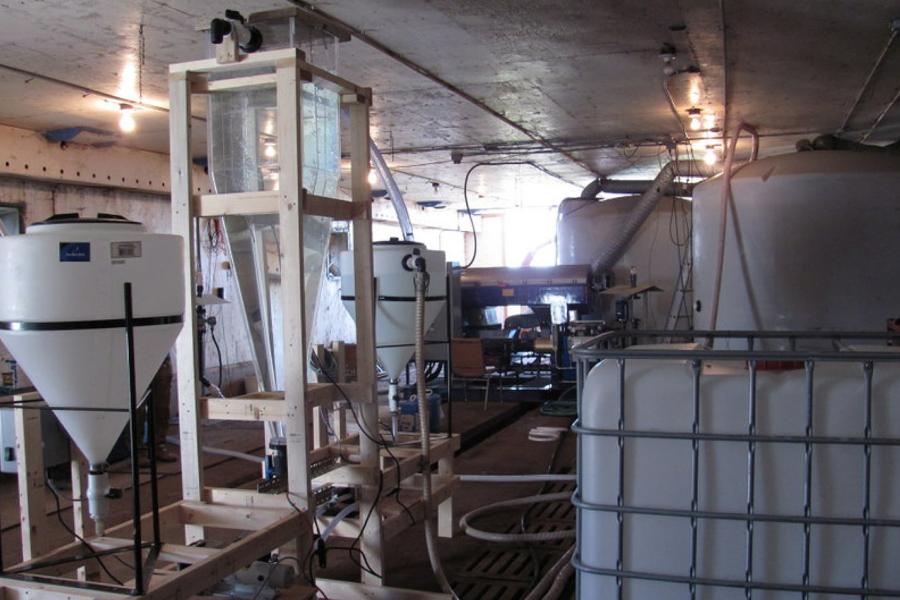
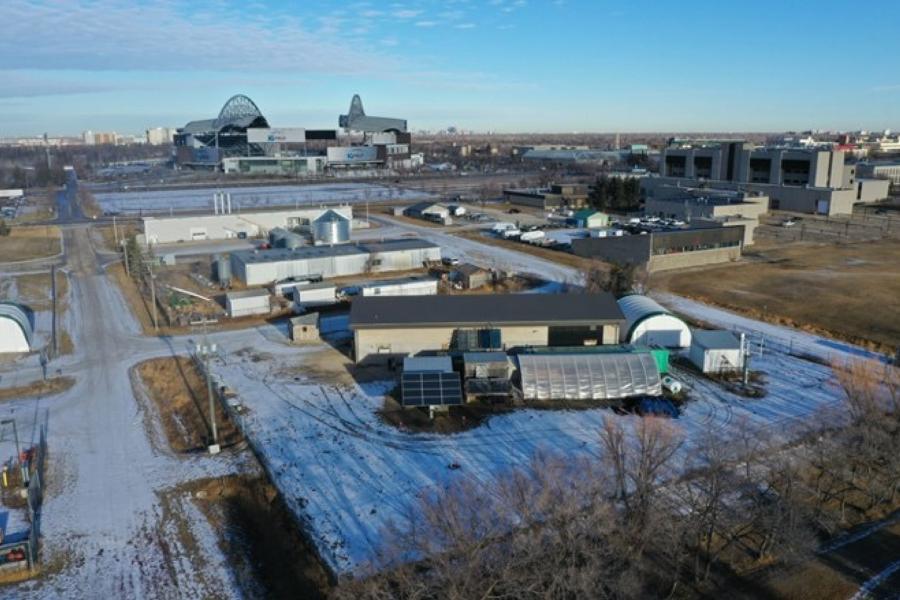
The Department of Biosystems Engineering is pleased to announce the establishment of the “Sustainability-in-Action Facility” (SiAF) on the west edge of the Fort Garry campus. Our Vision is that SiAF will be available to the University of Manitoba community for experiential learning and demonstration opportunities that relate to sustainability.
Goals
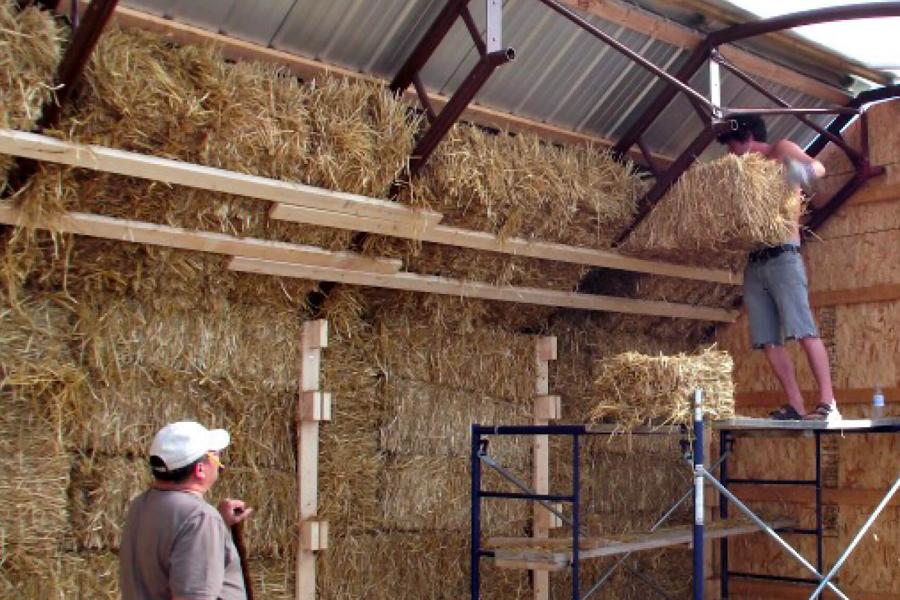
- Enhance sustainability content in undergraduate and graduate courses through access to experiential learning activities in the areas of renewable energy, innovative food production systems within controlled environments, sustainable building practices, and utilization of waste biomass for production of value-added materials.
- Enable the University of Manitoba to engage in public education and outreach in the areas of sustainability, renewable energy, northern/urban food production, and utilization of waste biomass through open houses, workshops, and media events.
- Initiate short-term demonstration projects with industry to showcase emerging sustainability technologies.
- Support innovative research activities in the areas of sustainability, renewable energy, northern/urban food production, and utilization of waste biomass.
Contact
Dr. Joe Ackerman
SiAF Research Associate & Manager
Joe.Ackerman@umanitoba.ca
204-261-0930
UM Resources for Agricultural Engineering
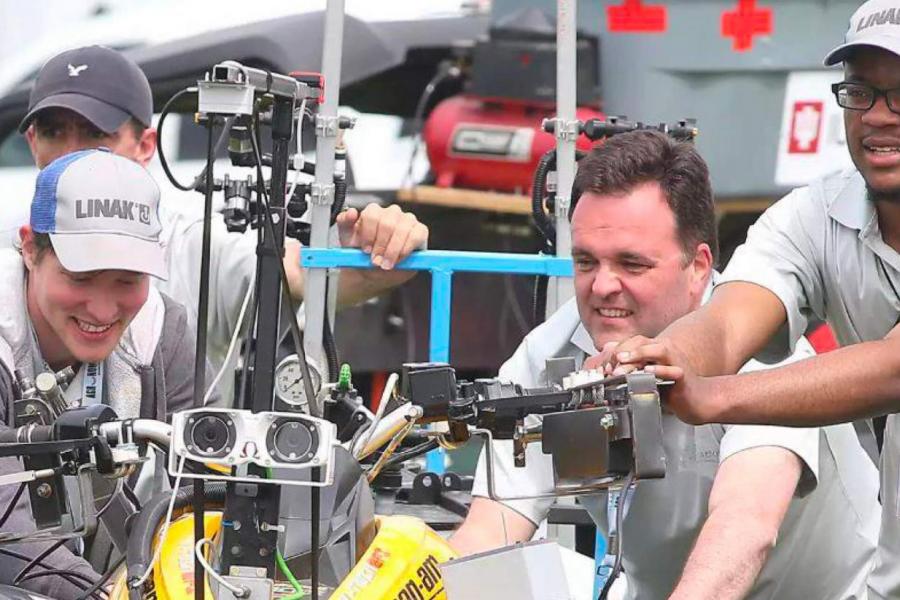
We are committed to promoting advancements of the agricultural engineering profession and fostering sustainable practices. Our center serves as a hub for innovation, education, and community engagement, with a mission to empower farmers and rural communities through the application of cutting-edge technologies and knowledge dissemination.
Goals
Enhance Visibility of Profession
Increase the presence of Agricultural Engineering professionals in Manitoba through collaboration, student recruitment, education and training, networking, and advocacy.
Community Engagement
Building strong relationships with local farmers, understanding their unique needs, and working collaboratively to address challenges.
Rapid Value Creation
Collaborate with manufacturers, and Agricultural Engineering consultants to develop cutting-edge solutions that address the unique needs of the farming community.
Knowledge Transfer
Disseminate information to the farming community through factsheets, videos, infographics, podcasts, workshops, and public presentations.
Contact Us
-
Dr. Uduak Edet
96 Dafoe Road
Room A204, AEB
University of Manitoba
Winnipeg, MB R3T 6B3
um-rae@umanitoba.ca
Uduak.Edet@umanitoba.ca
204-474-6859 -
Dr. Don Petkau
96 Dafoe Road
Room A204, AEB
University of Manitoba
Winnipeg, MB R3T 6B3
um-rae@umanitoba.ca
Don.Petkau@umanitoba.ca
204-474-6859
Our Partners
-
Manitoba Agriculture
Oversees agriculture, natural resources, agrifood, agriproduct, food safety, and animal health
-
Biosystems Engineering
Helps to develop innovative technologies for human and animal well-being, as well as the conservation of natural resources and the environment
-
Prairie Agricultural Machinery Institute
Provides unique resources to both prairie farmers and agricultural machinery manufactures
Contact us
Department of Biosystems Engineering
Room E2-376 Engineering and Information Technology Complex
75 Chancellors Circle
University of Manitoba (Fort Garry campus)
Winnipeg, MB, R3T 5V6, Canada
204-474-6033