| |
OVERVIEW
Entomology
is the study of insects and their allies. Insects are the
most numerous and most diverse animals on earth, and occur
in virtually every aquatic and terrestrial habitat. Insects
pollinate, parasitize, predate, defoliate, scavenge, promote
decomposition and provide food for vertebrates. Insect diversity
is a measure of ecosystem health. Insect pests seriously limit
agricultural and forest productivity, and actions taken to
control insects can affect many components of the environment.
Insects exhibit numerous behavioural, morphological and physiological
adaptations to their environment and offer many examples of
evolution at work.
The
Department
Entomology
became a separate Department within the Faculty of Agriculture
in 1920. The first M.Sc. student graduated in 1951, and the
first Ph.D. in 1962. The Department's main focus is now undergraduate
and graduate teaching, and research. Undergraduate teaching
is within the framework of degrees or diplomas of the Faculty
of Agricultural and Food Sciences. About half of the graduate
work and research activity in the Department is in applied
areas. Additionally, all academic staff do active research,
and supervise graduate work, on fundamental entomological
topics.
Departmental
research facilities include the J. B. Wallis Museum of Entomology,
controlled environment chambers and an area for apiculture.
Other accessible facilities include a scanning electron microscope,
pesticide analysis laboratories, livestock, field plots and
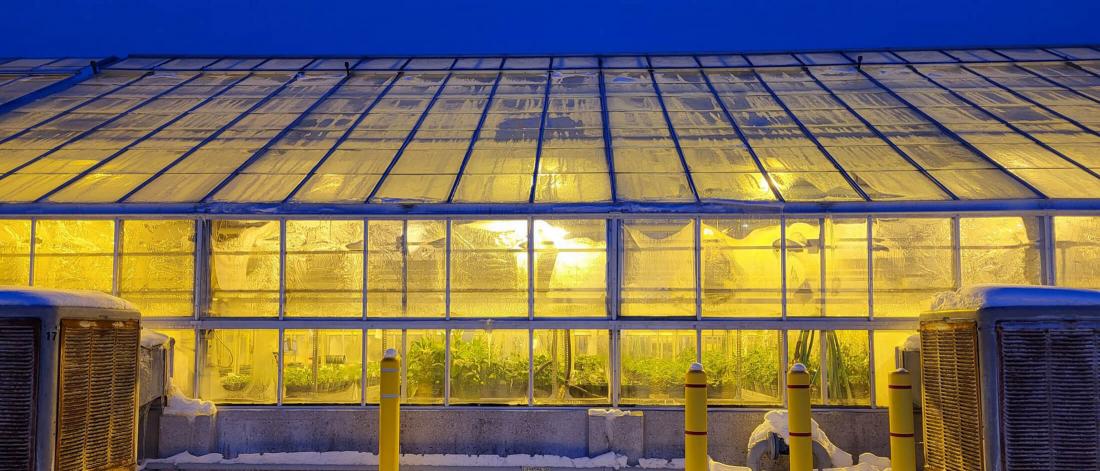
commercial scale fields, and greenhouse space.
The
University of Manitoba
The University
is the oldest University in Western Canada, and is a coeducational,
non-denominational government-funded institution with about
24,000 students and 6,000 academic and support staff. The
Department of Entomology is on the main campus, which is about
11 km south of the centre of Winnipeg. The main campus contains
all non-medical Departments of the University, the main libraries,
residences and student services, and is connected by direct
transit routes to downtown and several residential areas of
Winnipeg.
Winnipeg
Winnipeg
has a population exceeding 600,000 and is a major centre of
agribusiness, transportation, culture and sports. It has a
professional symphony orchestra, opera and ballet companies,
theatres and museums, and professional football and hockey
teams. Winnipeg is situated in the Red River Valley. The climate
is continental with cold, usually sunny, winters and hot dry
summers. There are abundant winter sports activities, and
Manitoba's lakes and forests provide recreational opportunities
in all seasons.
|
|