What is the National Centre for Livestock and the Environment (NCLE)?

NCLE Research Community

NCLE Research Capabilities Facilities and EquipmentResearch Locations

NCLE ResearchResearch Focus AreasMultidisciplinary ProjectsResearch Reports

NCLE PartnersFunding PartnersResearch Project Partners

NCLE More than Research Education and Training Extension and Outreach

What's New - NCLE Updates NewslettersCurrentArchive News and Events

Visiting NCLE

NCLE Frequently Asked Questions

Bruce D. Campbell Farm & Food Discovery Centre Glenlea Guardian Graduate Fund

Contact Us

ResourcesSample and Data ArchiveWeather at NCLE SitesInformation Sheets

blue


What's New - NCLE Updates

Pigs
Photo courtesy of Bert Luit.

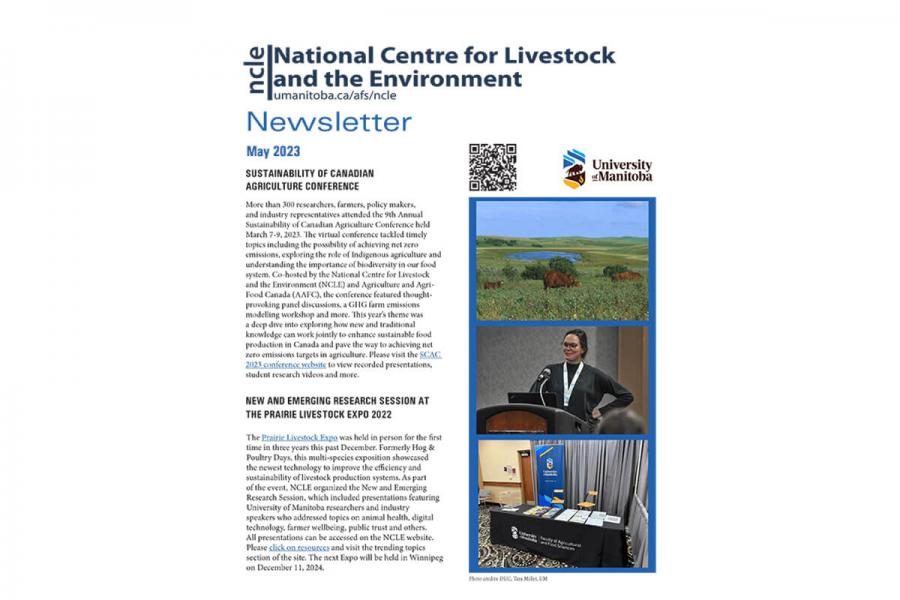
As part of our outreach program, we provide periodic updates on NCLE research, education, outreach and other activities in the form of a Newsletter.

These updates are posted on our website and emailed to our subscribers. An archive of past updates is also available.

If you would like to be on our email list, please email Christine Rawluk, NCLE Research Development Coordinator.

Current Archive

Current

November/December 09 Newsletter view as a pdf

Feature Research Project


On farm nutrient balance on dairy farms for herd health and environmental sustainability

Tracking and managing the flow of nutrients into, within and out of the farm can be a daunting process, but when the alternatives are possibly jeopardizing the health of your animals or exceeding regulatory limits, it’s worth the effort. High potassium in the diets of dairy cows causes problems with the metabolism of calcium and magnesium, and may cause udder edema. For dry cows, elevated dietary potassium increases the risk of milk fever. Phosphorus supplementation in dairy diets is vital for good health, fertility as well as high rates of milk production.  However, excess supplementation of phosphorus in diets could catch some dairy farmers off guard with the phosphorus-based manure management regulations that will be implemented province-wide by 2013. After years of applying manure on a nitrogen basis, there may be a build-up of excess phosphorus and potassium in some soils. For example, on farms where manure is recycled back onto crop land that produces dairy forages and other feeds used on-farm to feed dairy cattle, this creates a continual feedback loop where potassium and phosphorus content can build up over time.  
dairyA new study at National Centre for Livestock and the Environment aims to make whole farm nutrient balancing easier for dairy farmers, and the general principles will also apply to other livestock operations. Dairy researcher Kees Plaizier heads up the multi-disciplinary team on this project. “The goal is to develop targeted practical and sustainable management practices that producers can use to reduce surplus build up of phosphorus and potassium on their farm”, says Kees.

The recent two day workshop “Achieving Manure Phosphorus Balance in Manitoba” in Winnipeg drove home the importance of managing phosphorus, specifically. “No matter what soil test phosphorus level the manure P regulations stipulate, the key to sustainable phosphorus management is to balance what P goes into the soil with what P is taken out,” noted Don Flaten, co-chair of the workshop, and a co-researcher on this project.

Plaizier points out the strength of these management practices or tools coming out of the study rest on how well the participating dairy farms represent the full spectrum of import, cycling and export scenarios practiced on Manitoba dairy farms. “We are working with the Dairy Farmers of Manitoba and directly with dairy producers to identify a variety of suitable farms. We’re looking for variety in terms of farms that produce all their own feed, import all their feed or are somewhere in between. We’re looking for farms that export nutrients with cash crops, or that import synthetic fertilizers. Nutrients are everywhere – in the feed, in the animals, in dairy products, in manure, in crops and in the soil. Once we know the flow of nutrients, we can develop specific practices that help trim surpluses accumulating on the farm.”

“There is likely room for improved feed management, more closely matching supply with dietary requirements for both phosphorus and potassiumsays Kees, referring to a 2002 survey he and his colleagues performed. “But we don’t know how much room, as our survey pre-dates P-based manure management regulations, and we don’t know what other opportunities there are to reduce P and K surpluses on Manitoba dairy farms.”The project will also asses the suitability for utilizing pig manure on dairy farm crop and forage land, which could provide new opportunities for the management of pig manure in areas of the province where dairy and pig operations exist in close proximity.  This study is scheduled to start in spring 2010.

The Research Team: Kees Plaizier, Kim Ominski, Don Flaten and Luciano González. Funding provided in part by Dairy Farmers of Manitoba. For more information on this project or the dairy research program, contact Kees Plaizier (plaizier@ms.umanitoba.ca).

For a complete list of NCLE research projects visit http://www.umanitoba.ca/afs/ncle/ResearchProjects.html

Instant Update


NCLE and partners MLMMI, MAFRI and the Manitoba Manure Management Advisory Committee host “Achieving Manure P Balance in Manitoba - Technical Workshop”

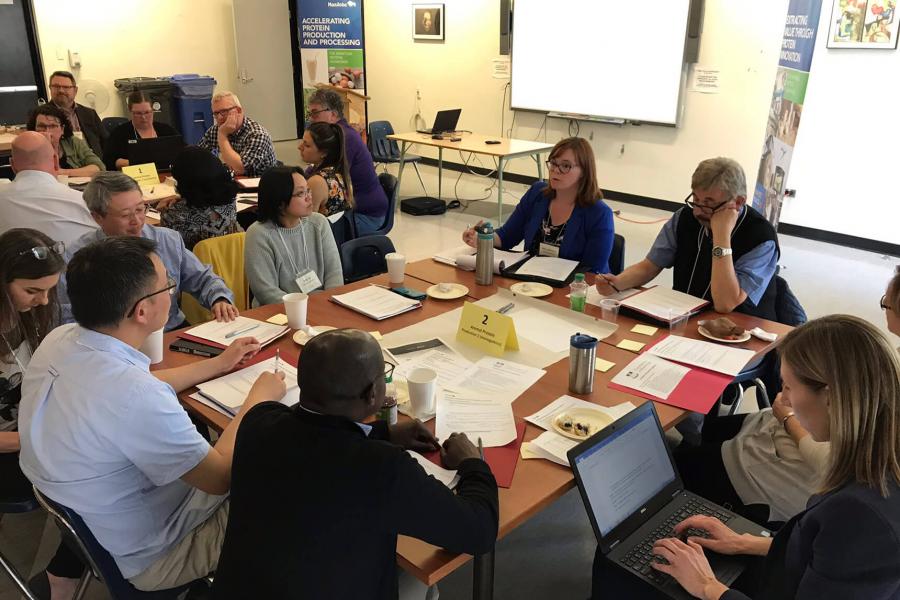
On November 30th and December 1st, government, industry and research leaders came together to share current information on available feed, crop/land and manure management options for balancing P and to identify research and extension priorities and develop strategically-minded, objectives-oriented action plans that will help Manitoba livestock producers manage manure phosphorus for balance. Look for a special newsletter feature issue on “Achieving Manure P Balance in Manitoba – Strategic Action Plan for Research and Extension” in the new year. NCLE Chair Don Flaten, Soil Science, Nazim Cicek, Biosystems Engineering, and Christine Rawluk, NCLE, provided technical updates at the workshop.  UM/NCLE researchers Kees Plaizier, Martin Nyachoti, Derek Brewin, Chad Lawley, Charles Grant, Mario Tenuta and Wole Akinremi also participated in the discussions and planning process.

NCLE and Animal Science dairy research showcased at the 4th Annual Manitoba Dairy Conference

Kees Plaizer, dairy researcher, highlighted some of the dairy research taking place at the Glenlea Research Station as well as some current and upcoming multi-disciplinary NCLE projects during an invited presentation. The University of Manitoba/NCLE research display at the conference provided a good opportunity for Kees and Christine Rawluk, NCLE Research Development Coordinator, to also have one-on-one conversations with conference participants.

Manitoba Cattle Producers Association members visit Glenlea Research Station

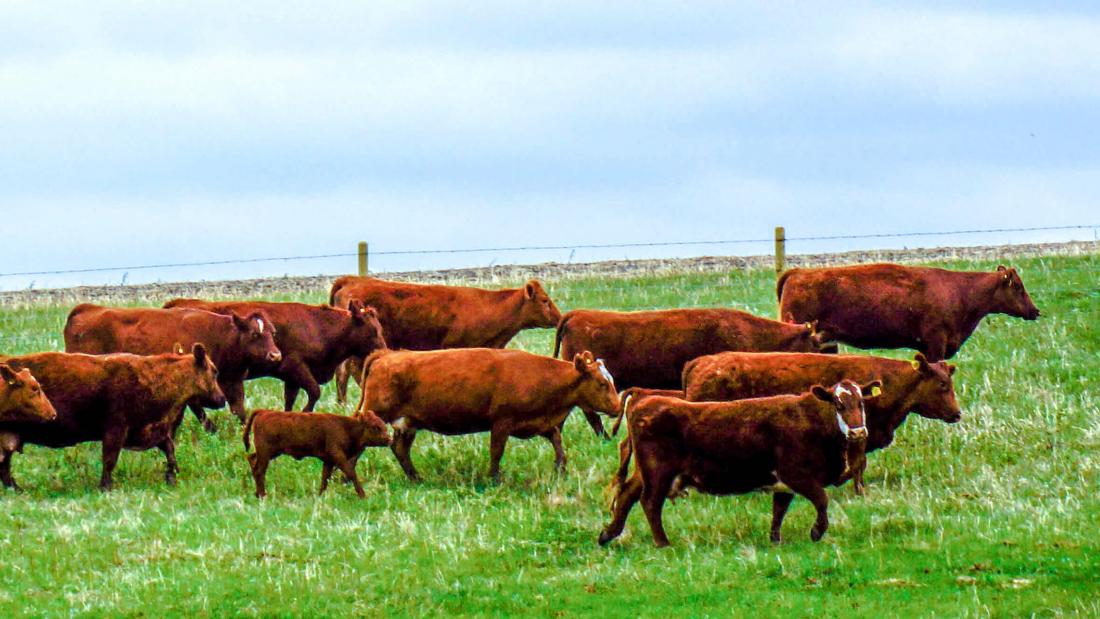
MCPAOn October 6th, NCLE hosted members and staff of the Manitoba Cattle Producers Association at the Glenlea Research Station. During the visit, researchers described recent forage-beef research projects, emphasizing the value of multidisciplinary research and partnerships in benefiting the sustainability of Manitoba's cattle industry. NCLE/UM researchers Kim Ominski, Karin Wittenberg, Don Flaten, Laurie Connor, Denis Krause, Mario Tenuta, Gary Crow, Derek Brewin and Julieta Frank, ruminant technician Terri Garner, and NCLE Research Coordinator Christine Rawluk hosted.

Attention focused on sow stalls for the Centre for Professional and Applied Ethics October lecture series

The topic "Sow Stalls: Ethics, Perceptions and Animal Welfare" was the focus of discussion on October 15th at the Faculty of Agricultural and Food Sciences lecture theatre. Laurie Connor, Department Head, Dept. Animal Science, and Dr. Wayne Lees, Chief Veterinary Officer, Government of Manitoba, gave their perspective on animal welfare and ethics surrounding the use of sow stalls. Paul Shapiro, Humane Society of the United States, Dana Medoro, Department of English, Film and Theatre, and Twyla Francois, Head of Investigation, Canadians for the Ethical Treatment of Food Animals (CETFA) shared their views from the perspective of public concern. The interest in this topic was high - close to 200 people from a variety of backgrounds attended.

Research Updates

NCLE part of a new research network on Environmental Policy research
NCLE, along with economists Gary Johnson and Chad Lawley, Agribusiness and Agricultural Economics, Don Flaten, Soil Science, and Esther Salvano, MAFRI, represent Manitoba on this new federally-funded cross-Canada Agriculture - Environmental Policy Research Network (ERCA). To get their feet wet, Gary and Chad are attending the first ERCA Network gathering at the Wetlands Management, Economics and Policy Workshop in Victoria, British Columbia, January 13-15, 2010. Stay tuned for new ERCA projects.

We want to hear from you … whether your interest lies in NCLE research, teaching or our extension activities, please direct your inquiries to Christine Rawluk, the NCLE Research Development Coordinator (Christine_Rawluk@umanitoba.ca) or (204) 474-8127


Help spread the news! Please share this newsletter with others who may be interested. Send an email to Christine_Rawluk@umanitoba.ca to sign up for our bi-monthly newsletter.


Archive

Select an issue:

September/October 09 Newsletter

July/August 09 Newsletter

May/June 09 Newsletter

March/April 09 Newsletter

Jan/Feb 09 Newsletter

July/August 2008 update

May 2008 update

back to top