
Request a service
Space/Campus planning request
New project requests for pre-design planning work include requests for new space, changes in space use, space programming, space optimization, and campus planning site analysis.
Campus initiatives
Planning can be an ambiguous concept. Residing somewhere between architecture, engineering and sociology, the goal of planners is to create quality places for people. By creating integrated policy frameworks that guide the evolution of open spaces, buildings and transportation systems, we are more likely to achieve our long-term vision for a vibrant campus community.
Fort Garry Campus master plan
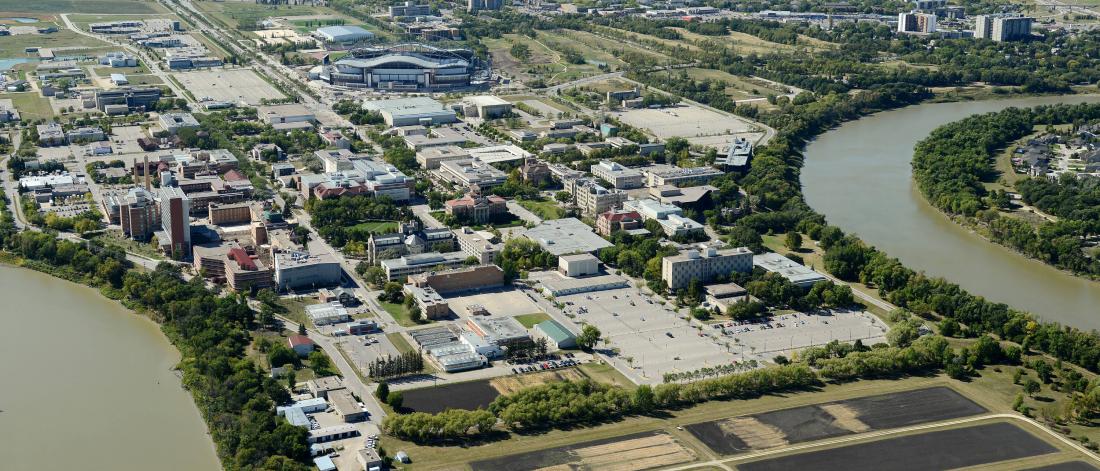
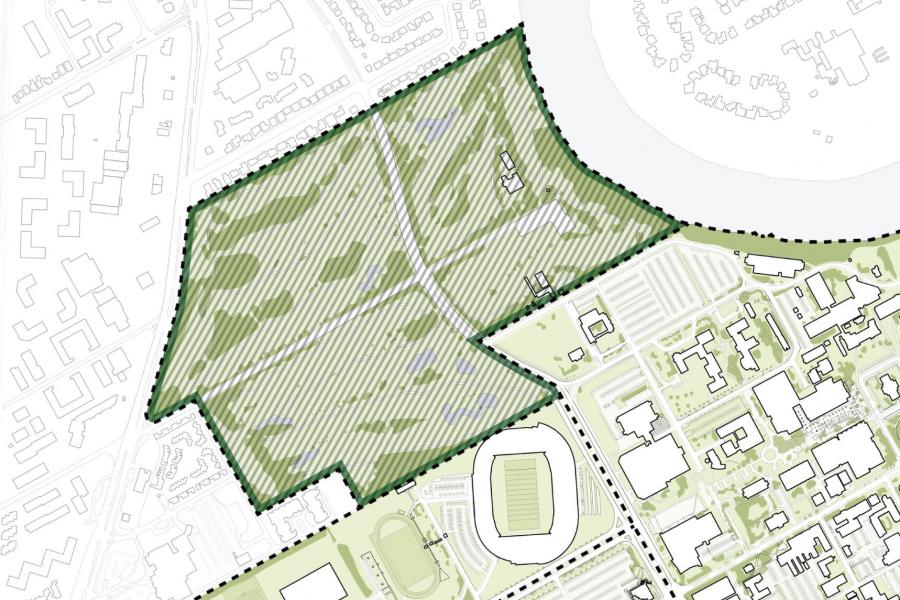
The Visionary (re)Generation Master Plan for the Fort Garry campus will guide the design and development of the University of Manitoba Fort Garry campus over the next 30 years. The plan is not a blueprint for specific buildings but a flexible decision-making framework that supports the evolution of the current Fort Garry campus into a vibrant, walkable, accessible and connected campus community.
What is Visionary (re)Generation?
Visionary (re)Generation refers to the process of planning, designing, and reimagining the Fort Garry campus. This process began with the Open International Design Competition for the campus and the former Southwood golf course. The result was a campus plan document, prepared collaboratively with university and community stakeholders, that will transform our campus over the next 30 years.
Indigenous planning and design principles
Indigenous Planning and Design Principles were developed collaboratively under the guidance of an Indigenous advisory committee and subcommittee and supported by the university’s Indigenous Advisory Circle during the Visionary (re)Generation master planning process. The principles have been established to guide planning and design on all university lands and campuses.
Stakeholder engagement
The planning process included participation from over 1,000 people, over the course of more than 60 meetings and events. The final campus master plan is the result of an engagement process that included students, staff, faculty, community residents, Indigenous and technical expert committees.
Bannatyne Campus master plan
The Bannatyne Campus Master Plan describes a vision for a compact, vibrant, sustainable and urban live/work/learn/play campus community that emphasizes health, active living and safety for students, and staff and the broader community. It envisions a campus with a strong sense of place, encouraging connections within the campus and with the surrounding neighbourhood. The vision emphasizes principles of universal design and accessibility for people of all ages, abilities and stages of life, and also encourages cross-disciplinary sharing of resources and inter-professional education.
Planning for an urban campus
The campus master plan was developed in response to the current challenges and needs of the university and the issues identified through an extensive engagement process. Some of the key driving factors behind the process include:
- The need to plan for increased interprofessional education in the health sciences
- The lack of amenities and services on campus
- The need for a greater 'sense of place' and campus identity
- The importance of a strong campus-community relationship
Stakeholder engagement
Over 800 people and 30 groups including students, faculty, staff, administration and surrounding neighbourhood stakeholders participated in the engagement process through meetings, Community Conversations, open house events and online feedback.
Space planning
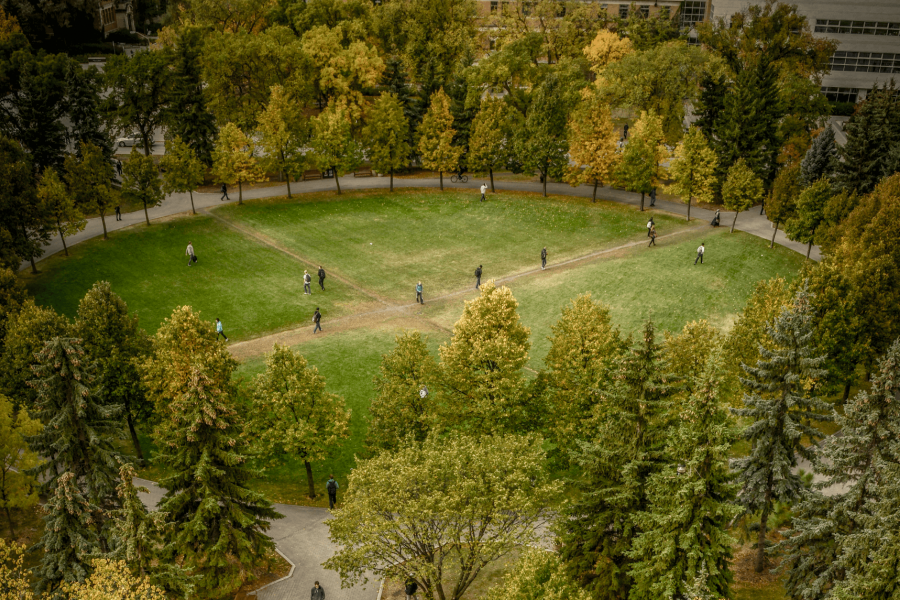
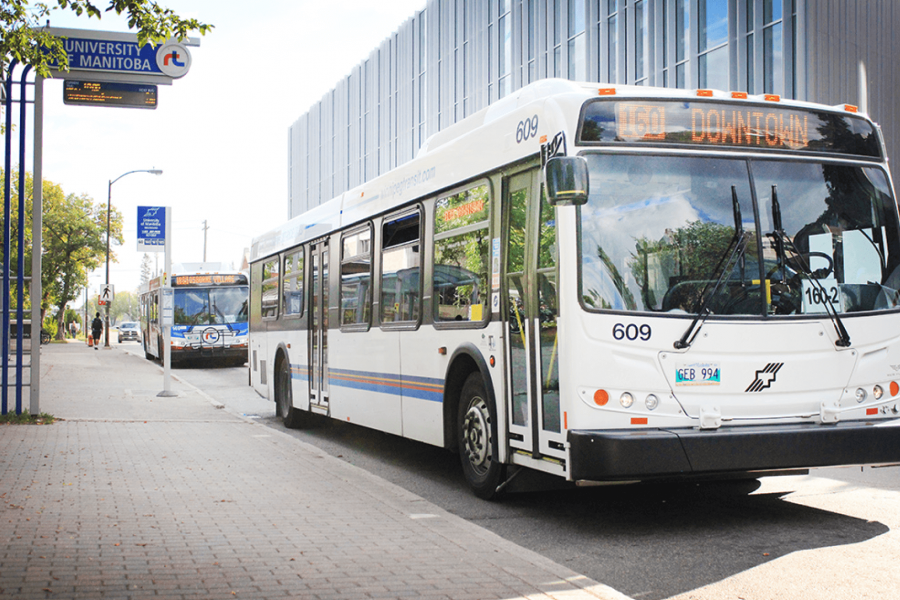
Collaboration with academic and administrative units is crucial to assess space needs and develop space programs to ensure that campus space fulfills the university’s strategic priorities and is allocated equitably among all units. Ongoing consultation is central to this process. Effective space planning is achieved through both the management of our existing resources and optimization of the physical space on campus.
-
Since 2018
space optimization strategies have reclaimed surplus space
-
8320
sq. ft. of new space saved
-
$5m
savings achieved
Space programming
Space programming is the collaborative process of working with university units to analyze, plan and configure spaces to meet the needs of users.
Space optimization
To create a more efficient and sustainable campus, we aim to maximize the use of existing spaces in order to minimize new construction. Through space optimization strategies, the Campus Planning Office helps units achieve their academic, research and service support missions.
Space management
Space management procedures monitor space use to identify surplus or poorly utilized facilities. This creates opportunities to consolidate occupancy and maximize utilization, while minimizing energy, maintenance and operating costs.
Space policy
The space policy governs efficient allocation and use of spaces on University of Manitoba campuses. The primary goal of the policy is to support the space needs of academic and administrative units while promoting the most effective functionality and use of space resources across our campuses.
Space Management Committee
The Space Management Committee (SMC) governs the allocation and management of all space at the University of Manitoba. The committee’s primary role is to promote the efficient and equitable use of space as defined in the Space Policy. SMC is responsible for approving new space allocation and change of room use (function), as the first step in the capital project process. The SMC also reviews and approves all Unit funded projects <$1M to proceed to design and construction.
Space inventory
The space inventory is an invaluable tool that is used to track and manage over 21,000 spaces throughout all University of Manitoba buildings. Intranet link
Indigenous planning and design
The University of Manitoba Campus Plan has overarching Indigenous Planning and Design Principles that have been established to guide planning and design on all University lands and campuses. The principles are rooted in the concept of interdependence, an Indigenous way of being that recognizes the interdependence of all things. The various components of campus planning and design are not isolated entities, but interdependent and interconnected. Effective planning must recognize that all components of a place – land, water, transportation networks, buildings, infrastructure, open spaces and the people that inhabit it – are linked in complex ways. Each one affects the other, and they must be viewed holistically.
Indigenous Planning and Design Principles
- Commit to relationships and listening
- Demonstrate culturally relevant design
- Respect mother earth
- Foster a sense of belonging and community
- Embrace a ‘Seven Generations’ view
History of the principles
These principles were developed collaboratively under the guidance of an Indigenous Advisory Committee and Subcommittee, and supported by the University’s Indigenous Advisory Circle during the Visionary (re)Generation master planning process.
Although the principles are a source of design and planning guidance, they do not encapsulate the depth and complexity of Indigenous teachings, knowledge, and cultures. In this respect, they represent a starting point, and implementing the principles in campus projects will require further engagement with Indigenous Elders, traditional knowledge holders, and leaders.
Implementation
The principles continue to be applied to planning and design projects on campus, and can be applied in various meaningful and culturally significant ways. The principles may be applied to the program of a building that supports Indigenous learning and research, or ceremony. The principles may take form in an Elder-led ground blessing ceremony prior to construction related disturbances to the land. Other applications may be more visible as Indigenous cultures, teachings and values are woven into to the fabric of our campuses.

Engagement
Planning relies heavily on collaboration with the university community. Learn how we engage with students, faculty, staff, Indigenous stakeholders and neighbouring community members to realize the vision for the future of our campuses.
Contact us
Campus Planning Office
150 Physical Plant Building
89 Freedman Crescent
University of Manitoba (Fort Garry campus)
Winnipeg, MB R3T 2N2
For inquires related to interior space, please contact: